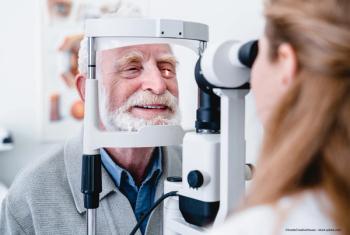
Study of subjects with rare inherited form of AD shows increased retinal capillary perfusion during the presymptomatic stage.

Study of subjects with rare inherited form of AD shows increased retinal capillary perfusion during the presymptomatic stage.

As the Fourth of July approaches, ophthalmologists warn patients to exercise caution with fireworks.
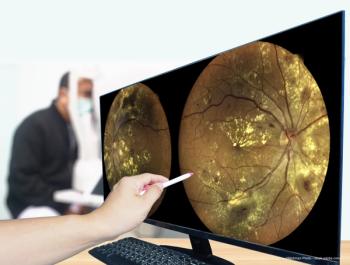
Deep learning predictions of the retinal nerve fiber layer thickness based solely on fundus photographs can be used to monitor the risk of future glaucomatous conversion in glaucoma suspects.
Clues to diagnosis from patient and family histories, examination techniques.

If approved, PDS ranibizumab would become the first and only eye implant with continuous drug delivery, offering an alternative to more frequent anti-VEGF injections for people with wet AMD.

In a study, a single intravitreal injection of ADVM-022 had a 99% reduction in the mean annualized frequency of anti-VEGF injections.
Investigators corroborate the hypothesis that retinal ganglion cells with dendrites stratified in the off sublaminae could be damaged.
In endophthalmitis, the systemic anti-infective treatment specific to the infectious agent should always be used.

According to investigators, the new technology is designed to detect telltale signs of major blinding diseases in retinal blood and tissue that typically go unseen until it is too late.

Amid pandemic, physicians and patients have embraced remote technology.
Measures of inflammation can predict treatment outcomes for patients

An updated PDS procedure reduces complications.
Standardization of Uveitis Nomenclature (SUN) Working Group utilized machine learning to create new uveitis classification criteria, inciting hope for implementation in clinical and research settings.

The not-for-profit vision and healthcare organization breaks ground on premier Technology Center for assistive technology for people with vision loss.

PDUFA action date of October 30, 2021, is assigned for investigational therapy with a proposed indication of treatment of macular edema associated with uveitis.

Retinal imaging tests are providing material to train and test decision support systems.
The company is hoping to commercialize the first FDA-approved ophthalmic formulation of bevacizumab-vikg for retinal disease. It expects to receive BLA approval from the FDA by mid-2022.

Members of the medical community gather virtually to discuss current issues in the field, public health, and general business.

RGX-314 eyed by investigators as a therapeutic option for exudative AMD.

An international research team has shown that optogenetic therapy has helped to partially regain visual function in a patient with retinitis pigmentosa. This is a milestone towards a gene therapy that could restore vision.

Preexisting neutralizing antibodies associated with the inflammatory changes.

Novel therapies are shifting the paradigm in care of retinal diseases

Investigators at Mount Sinai report that ocular cells may be infected directly by the virus, with the limbus especially susceptible.

Study results show that aflibercept-treated eyes are protected.

Study results show the device offers an effective long-term option for patients.

Prevent Blindness dedicates the third week of May to raising awareness of the benefit of genetic testing, variety of retinal diseases, and available resources.

Mark Pennesi, MD, PhD, reports during ARVO 2021 that preliminary results have shown that AGTC-401 and AGTC-402 seem safe and well tolerated in patients with ACHM.

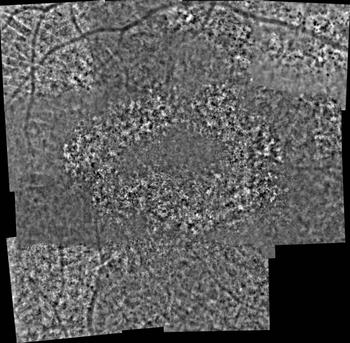
In a presentation at ARVO, Friederike Kortuem, MD, MSc, explains that treatment with voretigene neparvovec-rzyl led to a short-term change in the foveal morphology in a patient with visual impairment that included nyctalopia and decreased visual acuity in early childhood.
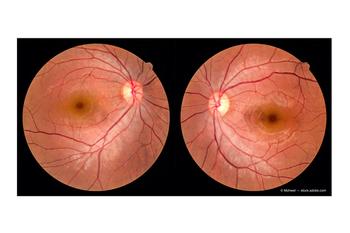
Clinicians' knowledge of the epidemiology, natural history, causal mechanisms, and treatments for diabetic retinopathy (DR) has evolved dramatically over recent decades.