
If approved, Genentech’s treatment of faricimab will be the first and only medicine targeting two distinct pathways, Ang-2 and VEGF-A, that often cause retinal diseases that may cause vision loss.

If approved, Genentech’s treatment of faricimab will be the first and only medicine targeting two distinct pathways, Ang-2 and VEGF-A, that often cause retinal diseases that may cause vision loss.

New opportunities continue to develop in an evolving landscape.

With orphan drug and fast track status, Neurotech plans to seek FDA approval for its NT-501 Implant platform late next year.

Investigators have found that 78% of neovascular AMD cases have been detected using the PHP home monitoring system.
A team of investigators used corneal confocal microscopy to identify corneal nerve damage in cases of long COVID-19.

The American Society of Cataract and Refractive Surgery hosted its 2021 ASCRS and ASOA Annual Meeting July 23-27 in Las Vegas, Nevada.

Nanoscope Therapeutics Inc. has dosed its first patient in a late-stage Phase 2b trial of a gene therapy that delivers multi-characteristic opsin to retinal cells.
A team of investigators found that the retina may offer signs of COVID-19 infection before symptoms present.
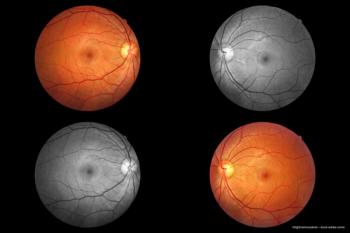
Why investigators are considering AMD to be a disease spectrum rather than a single disease.

Dual imaging may reduce costs, unnecessary referrals, telehealth study results show.

Promoting Tie2 signaling activity may complement inhibition of VEGF in addressing pathology in disease states characterized by angiogenesis, vascular permeability, and inflammation.

A poll for ophthalmologists and retina specialists to celebrate UV Safety Month. This poll will close July 28, 2021.

Trial shows treatment has acceptable safety profile, may improve visual function.

AAO develops task forces to evaluate academy, review outcomes in ophthalmology.

In order to benchmark 20/20 vision in an infant, the testing types and acuity being measured need to be altered.

Physicians should hospitalize ON patients to prevent blindness, possible death.

Knowledge of tools used in data interpretation helps clinicians trust accuracy of findings.
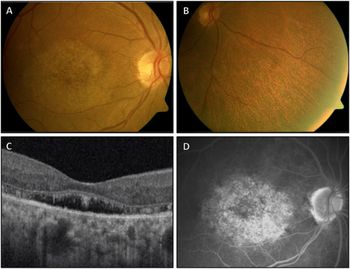
Structural photoreceptor abnormalities and an area of central sparing found.
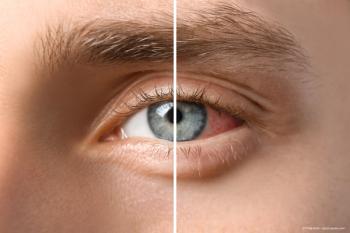
While operating on a patient with chronic uveitis presents some challenges, there are a few pearls that may increase success.
Study of subjects with rare inherited form of AD shows increased retinal capillary perfusion during the presymptomatic stage.

As the Fourth of July approaches, ophthalmologists warn patients to exercise caution with fireworks.
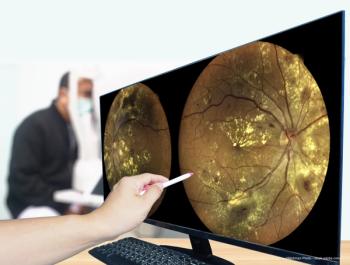
Deep learning predictions of the retinal nerve fiber layer thickness based solely on fundus photographs can be used to monitor the risk of future glaucomatous conversion in glaucoma suspects.
Clues to diagnosis from patient and family histories, examination techniques.

If approved, PDS ranibizumab would become the first and only eye implant with continuous drug delivery, offering an alternative to more frequent anti-VEGF injections for people with wet AMD.

In a study, a single intravitreal injection of ADVM-022 had a 99% reduction in the mean annualized frequency of anti-VEGF injections.
Investigators corroborate the hypothesis that retinal ganglion cells with dendrites stratified in the off sublaminae could be damaged.
In endophthalmitis, the systemic anti-infective treatment specific to the infectious agent should always be used.

According to investigators, the new technology is designed to detect telltale signs of major blinding diseases in retinal blood and tissue that typically go unseen until it is too late.

Amid pandemic, physicians and patients have embraced remote technology.