

The study found no association between treatment and the risk of chronic kidney disease or end-stage renal disease.

The study found no association between treatment and the risk of chronic kidney disease or end-stage renal disease.

In a poster presented at the Association for Research in Vision and Ophthalmology’s 2022 annual meeting, Osama Ibrahim Hirayama, MD, and colleagues offered results that demonstrating that anisometropia and astigmatic error were greater among the patients with high myopia compared with the other groups. Compared with the subjects with no myopia, those with high myopia reported significantly more dryness, less photophobia, and less pain.

Dr. David Bingaman of Ora Clinical discusses today’s need to accelerate clinical studies and increase investments in retina and challenging disease states.

The axitinib intravitreal implant (OTX-TKI) is being evaluated to treat wet age-related macular degeneration in a phase 1b clinical trial.
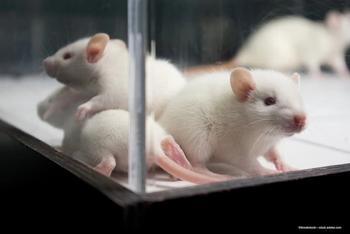
Investigators from the New York University Grossman School of Medicine presented data at the ARVO 2022 annual meeting that concluded mapping of the relative cerebrovascular reactivity in the murine brain showed widespread brain changes resulting from the chronic IOP elevation and demonstrates vascular involvement in glaucoma both within and beyond the primary visual pathways.

At ARVO 2022, Jason S. Slakter, MD, presents data on the efficacy and safety of OPT-302 when combined with ranibizumab for polypoidal choroidal vasculopathy.

In a poster presented at the Association for Research in Vision and Ophthalmology’s 2022 annual meeting in Denver, Mamoru Ogawa, MD, noted that investigators have found that the choroidal and central corneal thicknesses increased over a very short period of time following intensive outdoor activity.
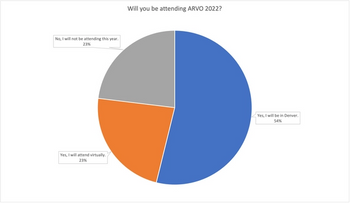
Results from our recent poll regarding ARVO 2022 attendance indicate that most ophthalmologists and retina specialists plan to participate in the Annual Meeting in person in Denver, Colorado.

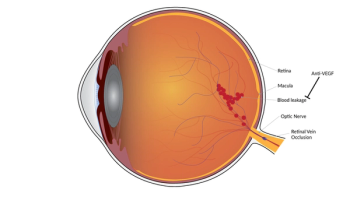
According to the study, many patients with retinal vein occlusion maintain visual acuity gains above baseline at five years, but they require long-term monitoring and treatment.
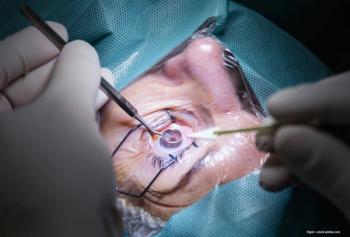
A variety of surgical advances were presented at ASCRS; here is a brief overview for retina specialists.

Apellis Pharmaceuticals releases results of their Geographic Atrophy Insights Survey (GAINS), revealing a large emotional toll and significant decrease in independence for patients with geographic atrophy.

Over the past 2 years, retina specialists and their patients have learned how AI may be a tool physicians can use to monitor patients for disease progression, how telemedicine might mean more than a mere video chat between patient and clinician, and how the tools of the 21st century were closer to real-world practice than anticipated.

In patients with amblyopia, minuscule fixation eye movements play a major role with treatment, according to Fatema Ghasia, MD, associate professor of ophthalmology and director of the Vision Neuroscience and Ocular Motility Laboratory at the Cole Eye Institute at Cleveland Clinic in Ohio.
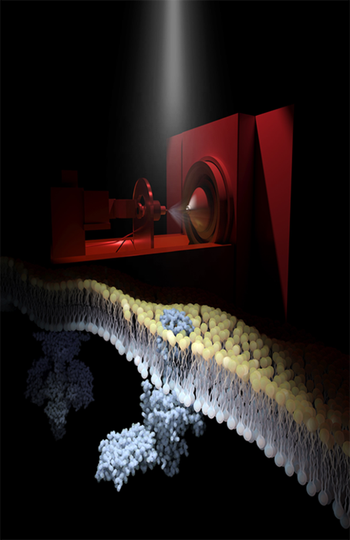
Impact of native lipids on rhodopsin signaling and regeneration opens door to GPCR drug discovery in native membrane environments.

Researchers at the University of Southern California have stimulated the retinas of blind mice using focused ultrasound technology.

Investigators reported that the incidence of retinal vein occlusions (RVOs) but not retinal artery occlusion, increased in the 6 months after COVID-19 diagnosis.

According to the company, post-hoc analyses from Illuminate trial of sepofarsen demonstrate an encouraging efficacy signal when comparing active treatment and sham eyes to their corresponding contralateral eyes across multiple endpoints. The company plans to discuss findings with regulators in Q3.

An end-of-week review of retina news and stories from April 8-April 14.

According to review, patients with mild diabetic retinopathy at baseline fare better.

The trial marks the first-ever in vivo delivery of an experimental CRISPR gene editing medicine to a pediatric patient, with the company on track to complete dosing of the pediatric mid-dose cohort in the first half of 2022.
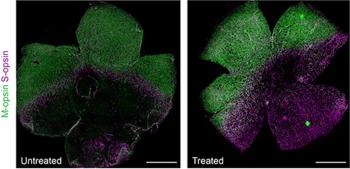
According to researchers at the University of California, Irvine, base editing may provide long-lasting retinal protection and prevent vision deterioration in patients with inherited retinal degeneration, specifically in Leber congenital amaurosis patients.

The trial will study the effect of the drug in treatment-naïve patients with diabetic macular edema (DME) who are members of underrepresented patient populations, ie, Black, Hispanic, Latin American, and Indigenous people.

The International Agency for the Prevention of Blindness (IAPB) recently announced an expansion of their ‘Focus on Glaucoma’ and ‘Focus on Diabetes’ series with their new ‘Focus on Child Eye Health’ series in partnership with CooperVision.

Investigators at the International Center for Materials Nanoarchitectonics have developed the first-ever artificial retinal device that increases the edge contrast between lighter and darker areas of an image, using ionic migration and interaction within solid.

Investigators found that patients with neovascular age-related macular degeneration in all countries included in the study lost vision as a result of the lockdown and reduced number of treatments during the COVID-19 pandemic.

Approval is based on year 1 data from the Phase III KESTREL and KITE trials investigating brolucizumab 6 mg versus aflibercept 2 mg in DME patients.

A University of Houston study found that minorities have fewer eye exams, higher instances of disease.

A team of investigators at the Okinawa Institute of Science and Technology Graduate University in Japan have identified a gene necessary for the survival of retinal ganglion cells—a class of neurons located in the retina that are critical for vision.

Study focuses on ascertaining the risk of patients developing additional tumors