
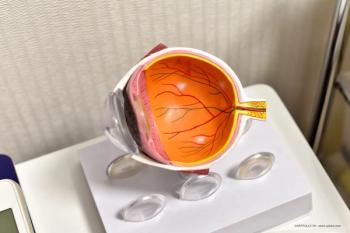
Suprachoroidal injections provide safe, effective drug delivery to target choroidal, retinal tissues.

Suprachoroidal injections provide safe, effective drug delivery to target choroidal, retinal tissues.
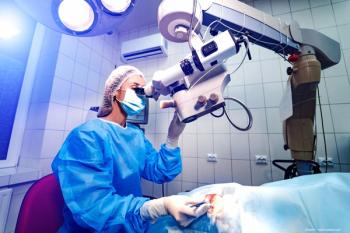
In the face of the COVID-19 pandemic, the procedure required adjustments.
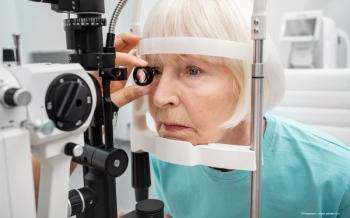
The company notes that its clinical trial of the light delivery system meets the primary efficacy endpoint and can offer hope to patients with dry AMD who are experiencing vision loss and currently have limited treatment options.
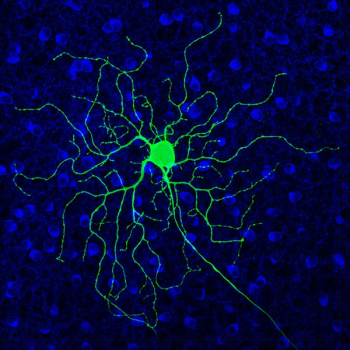
According to a team of investigators at University of California, Berkeley, tests of the drug Antabuse could prove the role of hyperactive retinal cells in blindness, potentially leading to better therapies.

Researchers from the Department of Ophthalmology at the University Hospital Bonn and Deutsches Zentrum für Neurodegenerative Erkrankungen suggest that assessments of the eye’s retina could help to detect a loss of brain substance, ie “brain atrophy.” The findings are based on data from the Rhineland Study.
Investigators identified that patients with moderate and severe SARS-CoV-2 pneumonia have decreased central retinal vascular density compared with patients who were asymptomatic/paucisymptomatic or control subjects.

Investigators observe survival rate with orbital retinoblastoma improves substantially due to a combination approach that includes intensive sequential treatment comprised of chemotherapy, enucleation, and external beam radiation therapy.
The implant achieves impressive efficacy and reduces treatment burden.

Luis Acaba-Berrocal, MD, of the Illinois Eye and Ear Infirmary in Chicago, worked with a group of colleagues to conduct a multicenter, retrospective, consecutive study of infants with ROP who had been treated with intravitreal anti-VEGF injections between 2008 and 2020 in light of the dearth of real-world data on the topic.

The clinical trial will evaluate the safety and tolerability of ADX-2191 in patients diagnosed with RP due to mutations of the rhodopsin gene, including the P23H gene mutation.
ProQR's Phase 2/3 trials center around its emerging therapy, ultevursen (previously named QR-421a), and are accepting patients with mutations in exon 13 of the USH2A gene.
Taiichi Hikichi, MD, counteracted the potential inflammatory effect of brolucizumab by combining its administration with a sub-Tenon’s capsule injection of triamcinolone acetonide.

Technology that allows consistent monitoring could be useful tools in 2022—and may be the key to tracking nAMD progression in fellow eyes among patients who have had intervals extended due to new technology.
According to the company, pegcetacoplan demonstrated continuous and clinically meaningful effects at month 18 in the studies, which also found that treatment effects in DERBY were comparable to OAKS during months 6 to 18. The combined 18-month data show the potential for improving treatment effects over time.

Investigational pipeline provides promise for an unmet need.

The first FDA-approved bispecific antibody for the eye targets two leading causes of vision loss.

Ultrasonic retinal prosthesis has been achieved by a research group at UCLA. It is a step towards a non-invasive retinal prosthesis that works without invasive eye surgery.
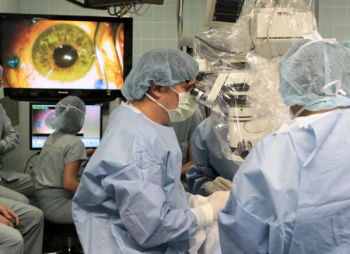
A gift from Bronwyn Bateman, MD, will establish the UCLA Bronwyn Bateman Center for Ocular Genetics at the Stein Eye Institute.

Russian bombs on Wednesday struck a hospital in Mariupol, Ukraine, damaging several buildings, including an ophthalmology department. Elsewhere, physicians are participating in relief efforts.

Investigators studying old flies have gained some new insight into retinal degeneration, seeking an understanding "of the molecular mechanisms that drive age-associated changes and the external and internal factors that influence them.”
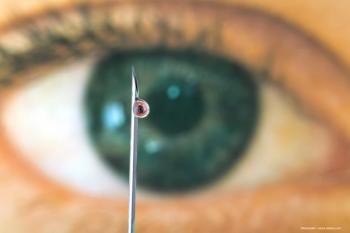
Reducing the treatment burden is a prime goal for emerging AMD therapies.

World Glaucoma Week, March 6-12, 2022, highlights how far ophthalmologists have come in managing the disease as well as cutting-edge therapies and techniques.

A team of investigators found that sigma 1 receptor, which is known to protect cells from stress, could turn out to be key to the function and survival of the neurons most impacted by glaucoma.

Presenters at the conference provided new evidence about detecting geography atrophy and wet and dry AMD early and predicting disease progression. Investigators are also focused on finding cures for inherited retinal diseases.

40 years after the inaugural flight of the Flying Eye Hospital, Orbis International continues to harness the power of innovation to reach new heights in the fight against avoidable blindness.

The group is offering free sight-saving resources to employees and employers.

KSI-301, a therapy for patients with nAMD, did not meet the primary endpoint of showing non-inferior visual acuity gains compared to aflibercept given every eight weeks; however, it was safe and well-tolerated with no new or unexpected safety signals.
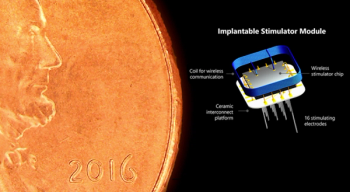
While there is currently no cure for blindness, an artificial vision system has undergone its first successful implantation, bringing with it the potential to restore partial vision to people who have lost their sight.

Investigators at the Eye Clinic, Department of Medicine, Surgery and Health Sciences, University of Trieste, Trieste, Italy, found that the appearance of the retina and optic disc was associated with the SARS-CoV-2 virus.

Alimera Sciences, Inc. announces statistically significant improvements in best corrected visual acuity, central subfield thickness and treatment burden for patients with diabetic macular edema.