
Arshad M. Khanani, MD, MA, discusses phase 3 SOL-1 data showing axitinib sustained vision in wet AMD for 9-12 months after 1 dose, outperforming aflibercept 2 mg.

Arshad M. Khanani, MD, MA, discusses phase 3 SOL-1 data showing axitinib sustained vision in wet AMD for 9-12 months after 1 dose, outperforming aflibercept 2 mg.
Applying phase 3 LUGANO/LUCIA criteria to the phase 2 DAVIO 2 population showed stable vision and anatomy with the vorolanib insert EYP-1901 in wet AMD, Aleksandra Rachitskaya, MD, FASRS, reported at ASRS 2026.
OLN324 outperformed faricimab on anatomic outcomes as early as week 1 in the JADE trial, with no cases of intraocular inflammation across both dose groups.
Initiating aflibercept 8 mg or faricimab as a first-line therapy was associated with longer treatment intervals and superior anatomic outcomes in a real-world analysis of more than 12,000 eyes.
Bedside OCT in preterm infants links retinal thickness to motor, cognition, and autism risk at age 2, hinting at earlier brain screening.
Meeting founder and co-chair Arshad M. Khanani, MD, MA, FASRS, shares what attendees can expect during this year's program, opening the evening of June 12 and running through June 13 in Las Vegas, Nevada.
Sharon Fekrat, MD, FACS, FASRS, reviews the science behind dopamine signaling in the retina and its potential role in the progression of age-related macular degeneration.
Dimitra Skondra, MD, PhD, FASRS, shares her perspective on the evolving treatment landscape for dry age-related macular degeneration and the key questions facing the field.
Carl D. Regillo, MD, FACS, reviews long-term efficacy and safety findings from the Port Delivery System clinical trial program.
Michael Singer, MD, discusses the role of steroids, biomarkers, and second-generation therapies in diabetic macular edema management.
In this interview from the 2026 Retina World Congress, Katherine Talcott, MD underscores that retinal vein occlusions (RVOs) should prompt retina specialists to look beyond the eye and ensure patients are connected to primary care and cardiology. She highlights the importance of systemic risk factor management and interdisciplinary coordination as essential components of comprehensive RVO care.
Ashkan Abbey, MD, reviews findings from the DAVIO2 and VERONA clinical trials for the bioerodible intravitreal insert.
Patricio G. Schlottmann, MD, examines why injection frequency drives treatment failure in wet AMD and the particular challenges facing patients in Latin America.
Posture, operating room setup, and small workflow adjustments can reduce cumulative neck and back strain over time.
Jay Chhablani, MD, on multimodal imaging, OCT biomarkers, and the importance of early diagnosis as treatment options emerge
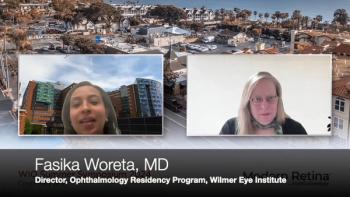
Fasika Woreta, MD, spoke about shattering glass ceilings in ophthalmology, highlighting the importance of diversity, mentorship, and empowering women in leadership roles within the field during her WIO Honorary Lecture and Award.
Hannah Chiu, MD, FRCSC, highlights some of the early benefits of an AI-operated telephone call system for postoperative patient care.
Stephanie Marioneaux, MD, gives insight into the inspiration and research discussed in her talk “First in Medicine: An African American perspective from 1700 to 1940" as the Patricia Bath Distinguished Lecture at the National Medical Association's annual conference in New York City, NY.
M. Roy Wilson, MD, touches upon reconceptualizing the use of race in medicine as part of his Robert Copeland Distinguished Lecture at the National Medical Association's annual conference in New York City, NY.
Scott Walter, MD, an investigator in the TENAYA and LUCERNE trials discusses the year 2 data for the treat-and-extend regimen of faricimab for the treatment of nAMD and DME.
Carl Danzig, MD, points out that the sooner patients can be diagnosed, the sooner ophthalmologists can treat them and preserve their vision.
Tom Ruggia, President and CEO of Samsara Vision, provides updates on the lead asset for late-state age-related macular degeneration: Smaller-incision, new generation, implantable miniature telescope (SING IMT).
At AAO 2022, Justis Ehlers, MD, presented a talk entitled, "Defining the Fluid Problem in Neovascular AMD: To Dry or Not to Dry?"
Roger A. Goldberg, MD, MBA, discusses his 2022 AAO poster: "T&E-Based Personalized Treatment Interval Dynamics in the YOSEMITE/RHINE Trials of Faricimab in DME."
Tunde Peto, MD, PhD, shares some ophthalmic initiatives she's excited about in light of EURETINA 2022.
Tunde Peto, MD, PhD, discussed two of her presentations at EURETINA 2022: "UK Biobank retinal imaging grading: methodology, baseline characteristics and findings for common ocular diseases" and "Retinal phenotyping of different variants of Alzheimer’s disease using ultra-widefield imaging."
Dara Conlon, Executive Vice President of EURETINA, and Prof. Anat Loewenstein, General Secretary of EURETINA, discuss some key features of this year's Congress.
Nancy Lurker, CEO of EyePoint Pharmaceuticals, shares the 12-month safety data from the DAVIO trial, investigating EYP-1901 for the treatment of wet age-related macular degeneration (AMD) and nonproliferative diabetic retinopathy.
Victor Gonzalez, MD, shares updates from the Phase 4 Paladin study regarding the safety and efficacy of fluocinolone in diabetic macular edema.
Claire Gelfman, PhD, Chief Scientific Officer of Foundation Fighting Blindness, supplies a brief overview of the foundation's aims and updates on retinal disease research.