

Murtaza K. Adam, MD, shares pearls on haptic docking, patient selection, and preventing complications with the Yamane technique.
Murtaza K. Adam, MD, shares pearls on haptic docking, patient selection, and preventing complications with the Yamane technique.

Omur Ucakhan, MD, explains why artificial tears are not interchangeable and how dry eye phenotype should guide formulation choice.
The epidemiology, inflammatory pathophysiology, diagnosis, and treatment of diabetic macular edema are discussed during Inflammatory Eye Disease Week.

Himani Goyal, MD, reviews a patient case and discusses what a multispecialty group is seeing in practice.

CLARITY program data show significantly longer time to treatment failure and higher rates of steroid-free quiescence vs placebo.
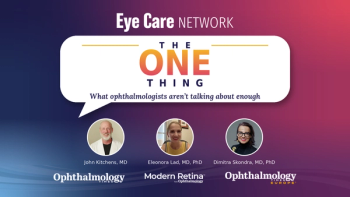
Eleonora Lad, MD, PhD, Dimitra Skondra, MD, PhD, and John Kitchens, MD, point to structure and function, diet and the gut, and the future of reimbursement.

Spectacle lenses with highly aspherical lenslets are safe and effective for reducing myopia progression in US children.

CHMP backs Accord Healthcare’s Lucentis biosimilar Fovlussea for nAMD, DMO, RVO and CNV ahead of an EC decision.

Andrew G. Lee, MD, and Drew Carey, MD, break down the link between optic neuritis and uveitis in central nervous system demyelinating disease.

Enrollment in the licaminlimab trial closed above target, with two-thirds of 176 patients carrying a TNFR1 variant associated with stronger treatment response. Topline data are expected around year-end 2026.
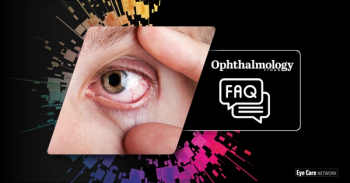
Prevent Blindness marks IED Week, October 19 to 25, as new therapies and pivotal trials reshape care for uveitis and thyroid eye disease.

Second phase 3 trial of Duravyu misses wet AMD noninferiority end point; EyePoint cuts 53% of staff to focus on DME.
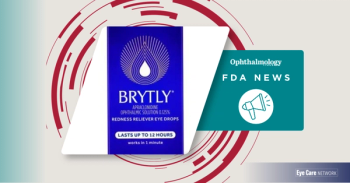
The nonprescription 0.125% apraclonidine drop is approved for adults and children 12 years and older, and Alcon says each dose whitens the eye for up to 12 hours.

Anat Galor, MD, MSPH, discusses subtyping dry eye, emerging diagnostic tools, and when to consider oral neuromodulation.

Interim 48-month data show 86% of patients with glaucoma or ocular hypertension remain off topical drops after a single cataract procedure, although the drop-free rate has eased from earlier timepoints.

Duravyu gained 2.5 letters vs 6.1 with aflibercept at week 52/56, missing noninferiority in a second phase 3 wet AMD trial.

Jordi Monés, MD, PhD, explains why RP and Stargardt data support testing son-vec to restore vision in advanced GA.
At AAO 2026, Anjum F. Koreishi, MD, shared how to prevent complications after cataract surgery in patients with uveitis.

Two phase 1 OSPREY cohorts of intravitreal STK-002 for ADOA are dosed; first safety and efficacy data are expected by mid-2027.
David F. Chang, MD, shares how to set realistic refractive IOL expectations and streamline patient counseling.
Timothy Janetos, MD, explained when to refer uveitis to a specialist and why access to uveitis care remains limited.
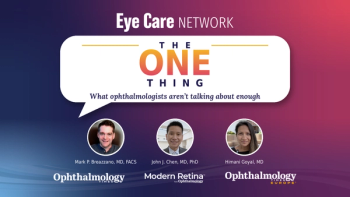
Himani Goyal, MD, John J. Chen, MD, PhD, and Mark P. Breazzano, MD, FACS, point to academic compensation, optic nerve damage, and who chooses retina.

A higher risk of central serous chorioretinopathy and serous pigment epithelial detachment are associated with varicose veins.

Ryzumvi gained a presbyopia indication in adults based on the phase 3 VEGA-2 and VEGA-3 trials, adding a pharmacologic option for optometrists managing near vision loss.

LUGANO missed its visual noninferiority endpoint for the vorolanib insert vs aflibercept in nAMD despite comparable anatomic control. Regillo attributes the gap partly to 9 outliers with vision loss unrelated to nAMD.

Enspryng is the first subcutaneous, at-home treatment option for TED and the first interleukin (IL)-6 receptor inhibitor approved in the indication.

Noab Banoub, a third year medical student, describes his journey into medicine and his view of ophthalmology's future.

OT Roundup covers the optogenetics Nobel Prize, remigromig in DME with Veeral Sheth, MD, Stargardt disease and a total human eye transplant.

Eclipse Life Sciences reports that its biodegradable 6-month fluocinolone acetonide implant met its primary safety end point and beat the dexamethasone implant on visual and anatomic measures at 24 weeks.

Vaidehi Dedania, MD, discussed surgical advances, candidates, and how far whole eye transplant is from clinical use.