
















Interventional Glaucoma
Latest News
Advertisement
CME Content
Advertisement

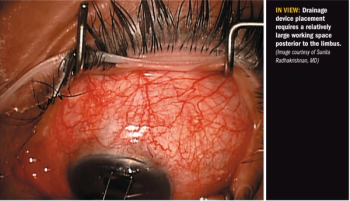
Orbital and adnexal anatomy and pathology can affect IOP and its measurement as well as planning of glaucoma surgery, and these structures can be affected by medical and surgical treatment of glaucoma
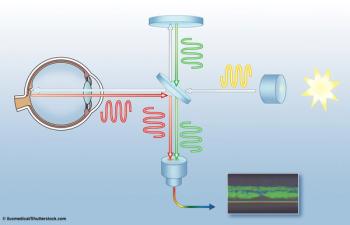
Optical coherence tomography angiography is finding new uses in glaucoma, as it can depict loss of blood vessels around the optic nerve and distinguish vascular layers.
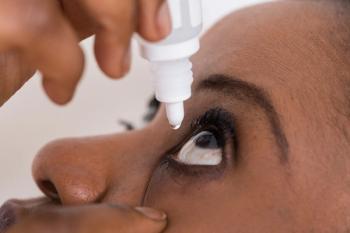

Here's how your practice can utilize Facebook to reach out and spread the word about how you can help people with glaucoma.
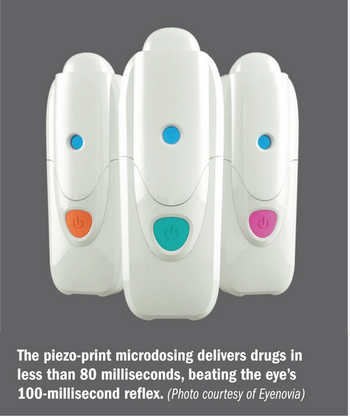
The piezo-print microdosing delivers drugs in less than 80 milliseconds, beating the eye’s 100-millisecond reflex.

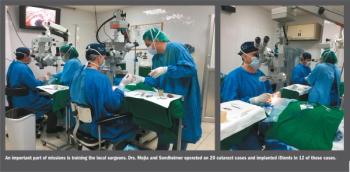

As more microinvasive glaucoma surgery (MIGS) procedures become available, surgeons are faced with decisions on adoption of new techniques.

In a small study, a combination over-the-counter supplement with antioxidant and mitoprotective properties significantly reversed mitochondrial dysfunction.
Results from MERCURY-1, a 12-month phase III pivotal trial, show that once daily treatment with fixed-dose combination netarsudil 0.02%/latanoprost 0.005% (Aerie Pharmaceuticals) is safe and provided significantly greater IOP-lowering than either of its components throughout follow-up.
Know the patient’s family history of glaucoma, and conduct a comprehensive exam before LASIK procedure. It is crucial to monitor the patient after surgery; watch for interfact cysts, loose flaps, and pressure-induced interlamellar stromal keratitis.
Jonathan S. Myers, MD, reports that intraocular drug delivery systems could help solve the problem of poor adherence in patients taking glaucoma medications. Implanted in the eye, the systems would allow for glaucoma drugs to gradually dissolve or elute medication.
Compared with SLT, PSLT appears to offer some advantages, such as a shorter duration of treatment and more comfort for patients.
Steven Vold, MD, reports that toric IOLs provide an accurate, safe, and convenient way to correct astigmatism and uncorrected distance vision for glaucoma patients, while patients wanting presbyopic correction have IOL options to fit a range of visual needs.
Until now, surgery has been considered a second-line treatment after medication and lasers because of the risks associated with trabeculectomy and tube shunts. Now ophthalmologists can draw from a larger surgical tool chest, explains Iqbal Ike K. Ahmed, MD.
Advances in phacoemulsification are creating new opportunities for glaucoma surgery, especially in developing countries, according to Alan S. Crandall, MD.
One laboratory is at work on new devices that use visual stimuli to prompt retinal ganglion cells to regenerate, while two other researchers describe techniques through which virtual reality might diagnose the disease more accurately than standard automated perimetry.
One laboratory is at work on new devices that use visual stimuli to prompt retinal ganglion cells to regenerate, while two other researchers describe techniques through which virtual reality might diagnose the disease more accurately than standard automated perimetry.
In addition to making use of MIGS, interventional glaucoma might utilize other novel drainage devices and sustained drug-delivery devices and be combined with cataract surgery. This approach is more proactive, aims at lower IOP, lowers risk and addresses adherence, said Iqbal Ike K. Ahmed, MD.
Glaucoma 360, a three-day event being held here by the Glaucoma Research Foundation (GRF), will move from its "Celebrate" phase with Annual Gala on Thursday into its "Innovate" phase with the New Horizons Forum set for today. This event is a full day of presentations, panels, and discussions featuring leaders from start-up companies, industry executives, ophthalmic experts, venture capitalists, and the FDA.
Glaucoma 360, a three-day event organized by the Glaucoma Research Foundation (GRF) will move into its final day on Saturday with the Glaucoma Symposium. The focus will shift from "Innovate" to "Educate." Two continuing medical education sessions are-one for ophthalmologists in the morning and another for optometrists in the afternoon.
Advertisement
Advertisement
Trending on Eye Care Network - Ophthalmology Times
1
FDA approves subcutaneous Enspryng for TED
2
FDA approves phentolamine ophthalmic solution 0.75% (Ryzumvi) for presbyopia
3
OT Roundup: Optogenetics Nobel Prize, BRUNELLO, DRAGON, eye transplant
4
Introducing Noah Banoub: The medical student’s path from church pews to the retina clinic
5