



Cornea
Latest News
Advertisement
Video Series
CME Content













Advertisement

The endorsement follows FDA approval in the United States this summer

Esen K. Akpek, MD, discussed her presentation at this year's American Academy of Ophthalmology meeting, covering recent advancements in artificial corneas

Researchers conducted a study on 145 patients with night vision problems, testing the effects of 0.75% phentolamine ophthalmic solution

No two corneal ulcers are alike, but if they are large and centrally located, the common denominator is that time is of the essence

For clinicians, the evolution of treatment is as much a responsibility as an opportunity

The approach to lowering intraocular pressure reduces medication burden without risking graft rejection
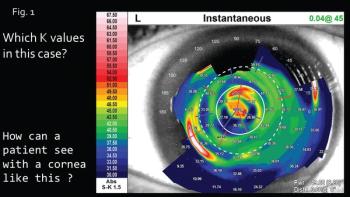
Sequential customised therapeutic keratectomy (SCTK) improves visual quality by eliminating superficial corneal high order aberrations

The future of refractive surgery is bright, thanks to OCTs and advances in laser technology
In a conversation at ESCRS, the CEO said by 2028, Aurion Biotech hopes to see global registration for its corneal endothelial disease therapies.

One of AI’s most promising applications: new diagnostic algorithms
Surgeon discusses latest trends for treating cornea

To heighten precision, use total keratometry, not imaginary numbers
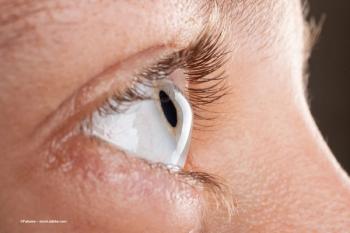
A recent study demonstrates the safety and efficacy of treating eyes with cross-linking after keratoconus relapses following keratoplasty.
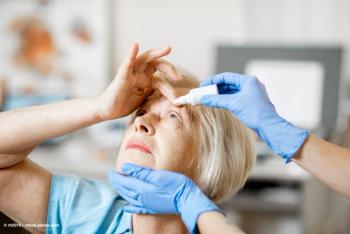
The use of topical insulin eye drops led to a successful resolution of PEDs in 9 of 11 cases in the study.

Jorge L. Alió, MD, PhD, FEBOphth, shared his pearls situations in which a patient presents with a cataract and corneal opacity at the European Society of Ophthalmology Conference, Prague.

Scientists hope to develop novel AI solutions for the prediction of DPN using corneal OCT images.
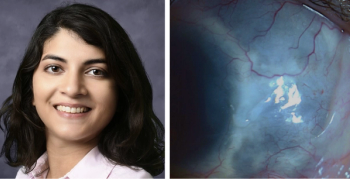
Dr Zeba A. Syed emphasises the importance of performing surgery sooner rather than later for patients with Pseudomonas scleritis

Ground-breaking treatment for bullous keratopathy approved in Japan

According to Bausch + Lomb and Novaliq, MIEBO is the first prescription eye drop approved for dry eye disease that directly targets tear evaporation, based on consistent results from a pair of pivotal Phase 3 trials.
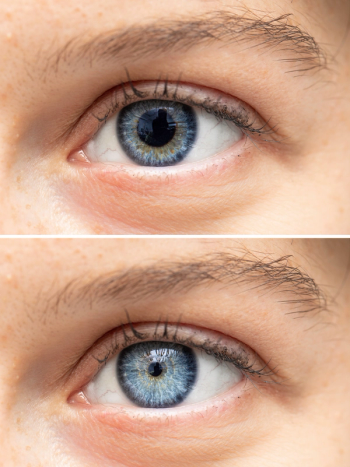
The announcement represents the first FDA-approved, fixed-combination of tropicamide and phenylephrine for mydriasis, according to the company.

Physician outlines latest emerging technologies to treat condition

A colourful look at how the keratopigmentation technique offers therapeutic and cosmetic applications.

The Eye Rubbing Cycle Study yields cautions for patients with keratoconus and ocular surface disease.

Regenerative technologies are providing an influx of options.
Patient centricity an important driver in topical development.
Advertisement
Advertisement
Trending on Eye Care Network - Ophthalmology Times
1
One day, three approvals: FDA expands options for ocular redness, thyroid eye disease, and presbyopia
2
Matching artificial tears to dry eye phenotype: a Q&A with Omur Ucakhan, MD
3
Diabetic macular edema: an inflammatory disease in focus
4
Teprotumumab and TED: Sarah Cheng, MD, PhD, on orbital tissue changes
5