

















Cataract & Refractive
Latest News
Advertisement
CME Content
Advertisement
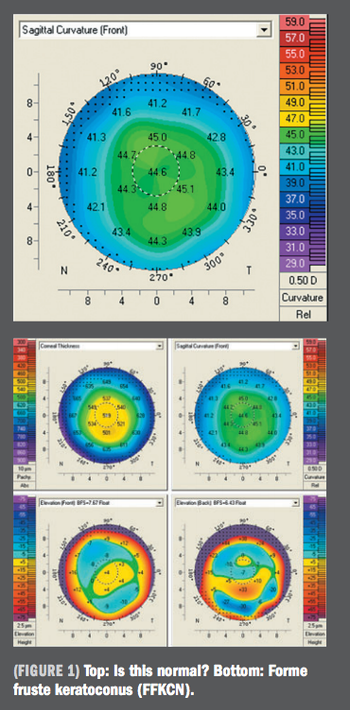

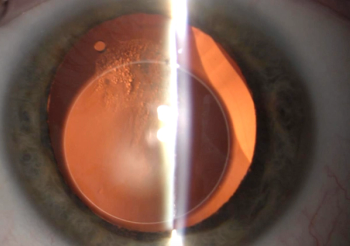
There is a strong link between alpha-blocking medications and floppy iris.
Clear lens exchange with implantation of a trifocal IOL is the best solution.
OCT-based biometers like the ARGOS allow for accurate measurement of very dense lenses in cataractous patients.
A new method for predicting the behaviour of multifocal IOLs has been developed. This methodology could be very useful for ophthalmologists, enabling them to know the potential effect of the implantation of an IOL in any type of eye prior to implantation.

The management of astigmatism can be accomplished during cataract surgery. Employing femtosecond lasers improves the accuracy, safety and predictability of arcuate incisions, as well as the alignment of toric IOL placement.
Professor Gerd U. Auffarth and collegues have found that ophthalmic viscoelastic devices that combine both dispersive and cohesive properties, so that they can be used in sequence and at the appropriate phases of cataract surgery, can result in decreased complications, low adverse events, improved visibility and good space management.
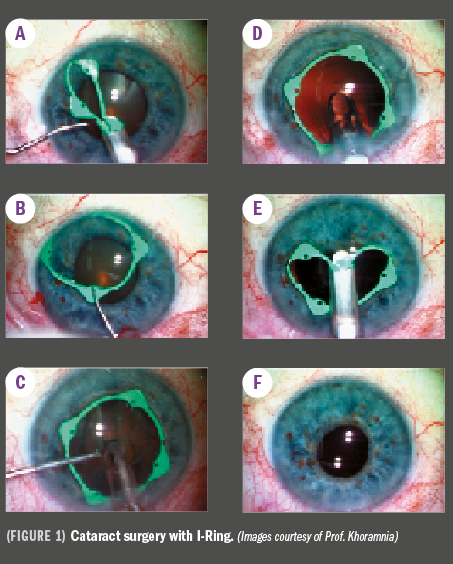
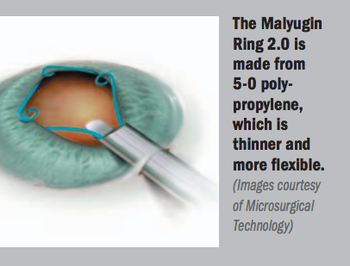
The second-generation Malyugin ring is a versatile pupil expansion ring with high efficacy in femtosecond laser-assisted cataract surgery. Professor Boris Malyugin notes its advantages, having used it on a variety of classically difficult eyes and in complicated surgical cases.
Ongoing case series is revealing small-incision lenticule extraction to be better than surface ablation (SA) for all myopic laser corrections. However, SA still is useful in patients with thin corneas and therapeutic indications, according to Prof. Suphi Taneri.
Diabetes doubles the risk of cataract in the general population, with an even greater increased risk among people aged under 70, according to researchers.
The Malyugin ring is a safe alternative to traditional pupil-expansion approaches in cataract surgery. Here, best practice for safe surgery and a case study are described
Cataract surgery increases the risk of diabetic macular oedema (DMO), medical records from the United Kingdom suggest. An analysis of 4,850 eyes showed that the rate of DMO requiring treatment spiked about 4 months after the surgery.

During the XXXV Congress of the ESCRS, an international panel of expert FLACS users gathered to share their research and insights, and to learn from the experiences of their colleagues.
Research shows that enhancement rates after LASIK range from approximately 7.8% to 20%, with regression of approximately 1 diopter after 10 years.
Corneal epithelial thickness mapping may become an easy and objective tool in the diagnosis of biomechanically unstable corneas and perhaps a multitude of anterior segment disorders.
As another year comes to an end, five members of Ophthalmology Times Europe’s Editorial Advisory Board reflect and share their perspectives on the exciting opportunities that lie ahead for ophthalmologists in 2018, whilst also considering the potential challenges.
A combination of a topical corticosteroid and a nonsteroidal anti-inflammatory drug (NSAID) is more effective than either one alone in reducing the risk of cystoid macular oedema (CME) after cataract surgery in nondiabetic patients, researchers say.
Advertisement
Advertisement
Trending on Eye Care Network - Ophthalmology Times
1
Alvotech files first known aflibercept 8 mg biosimilar with EMA
2
AAO 2026: How to become an ocular pain detective in dry eye
3
AAO 2026: Tinlarebant in Stargardt disease: Jacque Duncan, MD, on DRAGON results
4
AAO 2026: Vamikibart shows sustained gains in uveitic macular edema as FDA accepts BLA
5