

The concerns of October 10, 1857, sound remarkably familiar today.
The concerns of October 10, 1857, sound remarkably familiar today.

Hove stresses surgeons who prescribe premium lenses or laser surgery to patients should be willing to have those same treatments themselves when needed.
Hove explains how his own cataract surgery has changed the way he counsels patients about glare, halos, and near vision.

Waste, cost, and carbon are converging to reshape how cataract centers choose instruments.
Private practice fellowships sharpen cataract and refractive skills with high volume, new tech, and hands-on practice management mentorship.

The annual Best Hospitals report from US News & World Report compares more than 4500 hospitals across 14 specialties and 22 procedures and conditions.
New real-world data from ASRS 2026 show nearly 40% of wet AMD patients go 180+ days without anti-VEGF treatment within a year, and treatment gaps are linked to worse long-term vision.

Ophthalmology is projected to face one of the steepest physician shortages of any subspecialty by 2038.
Host Deborah Ristvedt, DO, welcomes Vance Thompson, MD, to discuss how prioritizing people has shaped the culture and growth of Vance Thompson Vision.
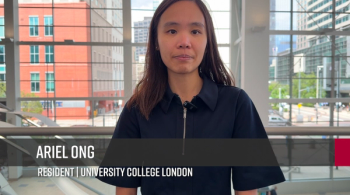
Ariel Ong, a fellow from University College London, discussed her ARVO poster, looking at her work on developing a scalable pipeline for data extraction from ophthalmic clinical letters and what significance that could have in managing patients.


An ophthalmology resident shares insights from experiences across Mexico, Europe, and the US.
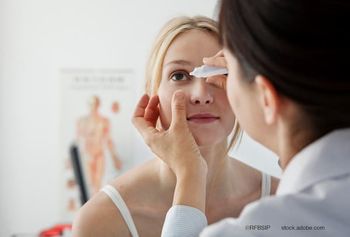
Paula Anne Newman-Casey, MD, MS, explains the multifactorial needs and her decades-long research that resulted in the SEE program for glaucoma patients.

Healthcare staff face splashes, aerosols, chemicals and lasers daily; ANSI-rated eye protection and better compliance prevent most workplace injuries.

James Tsai, MD, MBA, discusses his approaches given the wide diversity of patients in a major urban setting when awareness of glaucoma can range from highly educated patients to uninformed individuals.

Analysis of 20 years of data highlights differences in reimbursement trends across ophthalmology subspecialties and practice settings, according to Dustin D. French, PhD.

OpZira’s product portfolio includes AdaptDx Pro and the NOVA Vision Testing System.

Virtual reality and artificial intelligence are reshaping medical education.

The goal is to provide an end-to-end operating system that unifies clinical, operational, and financial workflows.
In episode 1, Bill Trattler, MD, shares practical advice on documentation, patient communication, keratoconus management, and advanced lens technology.


Survey reveals severe impact of Good Days underfunding on retina practices, with many patients experiencing vision loss due to delayed access to care.

The annual Best Hospitals report from US News & World Report compares more than 4500 hospitals across 15 specialties and 22 procedures and conditions.

Patients express mixed feelings about AI in health care, favoring its use for documentation and administrative tasks while demanding transparency and safety standards.

Changing demographics and increasing trial complexity present challenges and opportunities.


Explore the challenges and strategies of private practice management, focusing on financial sustainability and patient care in today's healthcare landscape.

The partnership will integrate Ocuco’s optical software solution, Acuitas 3, with Nextech’s Ophthalmic Platform.

To create lasting change, ophthalmology must embrace the impact of sponsorship and advocacy—empowering the next generation of leaders with not just knowledge, but the opportunities to excel.

A retrospective study showed that the gender of the ophthalmologist influenced the amount of communication with the patient, and that the pandemic had an impact.