

Kenneth C. Fan, MD, MBA, shared 4-year REMAIN data showing durable vision gains with MCO-010 in retinitis pigmentosa.
Kenneth C. Fan, MD, MBA, shared 4-year REMAIN data showing durable vision gains with MCO-010 in retinitis pigmentosa.

John A. Hovanesian, MD, discusses the Armenian Eyecare Project’s annual trip, from preparation and surgery to teaching and student involvement.

At AAO 2026, Michael T. Yen, MD, reviewed REVEAL-1 efficacy and hearing safety data for subcutaneous elegrobart in active TED.

John J. Chen, MD, PhD, of Mayo Clinic discusses how NMOSD and MOGAD antibodies are changing optic neuritis care and the two trials now enrolling.

Twice-daily clobetasol 0.05% cleared cells in 26.5% vs 8.6% of patients and pain in 75.1% vs 32.4% after cataract surgery, with no added endothelial cell loss.

Initial phaco for angle-closure glaucoma climbed to 48.4% in adults 50 and older, while surveys and IRIS data show shifting trabeculectomy and JOAG surgical patterns.

Liangbo Linus Shen, MD, shared phase 2 data showing kamuvudine K8 reduced geographic atrophy growth by 54%.

A cataract expert discussed if postoperative topical antibiotics add protection after intracameral prophylaxis.
Donald J. D’Amico, MD, presents 1-year pivotal results comparing a Wnt pathway agonist with ranibizumab in diabetic macular edema.

Mark J. Gallardo, MD, discusses how the laser performed alongside cataract surgery in open-angle glaucoma, including medication burden and safety.

Oral PKC inhibitor darovasertib preserved the eye in 57% of patients facing enucleation and cut projected radiation doses in 70.3% in the phase 2 OptimUM-09 trial.
Drew Carey, MD, and Andrew G. Lee, MD, discuss triage, visual fields, double vision, and cataract topics from Neuro-Ophthalmology Subspecialty Day.

Noguchi FS formula error was 0.280 D in 486 eyes, LAL piggyback cut residual cylinder to 0.1 D, and Yamane and Gore-Tex fixation showed distinct complication profiles.

At AAO 2026 Retina Subspecialty Day, SriniVas Sadda, MD, outlined limits of current GA growth metrics and introduced border advancement pace and a location-weighted GA severity score.

In the phase 3 RESTORE-3 trial of 116 Chinese participants, the anti-IGF-1R antibody produced a 60.4% proptosis response rate vs 23.5% with placebo at week 24.

The concerns of October 10, 1857, sound remarkably familiar today.

At the American Academy of Ophthalmology (AAO) 2026 Retina Subspecialty Day in New Orleans, Charles C. Wykoff, MD, PhD, presented 1-year primary end point results from the phase 3 DAYBREAK trial.

A glaucoma expert addressed the connection between systemic blood pressure, intraocular pressure, and glaucoma.

Stuart Therapeutics Inc. submitted an investigational NDA amendment to the FDA to study ST-100 (vezocolmitide) in corneal wound healing.

Michel Michaelides, MD, discusses phase 3 DRAGON results showing that oral tinlarebant slowed atrophic lesion growth by about 36% in adolescents with Stargardt disease.

A single intravitreal injection improved acuity in Stargardt disease; a randomized trial in geographic atrophy is planned.

A handful of eye care providers spoke on the factors that have led to a lack of eye care access for World Sight Day.

Long-term data from the GLK-202-03 extension study show a sustained 1.9 D improvement in Kmax after a single epithelium-on cross-linking treatment, with no serious or treatment-related adverse events reported.

Lloyd Williams, MD, PhD, discusses rising cataract blindness and low-cost surgery in conflict zones for World Sight Day.

Arun C. Gulani, MD, introduces a keratoconus classification based on what prevents vision: visual, structural, or salvage.

A solo surgeon explains how automation replaced his front desk, scheduling, and billing staff.
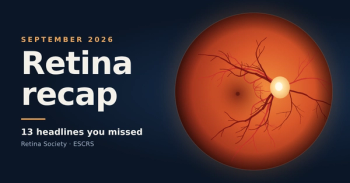
Pivotal wet AMD, DME, and XLRP readouts; the MOGENRY BLA; and Retina Society, EURETINA, and ESCRS highlights from September.

The Wilmer Eye Institute's new Glaucoma Division chief discusses mentoring junior faculty, multicenter trials, and optic nerve regeneration.

At EURETINA 2026, Jordi Monés, MD, PhD, outlined the rationale for gene-agnostic optogenetic therapy MCO-010 to restore vision in Stargardt disease and geographic atrophy.

September was one of the busiest months of the year in eye care—From ESCRS to Eyecon