
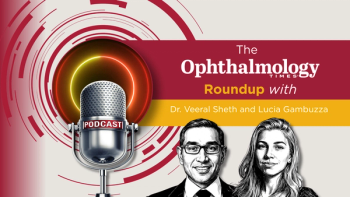
OT Roundup covers the optogenetics Nobel Prize, remigromig in DME with Veeral Sheth, MD, Stargardt disease and a total human eye transplant.
OT Roundup covers the optogenetics Nobel Prize, remigromig in DME with Veeral Sheth, MD, Stargardt disease and a total human eye transplant.
Eclipse Life Sciences reports that its biodegradable 6-month fluocinolone acetonide implant met its primary safety end point and beat the dexamethasone implant on visual and anatomic measures at 24 weeks.

Vaidehi Dedania, MD, discussed surgical advances, candidates, and how far whole eye transplant is from clinical use.
At AAO 2026, Adam, MD, shares Yamane technique pearls, from docking the trailing haptic to preventing tilt and haptic exposure.

AVT29, filed as a line extension to Mynzepli, reaches EMA before its phase 3 comparative trial in DME reads out in mid-2027.
Anat Galor, MD, MSPH, explains how to tell whether dry eye pain stems from the nerves or the tear film and how to target it.
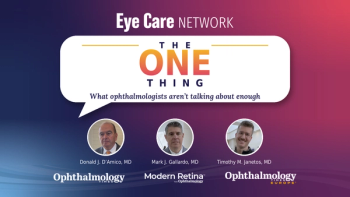
Timothy M. Janetos, MD, Donald J. D’Amico, MD, and Mark J. Gallardo, MD, point to uveitis access, clinical trial rigor, and procedural pharmaceuticals.
At AAO 2026, Michael T. Yen, MD, explained how at-home subcutaneous elegrobart could ease treatment burden in thyroid eye disease.

Uveitis is uncommon, but it causes a disproportionate share of visual morbidity.

Discover how IRIS Registry real-world data turns EHR notes and images into evidence that speeds ophthalmology trials, recruitment, safety studies, and post-approval insights.
Liza M. Cohen, MD, explains when to use CT vs MRI in thyroid eye disease and why to review images yourself.
Anjum F. Koreishi, MD, explains why inflammation control and planning are key to cataract surgery for patients with uveitis.

FDA accepts vamikibart BLA for UME as data show sustained gains at 1 year; decision July 2027.

Liangbo Shen, MD, discussed unmet needs in geographic atrophy and how implants could ease treatment burden.

FDA advisers review SYD-101, low-dose atropine 0.01% for pediatric myopia, on Oct 30 after a 2025 complete response letter.
Ehsan Rahimy, MD, says most PRIMA serious adverse events occurred early, while vision gains held through 36 months.
David F. Chang, MD, explained how offering complementary refractive IOLs reduces patient anxiety and indecision.
Vaidehi Dedania, MD, shared what the first whole eye transplant revealed about reperfusion, retinal cells, and sight.
Timothy Janetos, MD, outlined can’t-miss uveitis diagnoses, warning signs, and why every new patient needs dilation.
Anti-VEGF for ROP is not associated with systemic and neurodevelopmental outcomes.

The evidence for nutrition in eye care is strong for some conditions and thin or absent for others.
A successful premium outcome depends not only on the lens, but also on how well the patient understands what to expect before surgery.

Jacque Duncan, MD, reviews phase 3 DRAGON data on oral tinlarebant for Stargardt disease and its mechanism-related visual effects.

Kenneth C. Fan, MD, MBA, shared 4-year REMAIN data showing durable vision gains with MCO-010 in retinitis pigmentosa.

John A. Hovanesian, MD, discusses the Armenian Eyecare Project’s annual trip, from preparation and surgery to teaching and student involvement.
At AAO 2026, Michael T. Yen, MD, reviewed REVEAL-1 efficacy and hearing safety data for subcutaneous elegrobart in active TED.
John J. Chen, MD, PhD, of Mayo Clinic discusses how NMOSD and MOGAD antibodies are changing optic neuritis care and the two trials now enrolling.
Twice-daily clobetasol 0.05% cleared cells in 26.5% vs 8.6% of patients and pain in 75.1% vs 32.4% after cataract surgery, with no added endothelial cell loss.
Initial phaco for angle-closure glaucoma climbed to 48.4% in adults 50 and older, while surveys and IRIS data show shifting trabeculectomy and JOAG surgical patterns.
Liangbo Linus Shen, MD, shared phase 2 data showing kamuvudine K8 reduced geographic atrophy growth by 54%.