


Conference Coverage
Trending on the Eye Care Network
1
RCA releases first State of Retina Care report
2
OT Roundup ep. 1: ADHD's eye link, MOGENRY's BLA, and myopia news
3
FAQ: What retina specialists need to know about the MOGENRY (MCO-010) BLA acceptance
4
Vienna calling: Inside the 26th EURETINA Congress
5
How screen time and eyelid health affect dry eye risk
Latest News

Sep 19, 2026 | News
Vienna calling: Inside the 26th EURETINA Congress

The association between atrial fibrillation and the eye
Sep 16, 2026

Bausch + Lomb's SeeLyra femtosecond laser earns European CE mark
Sep 15, 2026

ESCRS 2026: When "dry eye” isn’t dry eye: a case-based look at corneal neuropathic pain
Sep 13, 2026

ESCRS 2026: The eye as a window into ADHD: emerging evidence and practical implications
Sep 13, 2026







Advertisement
Shorts
0:56
ESCRS 2026: Why retinal measurements can be wrong
2 days ago

0:39
ESCRS 2026: What makes a good candidate for aceclidine drops?
4 days ago
1:03
Intra-Operative OCT During Glaucoma Surgeries
6 days ago
0:50
Building a low-level light therapy workflow
7 days ago
1:08
AI's growing role in ophthalmology screening and outcomes analysis
8 days ago

0:40
Dr. Radhika Rampat: AI in practice today
9 days ago
0:33
Fast ocular surface stabilization with dry eye lubricating drop: Piotr Wozniak, MD
a month ago
0:36
Redefining surgical success as "20/happy"
2 months ago
0:58
How ectoine's molecular shield protects the ocular surface
2 months ago
0:41
Counseling low myopes before cataract surgery: C. Ellis Wisely, MD, MBA
2 months ago
Digital Edition

Ophthalmology Times Europe
Waste, cost and carbon are converging to reshape how cataract centres choose instruments.

Ophthalmology Times Europe
Why AI-driven functional imaging could change how clinicians assess and treat retinal disease

Ophthalmology Times Europe
David E. I. Pyott, CBE, MD(Hon), MBA, MA, discusses expanding subspecialty training and internationally recognized credentials in underserved regions.

Ophthalmology Times Europe
Charlie Zhang, MD, reflects on the rising incidence, diagnostic challenges and multidisciplinary management of immune checkpoint inhibitor–associated uveitis

Ophthalmology Times Europe
AI models predicting retinal function from OCT could transform geographic atrophy assessment in clinical care and trials

Ophthalmology Times Europe
Two cases highlight the diagnostic challenges of Demodex blepharitis and underscore the unmet need for approved targeted therapies in the United Kingdom.

Ophthalmology Times Europe
Utilize oral agents, diet and glucose monitoring systems when
acting to preserve vision

Ophthalmology Times Europe
New pathways are reshaping the management of retinal disease
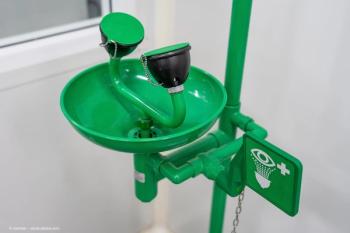
Ophthalmology Times Europe
Immediate flushing of the eye can significantly reduce long-term damage after chemical exposure

Ophthalmology Times Europe
After accounting for key factors like eye length, researchers found no meaningful differences in corneal biomechanics between primary open-angle and primary angle-closure glaucoma.
Podcasts



Continuing Medical Education




Advertisement
All News
Advertisement
Mingo-Botín, MD, PhD, discusses ESCRS 2026 data on an EDOF IOL in post-LASIK eyes vs non-LASIK controls.

The 44th Congress of the ESCRS kicked off at ExCeL London with iNovation Day and the Opening Ceremony, setting the stage for a five-day programme.
Handheld IC1000 pairs rebound tonometry with camera-guided alignment

Ahead of the 44th ESCRS Congress in London, a look at the presbyopia-correcting IOL, glaucoma and dry eye disease research on this year's scientific programme.
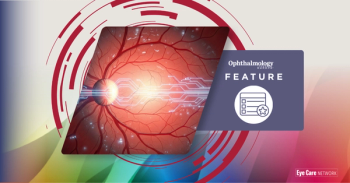
New research covers a 3D OCT foundation model, an OCTA biomarker review and offline smartphone screening for three retinal diseases.

A gamified program may speed the brain’s adjustment, new data suggest.

When to retest for inherited retinal dystrophies
Published: | Updated:
João Pedro Marques, MD, PhD, on how systematic reanalysis moved a cohort's solved rate from 59.4% to 70.1% and what it means for gene therapy eligibility

A systematic review of 21 studies found OCTA detects early diabetic retinopathy—reduced vessel density being the most consistent biomarker—but heterogeneous, unstandardized evidence isn't sufficient for routine clinical screening yet.

Japan designated gildeuretinol an orphan drug for Stargardt disease as the oral therapy enters phase 3 evaluation in the NORTHSTAR trial.

A preclinical study of the effects of aflibercept (Eylea, Regeneron Pharmaceuticals) and faricimab (Vabysmo-svoa, Genentech) showed that the two treatments were equal in their ability to maintain or restore the retinal endothelial barrier function and resultant visual integrity. Investigators attributed this result mainly to inhibiting vascular endothelial growth factor A165 from binding to its receptor.
Advertisement
Matias Iglicki, MD, PhD, on patient selection, technical pitfalls and why symmetry decides outcomes in flanged vs sutured fixation
Researchers in the UK have developed a new treatment approach for aniridia-related keratopathy (ARK), a rare genetic ocular disease, namely, a collagen scaffold that delivers limbal epithelial stem cells and stromal stem cells to the area affected by ARK. The treatment resulted in improved ocular surface scores and visual acuities.

AI model beats human graders at spotting glaucoma risk in UK population retinal photos, boosting accuracy and strengthening the case for scalable AI vision screening.

A maternal high-fat diet can negatively affect the retinal structure in mice.
In this Q&A from EDES 2026 in Milan, Piotr A. Woźniak, MD, PhD, discusses his real-world evidence study on a dry eye lubricating drop, including its effects on tear film stability.
Advertisement
Advertisement