
Opinion|Videos|April 23, 2026
Safety and Clinical Implications of OTX-TKI in Neovascular AMD
Author(s) Arshad M. Khanani, MD, MA, FASRS
Dr. Khanani reviews 52-week safety outcomes, noting Axpaxli was generally well tolerated with no cases of endophthalmitis or retinal vasculitis.
Advertisement
Episodes in this series
Dr. Khanani reviews 52-week safety outcomes, noting Axpaxli was generally well tolerated with no cases of endophthalmitis or retinal vasculitis. All inflammation events were mild to moderate, vasculitis-negative, and resolved with topical therapy. Vitreous floaters occurred more frequently (12.4% vs. 1.2% with aflibercept), likely reflecting hydrogel dissolution during drug release around weeks 30–36, with no impact on vision, cataract formation, or inflammation risk. He then integrates the full dataset, emphasizing sustained visual acuity maintenance, strong anatomic control, and reduced need for rescue treatment alongside a manageable safety profile. Axpaxli is positioned as a first-in-class tyrosine kinase inhibitor with extended durability of 9–12 months, addressing real-world undertreatment in neovascular AMD. He concludes by noting SOL-1’s unique FDA SPA design, emphasizing that its outcomes should be interpreted within a regulatory trial framework rather than standard clinical practice expectations.
This video series has been produced independently by Ophthalmology Times and supported by Ocular Therapeutix. The following presentation discusses OTX-TKI - an investigational product candidate that has not been approved by the FDA or any other regulatory body
Advertisement
Related to this article

In this Q&A, Ping Moore, OD, covers emerging dry eye therapies, from selenium sulfide to next-gen cyclosporine, and how subtype-guided care shapes treatment choices.

Ophthalmology is projected to face one of the steepest physician shortages of any subspecialty by 2038.

Two investigational pipeline therapies take aim at the root causes of dry eye disease

The RMAT designation opens the door to a faster development pathway for EO2002 as a minimally invasive alternative to corneal transplantation, while Emmecell also advances a cell therapy for geographic atrophy.
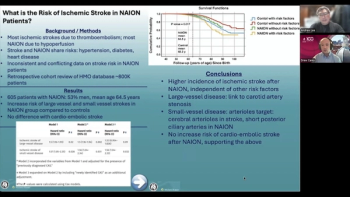
Andrew G. Lee, MD, and Drew Carey, MD, discuss findings from a retrospective study examining ischemic stroke risk in patients with non-arteritic anterior ischemic optic neuropathy and the implications for vascular risk factor management.

Length and width, not thickness, emerge as key drivers of higher-order aberrations.

What the approval of a second targeted biologic means for patients, practice, and the evolving TED treatment landscape

Three real-world cases illustrate strategies to identify and manage GA across a range of scenarios, from coexisting wet age-related macular degeneration to functionally monocular patients.
Advertisement
Advertisement
Trending on Eye Care Network - Ophthalmology Times
1
FDA approves subcutaneous Enspryng for TED
2
AAO 2026: Vamikibart shows sustained gains in uveitic macular edema as FDA accepts BLA
3
OT Roundup: Optogenetics Nobel Prize, BRUNELLO, DRAGON, eye transplant
4
EC-104 outperforms Ozurdex in phase 2 BETTIS-1 trial for anti-VEGF–resistant DME
5