

Opinion|Videos|June 29, 2026
Personalized Treatment with Faricimab in Retinal Vascular Diseases
Clinical and real-world faricimab data reshape DME treatment strategies, highlighting durability, drying benefits, and when switching therapies may improve outcomes.
Advertisement
Episodes in this series
In “Personalized Treatment with Faricimab in Retinal Vascular Diseases,” our panel explores how clinical trial findings and real-world experience with faricimab are shaping treatment strategies for retinal vascular diseases, particularly diabetic macular edema (DME) and diabetic retinopathy (DR). The panelists discuss how faricimab’s dual inhibition of VEGF-A and Ang-2 may provide unique benefits for certain patient populations and highlight the growing interest in more personalized approaches to anti-VEGF therapy selection.
Throughout the discussion, the expert faculty review differences in clinical trial design between faricimab studies and aflibercept 8 mg trials, emphasizing that dosing interval strategies and treatment paradigms cannot always be directly compared across programs. The panel highlights data suggesting that faricimab may provide enhanced retinal drying and additional benefit in patients with inflammatory disease features, particularly in diabetic eye disease. The expert faculty also discuss post-hoc analyses evaluating fluorescein angiography findings, intraretinal hyperreflective foci, and epiretinal membranes as potential indicators of disease biology and therapeutic response.
The panel further explores how clinicians currently approach therapy selection in the absence of definitive biomarkers that predict which patients may respond better to VEGF inhibition alone versus multi-targeted therapy. The expert faculty note that switching between therapies remains an important strategy when patients do not achieve desired anatomical or visual outcomes. In addition, the discussion highlights the future potential of artificial intelligence and advanced retinal imaging to better characterize disease subtypes and guide individualized treatment decisions in retinal vascular disease management.
Our next episode, “Dosing Frequency Across Retinal Vascular Diseases,” features the panelists discussing how clinicians individualize dosing intervals and maintenance strategies for patients with retinal vascular diseases. The expert faculty also highlight the growing role of patient expectations, treatment burden, and long-term disease control in guiding real-world anti-VEGF management decisions.
Advertisement
Related to this article

In this Q&A, Ping Moore, OD, covers emerging dry eye therapies, from selenium sulfide to next-gen cyclosporine, and how subtype-guided care shapes treatment choices.
Ophthalmology is projected to face one of the steepest physician shortages of any subspecialty by 2038.

Two investigational pipeline therapies take aim at the root causes of dry eye disease

The RMAT designation opens the door to a faster development pathway for EO2002 as a minimally invasive alternative to corneal transplantation, while Emmecell also advances a cell therapy for geographic atrophy.
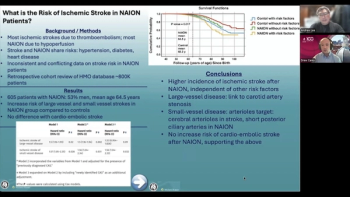
Andrew G. Lee, MD, and Drew Carey, MD, discuss findings from a retrospective study examining ischemic stroke risk in patients with non-arteritic anterior ischemic optic neuropathy and the implications for vascular risk factor management.
Length and width, not thickness, emerge as key drivers of higher-order aberrations.

What the approval of a second targeted biologic means for patients, practice, and the evolving TED treatment landscape

Three real-world cases illustrate strategies to identify and manage GA across a range of scenarios, from coexisting wet age-related macular degeneration to functionally monocular patients.
Advertisement
Advertisement
Trending on Eye Care Network - Ophthalmology Times
1
Matching artificial tears to dry eye phenotype: a Q&A with Omur Ucakhan, MD
2
Brepocitinib meets all Phase 3 end points in noninfectious uveitis
3
Myopia control using spectacle lenses with highly aspherical lenslets
4
Demodex blepharitis: Diagnosis, treatment response, and recurrence
5