

Opinion|Videos|June 29, 2026
Dosing Frequency Across Retinal Vascular Diseases
How faricimab reshapes DME care: trial vs real-world durability, Ang2/VEGF clues, when to switch, and how AI-guided OCT may help.
Advertisement
Episodes in this series
This episode, titled “Dosing Frequency Across Retinal Vascular Diseases,” features panelists discussing how clinicians determine dosing frequency and long-term treatment strategies for patients with retinal vascular diseases, including AMD, diabetic macular edema (DME), and retinal vein occlusion (RVO). The expert faculty explore how loading doses, disease activity, retinal fluid recurrence, and patient-specific factors guide interval extension and maintenance therapy decisions in clinical practice.
Throughout the discussion, the panel highlights how many retina specialists continue to use treat-and-extend strategies with next-generation anti-VEGF therapies while gradually extending patients at two-week intervals based on OCT findings and disease control. The expert faculty discuss the importance of maintaining durable disease suppression while carefully balancing the risks of undertreatment and recurrent retinal fluid. In addition, the panel examines how newer long-term clinical trial data have increased clinician confidence in extending some patients to Q18- or Q20-week dosing intervals when disease activity remains well controlled.
The panel also explores the growing role of patient preference in treatment decision-making, particularly as direct-to-consumer advertising and awareness of extended-duration therapies continue to increase. The expert faculty discuss how patient expectations regarding durability and injection frequency must be balanced with real-world treatment outcomes and individualized disease behavior. In addition, the discussion highlights ongoing uncertainty surrounding treatment discontinuation strategies, including when maintenance therapy may be safely reduced or stopped across different retinal vascular diseases. Overall, the conversation emphasizes the importance of individualized treatment planning that considers both clinical findings and patient-centered goals in long-term retinal disease management.
In the next episode, “Safety Considerations in Retinal Vascular Diseases,” panelists will discuss how retina specialists monitor and manage safety considerations associated with anti-VEGF therapy, including intraocular pressure changes and glaucoma risk. The expert faculty will also highlight practical strategies used to minimize treatment burden while optimizing long-term patient safety and disease control.
Advertisement
Related to this article

In this Q&A, Ping Moore, OD, covers emerging dry eye therapies, from selenium sulfide to next-gen cyclosporine, and how subtype-guided care shapes treatment choices.

Ophthalmology is projected to face one of the steepest physician shortages of any subspecialty by 2038.

Two investigational pipeline therapies take aim at the root causes of dry eye disease

The RMAT designation opens the door to a faster development pathway for EO2002 as a minimally invasive alternative to corneal transplantation, while Emmecell also advances a cell therapy for geographic atrophy.
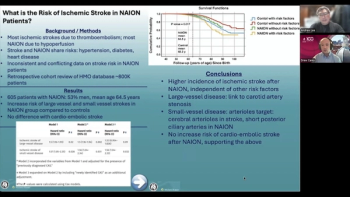
Andrew G. Lee, MD, and Drew Carey, MD, discuss findings from a retrospective study examining ischemic stroke risk in patients with non-arteritic anterior ischemic optic neuropathy and the implications for vascular risk factor management.

Length and width, not thickness, emerge as key drivers of higher-order aberrations.

What the approval of a second targeted biologic means for patients, practice, and the evolving TED treatment landscape

Three real-world cases illustrate strategies to identify and manage GA across a range of scenarios, from coexisting wet age-related macular degeneration to functionally monocular patients.
Advertisement
Advertisement
Trending on Eye Care Network - Ophthalmology Times
1
Matching artificial tears to dry eye phenotype: a Q&A with Omur Ucakhan, MD
2
Brepocitinib meets all Phase 3 end points in noninfectious uveitis
3
Myopia control using spectacle lenses with highly aspherical lenslets
4
Demodex blepharitis: Diagnosis, treatment response, and recurrence
5