
Opinion|Videos|March 7, 2026
Cost, coverage, and access challenges in geographic atrophy treatment
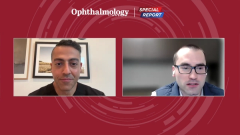
Joseph Anaya, MD, and Ashkan Abbey, MD, discuss the financial barriers facing patients with geographic atrophy, including Medicare coverage limitations, out-of-pocket costs, and the role of assistance programs such as Good Days in expanding treatment access.
Advertisement
In the final episode of this Special Report series, Joseph A. Anaya, MD, MBA, and Ashkan M. Abbey, MD, FASRS, FAAO, discuss financial access and real-world considerations surrounding treatment for geographic atrophy (GA), focusing on insurance coverage, patient affordability, and how clinicians approach conversations about treatment value.
Cost remains a legitimate concern for many patients, particularly given the chronic and progressive nature of GA. The disease can cause substantial functional impairment, including declines in reading ability, loss of driving independence, increased fall risk, and greater reliance on caregivers. Abbey explains that delaying central involvement, even by a year or a year and a half, may provide meaningful value for patients and the health care system. However, financial barriers within the current insurance infrastructure often complicate treatment access.
For patients with Medicare coverage but without supplemental insurance, out-of-pocket costs can be significant. Abbey explains that both available therapies are expensive, and patients with only Medicare Part B or Medicare Advantage coverage may face costs of approximately $400 to $450 per eye per treatment. For patients requiring treatment in both eyes, this can approach $800 to $900 every one to two months.
Historically, clinicians have relied on nonprofit financial assistance programs such as Good Days to help cover the remaining costs not paid by Medicare. Abbey notes that funding from Good Days has frequently run out quickly in recent years, limiting access for many patients. More recently, the program created a separate funding pool for non-vascular retinal diseases, including GA and MacTel, which may help improve access as additional funds are directed specifically toward these conditions, Abbey notes. However, the program is still ramping up, and some patients remain on waiting lists for approval.
Abbey notes that if patients must personally cover the full out-of-pocket cost, he often advises against starting treatment, noting that paying $800 to $900 regularly is generally not sustainable without financial assistance. Instead, he typically helps patients enroll in the Good Days program and proceeds with treatment if coverage is approved.
Despite these challenges, the clinicians highlight that therapies for GA represent an important step forward. Although current evidence demonstrates stronger anatomic outcomes than functional visual improvements, having an available treatment marks a meaningful shift in managing a disease that previously offered few options for patients.
Ashkan M. Abbey, MD, FASRS, FAAO, is in practice at Texas Retina Associates in Dallas, Texas, and director of clinical research. He is a speaker and consultant for Apellis Pharmaceuticals, Inc and Astellas Pharma Inc.
Joseph A. Anaya, MD, MBA, is assistant professor of ophthalmology at Wilmer Eye Institute at Johns Hopkins University School of Medicine in Baltimore, Maryland. He has no relevant financial disclosures.
Advertisement
Related to this article

The RMAT designation opens the door to a faster development pathway for EO2002 as a minimally invasive alternative to corneal transplantation, while Emmecell also advances a cell therapy for geographic atrophy.

Three real-world cases illustrate strategies to identify and manage GA across a range of scenarios, from coexisting wet age-related macular degeneration to functionally monocular patients.

In a preference study, Csaky and colleagues found that lesion growth rate reduction was the primary driver of GA treatment decisions among US retina specialists, with greater risk tolerance for foveal-threatening lesions.

In this Q&A, Ping Moore, OD, covers emerging dry eye therapies, from selenium sulfide to next-gen cyclosporine, and how subtype-guided care shapes treatment choices.

Ophthalmology is projected to face one of the steepest physician shortages of any subspecialty by 2038.

Two investigational pipeline therapies take aim at the root causes of dry eye disease
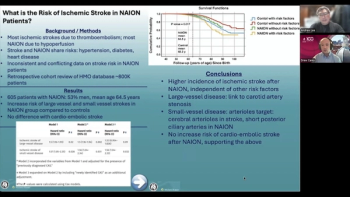
Andrew G. Lee, MD, and Drew Carey, MD, discuss findings from a retrospective study examining ischemic stroke risk in patients with non-arteritic anterior ischemic optic neuropathy and the implications for vascular risk factor management.
Patients with polyendocrine metabolic ovarian syndrome have higher ocular disease prevalence.
Advertisement
Advertisement
Trending on Eye Care Network - Ophthalmology Times
1
AAO 2026: BRUNELLO 1-year results for remigromig in DME
2
AAO 2026: Optogenetic gene therapy heads to phase 2 trial in geographic atrophy
3
AAO 2026: MCO-010 sustains vision gains in RP through 4 years
4
Real-world VOYAGER data on faricimab in nAMD, DME, RVO at EURETINA 2026
5