

Oral QA102 shows imaging signals slowing drusen and GA progression in intermediate dry AMD at ARVO 2026, despite missing its primary end point.
Oral QA102 shows imaging signals slowing drusen and GA progression in intermediate dry AMD at ARVO 2026, despite missing its primary end point.

Bausch + Lomb's PreserVision AREDS3 combines the established AREDS2 micronutrient formula with a B-vitamin complex.

Avacincaptad pegol may help preserve driving-related vision in geographic atrophy, but post hoc data did not reach statistical significance.
Ashkan Abbey, MD, reviews findings from the DAVIO2 and VERONA clinical trials for the bioerodible intravitreal insert.

Michigan pediatric ophthalmologist advances childhood glaucoma care with longer-lasting Ahmed valves, Ologen, and new clues on prematurity glaucoma.

Liliana Werner, MD, PhD, joins Douglas D. Koch, MD, for a discussion on the properties, limitations, and future of IOL materials

Transient vision loss may foreshadow stroke or heart events; study urges urgent 90-day evaluation and long-term cardiovascular monitoring.

Three cases illustrate how earlier, proactive intervention can reduce medication burden and preserve vision across a range of glaucoma severity.

Two years after LASIK, hidden corneal nerve loss and immune activation persist, with higher IL‑16 and faster T‑cell motion despite normal exams.

Swiss regulator backs tinlarebant for Stargardt as DRAGON phase 3 shows slower retinal atrophy, bringing first treatment closer to patients.

Investigators noted the patient's symptoms "reliably abated when she played the oboe or when she sang, only to return immediately after stopping.”

The app is designed to improve confidence among neurology and ophthalmology trainees.
Sunil S. Patel, MD, PhD, of the University of Texas Southwestern Medical Center, breaks down QA102's first-in-class mechanism targeting harmful gut bacteria and retinal inflammation, what the phase 2 drusen volume and GA growth rate data reveal about the therapy's potential, and what a phase 3 program must address to bring an oral AMD treatment to patients without options.

Biogen buys Apellis, taking over Syfovre for geographic atrophy—what it means for GA care, trial data, safety signals, and future formulations.
Ultra-widefield pediatric retinal scans plus adaptable AI reveal hidden eye issues during routine visits, enabling comfortable, scalable screening and earlier specialist referrals.

Danish JAMA Dermatology trials show short-term topical or oral corticosteroids don’t raise intraocular pressure, easing glaucoma worries in atopic dermatitis care.
Siegfried G. Priglinger, MD, FEBO, weighs in on the emerging rationale for gas-free, position-free macular hole surgery using an ILM flap.

New Turkish study links sleeve gastrectomy weight loss to clearer cornea and lens, lower eye pressure, and widened anterior chamber in 6 months.

Patricio G. Schlottmann, MD, examines why injection frequency drives treatment failure in wet AMD and the particular challenges facing patients in Latin America.

Caveolin‑1 is a membrane-associated protein expressed in many cell types that plays a key role in modulating inflammatory signaling.

Victor M. Villegas, MD, discusses supraorbital vibration as an adjunct to topical anesthesia in a high-volume retina practice.

Posture, operating room setup, and small workflow adjustments can reduce cumulative neck and back strain over time.
Jay Chhablani, MD, on multimodal imaging, OCT biomarkers, and the importance of early diagnosis as treatment options emerge
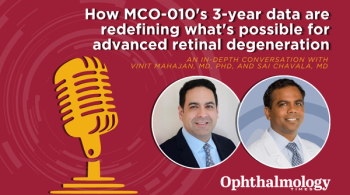
Two leading retinal specialists break down MCO-010's 3-year efficacy and safety data, the significance of contralateral eye findings, and how this gene-agnostic optogenetic approach could fill a critical gap for patients with advanced inherited retinal degeneration who have limited treatment options.
Jay Chhablani, MD, a retina specialist from UPMC Vision Institute and director of the Choroidal Analysis and Research Lab at the University of Pittsburgh, discussed recent advancements in choroidal imaging.

Matias Iglicki, MD, PhD, discusses why internal limiting membrane peeling deserves greater consideration in carefully selected patients with DME.

Uveitis expert Nisha Acharya, recipient of ARVO’s Mildred Weisenfeld Award, discusses how clinical trials and big data are reshaping treatment, vaccination, and vision outcomes.

Charlie Zhang, MD, reflects on the rising incidence, diagnostic challenges, and multidisciplinary management of immune checkpoint inhibitor–associated uveitis.

Wireless brain implant taps visual cortex to deliver artificial sight, marking third successful surgery and recruiting volunteers for trials.

Avacincaptad pegol may help preserve driving-related vision in geographic atrophy, but post hoc data did not reach statistical significance.