

Topcon Healthcare launches IDHea, an innovative platform enhancing AI research and ocular data access to improve clinical outcomes in healthcare.
Topcon Healthcare launches IDHea, an innovative platform enhancing AI research and ocular data access to improve clinical outcomes in healthcare.

Utilizing artificial intelligence (AI), Cascader is a new medical technology company that aims to transform the detection and management of eye disease.

A study reveals that repeated anti-VEGF injections for AMD do not alter retinal vascular metrics over time, ensuring treatment stability.

The phase 2 clinical trial data evaluating the efficacy, safety, and dosing intervals of high-dose IBI302 were presented during the annual 2025 ARVO meeting.


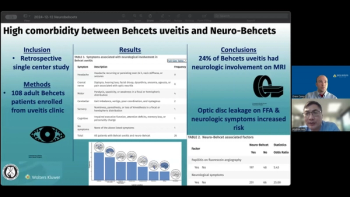
In cases with optic nerve hyperfluorescence or neurologic symptoms, prompt neuroimaging is warranted to rule out neuro-Behcet disease and guide multidisciplinary management.
Jennifer Lim, MD, FARVO, FASRS, discusses her ARVO presentation on sickle cell retinopathy, highlighting improvements in retinal surgery techniques and instrumentation.
Katherine Talcott, MD, a retina specialist at Cleveland Clinic, presented findings on EYP-1901 in the phase 2 DAVIO study.
The trial will assess allogeneic retinal pigment epithelium cells in the treatment of geographic atrophy.
In this Q&A, Luke Lindsell, OD, MD, shares his insights on emerging therapies in retina, the evolving role of optometrists in retinal disease management, and the importance of comanagement in patient care.
The first SightLine meeting, held pre-ASCRS, reveals insights on physician-industry relationships, mentorship opportunities, and the practical applications of AI in healthcare.

Opus Genetics reveals promising 1-year results from OPGx-LCA5 gene therapy, showing sustained vision improvements in adults with LCA5 retinal degeneration.
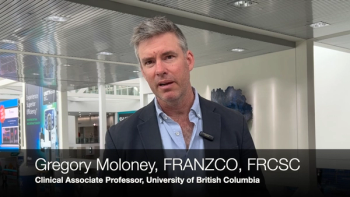
Research findings compare the rotational stability of a monofocal plus toric IOL with traditional toric lenses
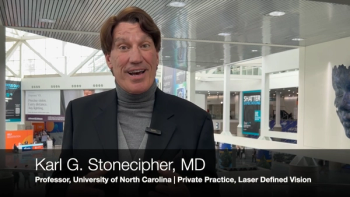
Outcomes from high myopia LASIK using the Teneo laser platform demonstrate strong visual stability and patient satisfaction, with reduced dysphotopsias and minimal reliance on cycloplegia or nomograms.

New research reveals subretinal drusenoid deposits as potential indicators of serious heart disease, highlighting the need for ophthalmologists to screen patients effectively.

The preclinical data was presented during the 2025 ARVO meeting.
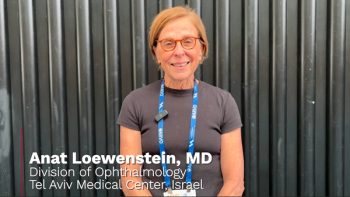
Prof Loewenstein and a cohort of colleagues assessed the current treatment outlook for patients with diabetic retinopathy
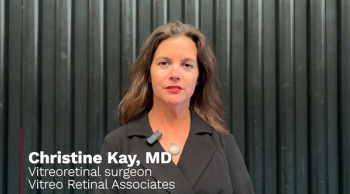
The PRISM clinical trial assesses 4D-150 (4D Molecular Therapeutics) in adults with neovascular age-related macular degeneration, also known as wet AMD.
In an analysis of the IRIS database, investigators assessed almost 1,200 eyes that had been treated with faricimab.

KIO-104 is a therapeutic candidate shown to significantly reduce retinal scar formation.


Members of the Ophthalmology Times Europe, Ophthalmology Times and Modern Retina editorial advisory boards are present and presenting at the 2025 ARVO meeting

Wendy Lee, MD, MS, shares how she integrates aesthetic and functional care in oculoplastics.
At the ARVO 2025 Annual Meeting in Salt Lake City, Utah, Nimesh Patel, MD, presented on the LUCIA and LUGANO phase 3 pivotal trials for EYP-1901 against aflibercept for the treatment of wet macular degeneration.
At the ARVO 2025 meeting in Salt Lake City, Utah, Cameron Cummings presented a poster on how retinal microvascular imaging metrics may show sex-specific biomarkers for Parkinson's disease.
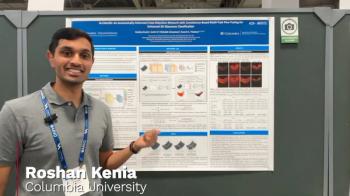
Roshan Kenia presented a poster on how AI-CNet3D enhances glaucoma classification using cross-attention networks while improving interpretability and performance in OCT scan analysis.