
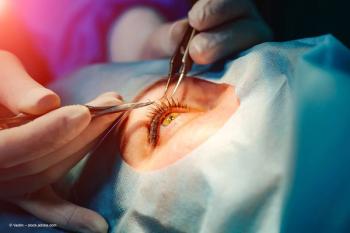
Looking at innovative tools and their applications in different disease states can help to think creatively about ways to benefit patients in retina care.
Looking at innovative tools and their applications in different disease states can help to think creatively about ways to benefit patients in retina care.
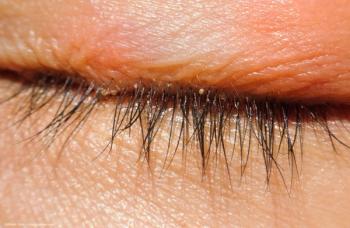
Timely diagnosis and personalized treatment are key to improving visual outcomes.

FLIO ushers clinicians from structural to functional imaging, said Robert Sergott, MD, in a presentation at the International SPECTRALIS Symposium

With detailed imaging and cognitive data, the Northern Ireland Cohort for the Longitudinal Study of Aging highlights the potential of integrating eye scans into broader health research.

Optical coherence tomography markers—like the ellipsoid zone—are reshaping clinical trials in intermediate age-related macular degeneration, as highlighted at the 2025 International SPECTRALIS Symposium — And Beyond (ISS).

Ainnova has collaborated with leading pharmacies to offer free diabetic retinopathy screenings to patients with diabetes.

Advanced monitoring strategies are overcoming significant obstacles in retinal care, as highlighted at the 2025 International SPECTRALIS Symposium — And Beyond (ISS).


In the second of two video interviews from the International SPECTRALIS Symposium, Prof Malik emphasises the importance of corneal imaging

The trial treated 9 patients in 3 sequential, ascending dose-level (DL) cohorts.

The LYNX LIO is the latest generation of pattern scanning lasers that were first introduced in 2006.


The Tecnis Odyssey, launched in the US in October 2024, is now available in Europe, the Middle East and Canada

Fluorescence lifetime imaging ophthalmoscopy is emerging as a valuable tool to reveal previously hidden links between retinal changes and systemic disease.

The center aims to optimize patients' vision with a range of cataract and corneal refractive procedures and minimize reliance on glasses and contacts.

Aldeyra had received 2 complete response letters (CRL) from the FDA in April 2025 and November 2023 for past submissions.

Investigators take an in-depth look at all aspects of the technology.

Deep learning discerns IIH, NAION, and normal eyes using single fundus image.

The phase 2/3 clinical trial for OCU410ST will enroll 51 participants diagnosed with Stargardt disease.

A mutation-agnostic gene therapy approach offers new possibilities for patients with advanced retinal disease.

The report highlights clinical successes, innovation, research, and patient outcomes.
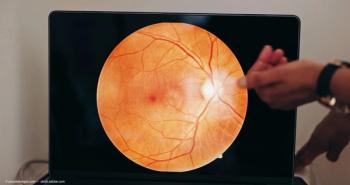
A study reveals significant retinal vessel changes in diabetic retinopathy, highlighting the need for early detection methods to prevent vision loss.

The LYNX LIO is the latest generation of pattern scanning lasers that were first introduced in 2006.

NASA’s development of autonomous eye imaging technologies for astronauts aboard the International Space Station is paving the way for remote, high-quality eye care both in deep space and underserved regions on Earth.

Prof Baljean Dhillon advocated for remote practices and provided advice for implementation at the International SPECTRALIS Symposium

Anat Loewenstein, MD, presented real-world results of remote imaging at the International SPECTRALIS Symposium

Catch up on this week's highlights in retina.

Dinah Zur, MD, shares insights from her International SPECTRALIS Symposium lecture

Advanced autofluorescence reveals cellular pigment reservoirs with therapeutic potential at the Heidelberg 2025 International SPECTRALIS Symposium – And Beyond (ISS).

Funding will support the continued clinical advancement of its lead ocular implant candidate, PA5108, for the reduction of IOP in patients with ocular hypertension and glaucoma.