

China approves ZEISS ARTEVO 750 and 850 ophthalmic microscopes, expanding 3D digital visualization and iOCT-ready workflows for cataract and retinal surgery.
China approves ZEISS ARTEVO 750 and 850 ophthalmic microscopes, expanding 3D digital visualization and iOCT-ready workflows for cataract and retinal surgery.
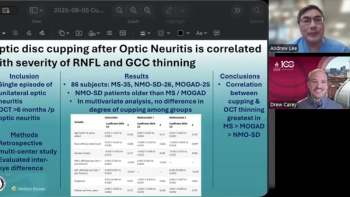
Andrew G. Lee, MD, and Drew Carey, MD, discuss how optic disc cupping after optic neuritis reflects nerve and ganglion cell thinning, not disease type, helping distinguish it from glaucoma.

Metformin, a common diabetes medication, may be associated with less development of intermediate age-related macular degeneration (AMD).

Early first-in-human results suggest Ocumetics’ accommodating IOL shows short-term safety and improved uncorrected distance vision, but data remain limited and preliminary.

Family-friendly format empowers continuing education.


MTII tracking in geographic atrophy reveals central macula preservation and predicts vision loss better than lesion area, shaping future trial endpoints.
NYU Grossman’s Preeya Mehta, MD, and Jonathan S. Williams, MD, sit down with Mount Sinai’s Louis R. Pasquale, MD, to discuss long-term safety and efficacy data from a PreserFlo microshunt trial and the role of microshunts in glaucoma surgery.
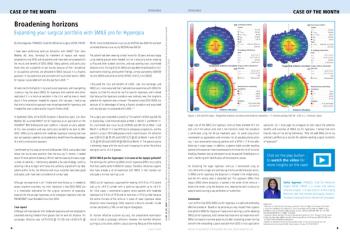
Discover how Dr. Smita Agarwal expanded her refractive portfolio with ZEISS SMILE pro for hyperopia, and why this flapless approach delivered excellent outcomes for her first hyperopic patient.

Revisyon is described as a device-led therapy that applies specific wavelengths of low-level LED light to the crystalline lens through a non-invasive, in-clinic procedure.
Marta Pazos, MD, PhD, examined the role of optical coherence tomography, artificial intelligence, and clinical evaluation in early glaucoma management.
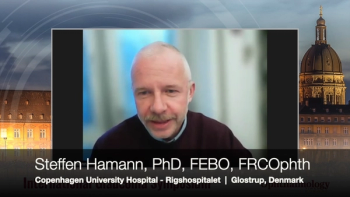
Steffen Hamann, PhD, FEBO, FRCOphth, discusses how optic disc drusen can mimic glaucoma and discussed evolving imaging and research strategies.

Proactive strategies enhance comfort, adherence, and long-term glaucoma control
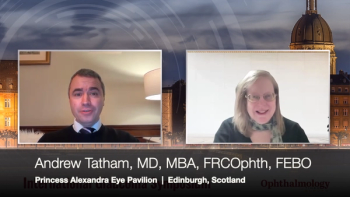
Andrew Tatham, MD, MBA, FRCOphth, FEBO, outlines the role of micro-invasive glaucoma surgery alongside established glaucoma procedures, focusing on safety, patient selection, and future directions.

AI is reshaping clinical practice in retinal imaging and workflow optimization, according to Priv.-Doz. Dr. med. Jan H. Terheyden, FEBO.

Prof. Dr. Luís Abegão Pinto outlines how real-world datasets can improve artificial intelligence accuracy, reduce bias, and support clinical decision-making at scale.
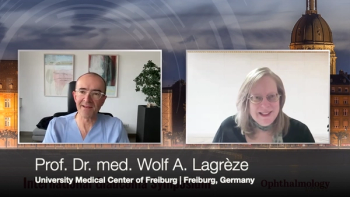
Prof. Dr. med. Wolf A. Lagrèze highlights the clinical role, limitations, and future potential of optical coherence tomography in glaucoma and neuro-ophthalmic disease.

Commercial OCT maps five IPL sublayers; aging reduces contrast, hinting at earlier biomarkers for glaucoma and Alzheimer’s.

Ahead of the 2nd International Glaucoma Symposium in Mainz, Germany, Stephan Schulz of Heidelberg Engineering outlines how the program blends everyday clinical challenges with advances in AI, imaging, and surgery.

As the 2nd International Glaucoma Symposium approaches in Mainz, Germany, Stephan Schulz highlights how the program bridges everyday clinical needs with the latest advances in AI, imaging, and surgery.

DTI-ALPS MRI tracks glymphatic flow changes in IIH, enabling noninvasive diagnosis and earlier protection against permanent vision loss.

Tenpoint Therapeutics’ YUVEZZI, projected to launch in the US in Q2 2026, represents the first fixed-dose combination eye drop developed to enhance near vision through pupil modulation with once-daily administration.

Expected in the US in Q2 2026, YUVEZZI from Tenpoint Therapeutics is the first fixed-dose combination eye drop formulated to enhance near vision via pupil modulation with once-daily use.

Tenpoint Therapeutics’ YUVEZZI, expected in the US in Q2 2026, is the first fixed-dose combination drop designed to improve near vision via pupil modulation with once-daily dosing.

FDA feedback backs urcosimod’s Phase 2b/3 plan for neuropathic corneal pain, defining a meaningful pain endpoint in an unmet field.

Glaukos noted under the updated labeling, physicians may now re-administer iDose TR more than once in patients who maintain a healthy cornea, as defined by corneal endothelial cell density parameters.

Belite Bio completes enrollment in phase 2/3 DRAGON II clinical trial evaluating tinlarebant for the treatment of Stargardt disease type 1 (STGD1).

The trial is evaluating OPGx-MERTK gene therapy for MERTK-related retinitis pigmentosa (RP).

New research compares 7 HA dry eye drops; Ivizia and Thealoz Duo most closely match natural tear viscosity during blinking.
The trial will evaluate the safety and effectiveness of the company's titratable glaucoma therapy system, designed to optimize IOP reduction in patients undergoing glaucoma surgery.