

A retrospective study from a UK tertiary centre reports satisfactory visual and topographic outcomes in patients monitored and treated by optometrists and nurse practitioners.
A retrospective study from a UK tertiary centre reports satisfactory visual and topographic outcomes in patients monitored and treated by optometrists and nurse practitioners.

In this interview from the 2026 Retina World Congress, Katherine Talcott, MD underscores that retinal vein occlusions (RVOs) should prompt retina specialists to look beyond the eye and ensure patients are connected to primary care and cardiology. She highlights the importance of systemic risk factor management and interdisciplinary coordination as essential components of comprehensive RVO care.

The incision-free, image-guided femtosecond laser system targets the trabecular meshwork to reduce IOP without entering the eye. Prof. Gus Gazzard discusses the technology, the patient experience and the potential for earlier interventional glaucoma treatment

Therini Bio begins a phase 1b DME trial of THN391, an intravitreal antibody targeting fibrin-driven retinal inflammation.

The next-generation FSYX ocular pressure adjusting pump adds wireless connectivity to transmit patient usage data to prescribing practices.

Findings from an 856-patient analysis suggest that evaluating GA topography beyond foveal involvement may better capture patient-reported functional impairment.

Off-label use of laboratory-grade dye preparation found to harbor Sarocladium kiliense beyond the sterilizing capacity of standard filtration.

The FDA's OND found substantial evidence of effectiveness for bevacizumab-vikg in nAMD, clearing the way for a BLA resubmission in June 2026 and a decision expected within 60 days.

Learning Brazilian Portuguese boosts brain resilience and may delay dementia symptoms, but a humorous lesson highlights the realities of health care paperwork and waiting rooms.

The device, described in a new study, uses a technique called temporal interference-based transcorneal electrical stimulation, or TI-TES.

The FDA's OND found substantial evidence of effectiveness for bevacizumab-vikg in nAMD, clearing the way for a BLA resubmission in June 2026 and a decision expected within 60 days.

Multimodal imaging, OCT biomarkers, and the case for early diagnosis as treatment options emerge for macular telangiectasia.

NUS researchers report that plant-based photosynthetic nanoparticles restored corneal NADPH levels and reversed damage within 5 days in preclinical dry eye.

Oral QA102 shows imaging signals slowing drusen and GA progression in intermediate dry AMD at ARVO 2026, despite missing its primary end point.

Bausch + Lomb's PreserVision AREDS3 combines the established AREDS2 micronutrient formula with a B-vitamin complex.

Avacincaptad pegol may help preserve driving-related vision in geographic atrophy, but post hoc data did not reach statistical significance.

Ashkan Abbey, MD, reviews findings from the DAVIO2 and VERONA clinical trials for the bioerodible intravitreal insert.

Michigan pediatric ophthalmologist advances childhood glaucoma care with longer-lasting Ahmed valves, Ologen, and new clues on prematurity glaucoma.

Liliana Werner, MD, PhD, joins Douglas D. Koch, MD, for a discussion on the properties, limitations, and future of IOL materials

Transient vision loss may foreshadow stroke or heart events; study urges urgent 90-day evaluation and long-term cardiovascular monitoring.

Three cases illustrate how earlier, proactive intervention can reduce medication burden and preserve vision across a range of glaucoma severity.

Two years after LASIK, hidden corneal nerve loss and immune activation persist, with higher IL‑16 and faster T‑cell motion despite normal exams.

Swiss regulator backs tinlarebant for Stargardt as DRAGON phase 3 shows slower retinal atrophy, bringing first treatment closer to patients.

Investigators noted the patient's symptoms "reliably abated when she played the oboe or when she sang, only to return immediately after stopping.”

The app is designed to improve confidence among neurology and ophthalmology trainees.

Sunil S. Patel, MD, PhD, of the University of Texas Southwestern Medical Center, breaks down QA102's first-in-class mechanism targeting harmful gut bacteria and retinal inflammation, what the phase 2 drusen volume and GA growth rate data reveal about the therapy's potential, and what a phase 3 program must address to bring an oral AMD treatment to patients without options.

Biogen buys Apellis, taking over Syfovre for geographic atrophy—what it means for GA care, trial data, safety signals, and future formulations.
Ultra-widefield pediatric retinal scans plus adaptable AI reveal hidden eye issues during routine visits, enabling comfortable, scalable screening and earlier specialist referrals.
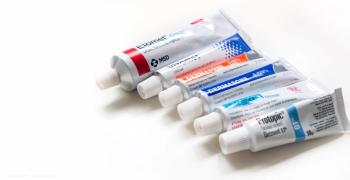
Danish JAMA Dermatology trials show short-term topical or oral corticosteroids don’t raise intraocular pressure, easing glaucoma worries in atopic dermatitis care.
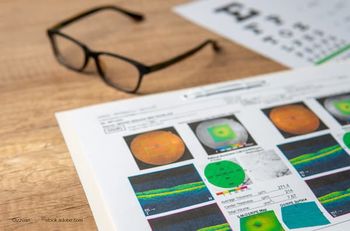
Siegfried G. Priglinger, MD, FEBO, weighs in on the emerging rationale for gas-free, position-free macular hole surgery using an ILM flap.