

Arshad M. Khanani, MD, MA, discusses phase 3 SOL-1 data showing axitinib sustained vision in wet AMD for 9-12 months after 1 dose, outperforming aflibercept 2 mg.
Arshad M. Khanani, MD, MA, discusses phase 3 SOL-1 data showing axitinib sustained vision in wet AMD for 9-12 months after 1 dose, outperforming aflibercept 2 mg.

Applying phase 3 LUGANO/LUCIA criteria to the phase 2 DAVIO 2 population showed stable vision and anatomy with the vorolanib insert EYP-1901 in wet AMD, Aleksandra Rachitskaya, MD, FASRS, reported at ASRS 2026.

The multicenter study is evaluating ZOC2017217, a lanosterol-derived investigational eye drop, ahead of a planned phase 3 trial.

Rising star in Ophthalmology, Nicholas Riina, MS, focuses on artificial intelligence and uses robotics training to enhance glaucoma diagnosis.

OLN324 outperformed faricimab on anatomic outcomes as early as week 1 in the JADE trial, with no cases of intraocular inflammation across both dose groups.

The randomized, double-masked, 3-arm trial did not achieve its primary endpoint of replicating the visual function improvements observed in a smaller phase 1/2a study.

Initiating aflibercept 8 mg or faricimab as a first-line therapy was associated with longer treatment intervals and superior anatomic outcomes in a real-world analysis of more than 12,000 eyes.

In the latest episode of The Retina TL;DR with Dr. Weng, host Christina Y. Weng, MD, MBA, FASRS, talks with Dr. Brodie about a photovoltaic subretinal implant showing meaningful visual gains in patients with geographic atrophy due to AMD.

Cynthia Toth, MD, of Duke University, discusses new BabySTEPS research showing that retinal nerve fiber layer and choroidal thickness on OCT correlate with 2-year neurodevelopmental outcomes in preterm infants and what it will take to bring bedside screening into routine NICU care.

Dry eye care pivots to root-cause diagnosis and personalized biologics/devices,

The long-term outcomes after primary scleral buckling procedures for rhegmatogenous retinal detachments showed high anatomic success, improved vision, and a good safety profile.

A new survey has discovered a gap between the value parents place on children's vision and the comprehensive eye care that teens and young adults receive.

A recap of the FDA approvals, phase 3 readouts, and pipeline data that shaped diabetic eye disease care in the first half of 2026.

Esen Akpek, MD, on dry eye's emotional and vision-related toll, its hidden autoimmune links, and when to move patients beyond artificial tears.

The non-exclusive license agreement pairs Alcon's PCIOL optical designs with RxSight's post-operative light-adjustable platform, with the aim of allowing surgeons to fine-tune visual outcomes after cataract surgery.

Antineoplastics were the most frequently implicated drug class in review

Cascade Prodrug and Uneedle are partnering to test suprachoroidal delivery of CPD100 using Uneedle's Bella-Vue microneedle system for the treatment of wet AMD.

Cataract surgery becomes refractive: learn how IOL choices and preop counseling across distance, intermediate and near turn 20/20 into 20/happy.

The FDA issued a nationwide recall of a steroid eye drop.

From a phase 3 durability readout for a first-in-class TKI to a new interchangeable ranibizumab biosimilar and a deep dive into geographic atrophy management, June brought a wide-ranging mix of regulatory, clinical, and practice-pattern news for retina specialists

Findings from the third annual State of Dry Eye survey link symptom management to quality of life gains, including lower anxiety and improved self-confidence.

June brings FDA clearance for Lumvoa, key retina and glaucoma trials, device deals, and hard truths on AI performance in eye care.

Dry eye cases rise with heavy screen use and younger patients; learn modern workups spotlighting MGD, etiology-driven treatments, and collaborative care reshaping outcomes.

A successful Type B Rare Disease Evidence Principles meeting confirms the pivotal study design, opening a potential BLA pathway on 6-month efficacy data, with dosing expected to begin in the fourth quarter of 2026.

The RMAT designation opens the door to a faster development pathway for EO2002 as a minimally invasive alternative to corneal transplantation, while Emmecell also advances a cell therapy for geographic atrophy.
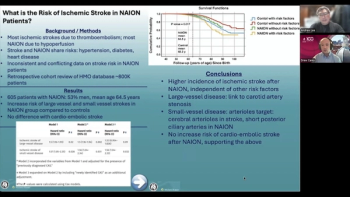
Andrew G. Lee, MD, and Drew Carey, MD, discuss findings from a retrospective study examining ischemic stroke risk in patients with non-arteritic anterior ischemic optic neuropathy and the implications for vascular risk factor management.

Patients with polyendocrine metabolic ovarian syndrome have higher ocular disease prevalence.

How this gene-agnostic optogenetic approach could fill a critical gap for advanced inherited retinal degeneration.

Length and width, not thickness, emerge as key drivers of higher-order aberrations.

Border zone lifetime gradient correlated with growth rate over 5 years