

Chiesi Global Rare Diseases said the agency declined to approve its application and requested additional information for the proposed treatment of Leber hereditary optic neuropathy.

Chiesi Global Rare Diseases said the agency declined to approve its application and requested additional information for the proposed treatment of Leber hereditary optic neuropathy.

See which ophthalmology surgery centers earn US News’ 2026 high-performing badge, where they cluster, and why complication rates drop 40%.

The trial, sponsored by ONL Therapeutics, aims to enroll approximately 324 patients across sites in Europe, the United States, and Canada.

About 90% of patients are female with obesity and potential hormonal drivers

AI-powered polarized-light retinal imaging separates Alzheimer’s from ALS/FTLD deposits with 96% accuracy, promising low-cost early diagnosis.

This scenario emphasizes the need to gain an understanding of the role of hearing impairment in vision rehabilitation outcomes, particularly as they relate to functional independence.


The planned study will assess the safety, efficacy, and optimal dosing of the investigational therapy in approximately 150 patients with DED

According to the company, the lens is the first and only FDA-approved EDOF IOL in the US without a warning regarding loss of contrast sensitivity.



The BIM-IOL System consists of 2 non-bioerodible drug pads attached to the optic-haptic junction of a monofocal intraocular lens (IOL), which is implanted as part of routine cataract surgery.

The phase 2a study looks at retinal vascular diseases, including wet age-related macular degeneration (wet AMD), diabetic macular edema (DME), and retinal vein occlusion (RVO).
Paula Anne Newman-Casey, MD, MS, explains the multifactorial needs and her decades-long research that resulted in the SEE program for glaucoma patients.
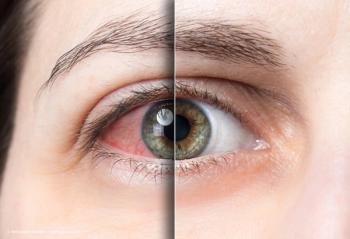
Ophthalmologists report dry eye’s mixed mechanisms, symptom-driven diagnosis, uneven treatment response, and payer hurdles—what needs fixing next.

FDA greenlights first human trial of SVT-001, a regenerative cell therapy aiming to restore vision for patients with rare familial drusen.
Joseph Anaya, MD, and Ashkan Abbey, MD, discuss the financial barriers facing patients with geographic atrophy, including Medicare coverage limitations, out-of-pocket costs, and the role of assistance programs such as Good Days in expanding treatment access.

Dhoot discusses the full results of the 5-year GALE extension study of pegcetacoplan in patients with GA secondary to age-related macular degeneration.

The planned phase 3 trial will evaluate the triamcinolone acetonide injectable for managing inflammation and pain after cataract surgery.
Joseph Anaya, MD, and Ashkan Abbey, MD, discuss how retina specialists identify appropriate candidates for complement inhibitor therapy in geographic atrophy, set patient expectations, and monitor treatment in real-world clinical practice.

Cases highlight faricimab’s dual VEGF/ANG2 action for severe diabetic macular edema—faster drying, better vision, longer intervals.

The 6-month Support, Educate, Empower (SEE) program was associated with a 20% improvement in glaucoma treatment adherence and reduced distress among adult patients.

Joseph A. Anaya, MD, MBA, and Ashkan M. Abbey, MD, FASRS, FAAO, consider how emerging treatments impact patient vision, functional outcomes, and practical management of geographic atrophy.

University of Utah data show US ophthalmic drug and eye drop shortages last longer and occur more often, affecting local and systemic medications equally.

Three real-world GA cases reveal why early imaging-guided treatment matters, how fast vision can decline, and how to manage CNV risk with anti-VEGF.

The company describes liMeliGhT as a 1-year clinical trial that will support the Biologics License Application (BLA) filing for OCU400 and potential approval in 2027.

The trials are evaluating DURAVYU (vorolanib intravitreal insert) for the treatment of diabetic macular edema (DME).

Healthcare staff face splashes, aerosols, chemicals and lasers daily; ANSI-rated eye protection and better compliance prevent most workplace injuries.