
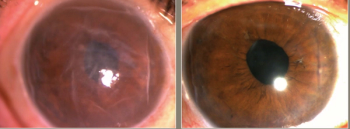
Results from Aurion Biotech's IOTA trial reveals that a corneal endothelial cell therapy showed improvements in visual acuity and central corneal thickness, according to a team of Japanese investigators.

Results from Aurion Biotech's IOTA trial reveals that a corneal endothelial cell therapy showed improvements in visual acuity and central corneal thickness, according to a team of Japanese investigators.

Cynthia Matossian, MD, FACS, ABES, takes a look at the recent, sudden change in low-payment reimbursement by Medicare Administrative Contractors for LipFlow and MGD procedure codes.

A simple solution that involves use of air filtration devices may help reduce the risk of hospital-acquired SARS-CoV-2 infections.

Aerie Pharmaceuticals announced Tuesday positive topline results for the phase 3 trial evaluating netarsudil 0.02% versus ripasudil 0.4% for the treatment of open-angle glaucoma and elevated IOP.

Changes in health care industry can affect the way ophthalmologists plan their finance.

The FDA approved Ocular Therapeutix Inc.’s Supplemental New Drug Application (sNDA) that further extends Dextenza’s (dexamethasone ophthalmic insert) 0.4 mg indications, the company announced Monday.

Merck and Ridgeback Biotherapeutics are seeking emergency use authorization for molnupiravir, an oral experimental antiviral treatment for mild-to-moderate COVID-19 in adults at risk for virus progression or hospitalization.

David Boyer, MD, reports on the use of pegcetacoplan to treat geographic atrophy when administered monthly or every-other-month regimens in the phase 3 DERBY and OAKS studies.

Arshad Khanani, MD, MA, reports primary study findings from the phase 3 study on the Port Delivery System with ranibizumab.

Investigators in the United Kingdom found that concomitant vaccination of flu and COVID-19 raised no safety concerns and preserved the immune response to both vaccines.

Changes are resulting in better outcomes for patients with glaucoma.

Richard B. Rosen, MD, DSc(Hon), reports on the capabilities of using clinical OCT for imaging and measuring macular surface macrophage cells during the 2021 ASRS annual meeting.

Sunir Garg, MD, reports on the risk of presumed infectious endophthalmitis following administration of anti-VEFG injections in correlation with universal masking.
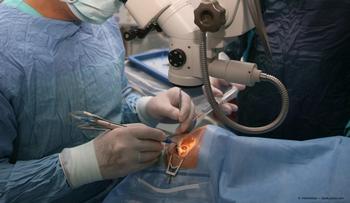
Yoshihiro Yonekawa, MD, reports on the findings of an investigation looking at the prevalence of endophthalmitis following minimally invasive glaucoma surgery.

Rishi Singh, MD, reports on results from the VISTA and VIVID studies analyzing the use of intravitreal aflibercept injections to treat DME.

W. Lloyd Clark, MD, presents results of the nonproliferative diabetic retinopathy-focused PANORAMA study during the 2021 ASRS annual meeting.

Investigators sought to develop a severity scale for tomographic edema in FECD based on Scheimpflug tomography maps, and to evaluate intra- and inter-observer variation for assessing severity.

According to 4D Molecular Therapeutics, it has received FDA Clearance of an IND Application for 4D-150, a dual-transgene intravitreal gene therapy for patients with wet AMD.

Investigators find that estradiol drops can ease signs and symptoms of DED.

A cross sectional study investigated how chronic pain conditions outside of the eye impact corneal sensitivity.
According to investigators, the BNT162b2 (Pfizer–BioNTech) vaccine appears to be highly effective in preventing hospital admissions for up to about 6 months after vaccine recipients are fully vaccinated

The company will move the highest dose of THR-149 (0.13mg) into Part B of the study based on favorable safety profile and positive efficacy data.
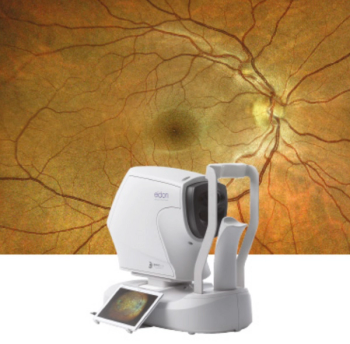
iCare USA’s EIDON Ultra-Widefield Lens module has received FDA 510 (k) approval for distribution across the United States, the company announced Wednesday.

The American Society of Retina Specialists (ASRS) will host its 39th Annual Scientific Meeting from October 8-12, 2021, at the JW Marriott San Antonio Hill Country Resort and Spa in San Antonio, Texas.
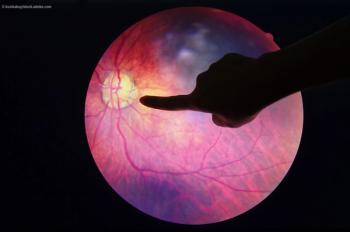
Investigators found evidence of improvement in vision and retinal structure in patients with DME and AMD sustained through 12 weeks.
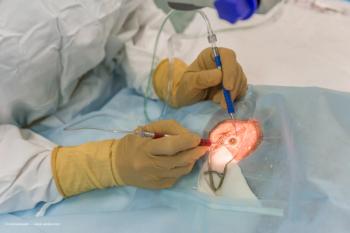
Factors that lead to complications must be managed for best outcomes.

A team of investigators at the Texas Tech University Health Sciences Center have developed a technology derived from corneal epithelial stem cells to improve outcomes for DED patients.

According to researchers at the University of Virginia School of Medicine, common HIV drugs or a safer alternative could stop vision loss.
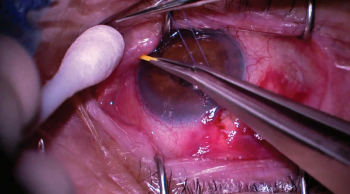
Sustained-release option helps with patient adherence following surgery.

A literature review indicates that intravitreal administration of anti-VEGF drugs are effective for treating DME, but close attention should be paid to the potential for elevated IOP, cataract progression.