

According to the company, a study shows the non-implantable minimally invasive glaucoma surgery effectively reduces IOP and reduces need for IOP-lowering medications in patients diagnosed with open-angle glaucoma.

According to the company, a study shows the non-implantable minimally invasive glaucoma surgery effectively reduces IOP and reduces need for IOP-lowering medications in patients diagnosed with open-angle glaucoma.

An independent data monitoring committee recommends continuing study with a sample size target of up to 350 Patients. According to the company, no safety concerns have been identified and topline results are expected during the second quarter of 2023.

According to Johns Hopkins Medicine researchers, as little as $65 per year appears to influence practitioners, making them up to twice as likely to prescribe the companies’ brand name eyedrops for glaucoma instead of cheaper generic versions.

Researchers at Linköping University have used implants made from pig skin to restore sight to 20 people with diseased corneas.

Researchers at the Medical University of Vienna are focusing on how the retina can be used as a prognostic marker. Analyses revealed that retinal layer thinning as a result of an MS relapse predicts the severity of future relapses and the likelihood of disability.

Donald Salzberg, MD, conspired with an alleged accomplice at a medical diagnostic company in a scheme that ran for five years, from 2014 through 2019, according to U.S. attorney’s office in Boston.

The study provided evidence of safety, visual acuity improvement and structural stability in a difficult-to-treat patient population.
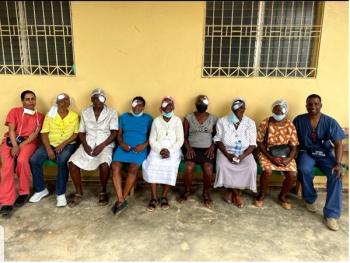
Anika Michael, MD, and Benjeil Edghill, MD, both ophthalmology specialists from AdvantageCare Physicians New York City, traveled to Haiti in July on a medical mission of mercy, where they evaluated and treated more than 400 patients and completed approximately 90 surgeries.

According to a news release, the U.S. Food and Drug Administration has approved Coherus’ ranibizumab-eqrn (Cimerli) as an interchangeable biosimilar for all five indications of Lucentis.

ThermaMEDx today announced a partnership with EyeCare Partners to expand EverTears distribution across the network of the national provider of clinically integrated eye care.

Combined, the companies say they will create the largest eye bank, tissue recovery and ocular research center in the world.

With the support of Harrington Discovery Institute at University Hospitals, an ophthalmic therapeutic dubbed KIO-301, initially developed by Richard Kramer, PhD, at the University of California, Berkeley (UCB), has successfully been granted approval to start a Phase 1b, first-in-human clinical trial.

Zachary Elkin, MD, MPH, of NYU Langone Eye Center, advises how ophthalmologists and parents should be aware of precautions that should be taken with sports involving small balls and urges the use of protective eyewear.

The gift will establish the Philip C. Hessburg, MD – Art Van Elslander Chair in Ophthalmic Research, which will constitute a permanent endowment fund to support the educational research initiatives at Henry Ford Health by the Detroit Institute of Ophthalmology.

The companies note that data from Study CPN-302 confirm the results in the first Phase 3 study, CPN-301, and they demonstrate the clear benefits of treating patients after cataract surgery with APP13007.

Kodiak Sciences Inc. announced that its BEACON Phase 3 study of tarcocimab, its novel antibody biopolymer conjugate, met the primary endpoint of non-inferior change from baseline in visual acuity at week 24 compared to aflibercept in patients with macular edema due to retinal vein occlusion.

In a study, investigators found that no characteristics of inflammatory bowel disease are related to ocular manifestations of the disease.

Industry leaders will come together Dec. 16-17 in Marco Island, Florida, to present the latest data and treatments.

According to the company, this Phase 1 dose escalations study will evaluate the safety and tolerability of intravitreal injection of IBI324 in subjects with DME.

At the recent ASRS meeting in New York, Aleksandra Rachitskaya, MD, of the Cleveland Clinic Cole Eye Institute, presented End-of-Study Retinal Fluid and Vision Outcomes in the Archway Phase 3 Trial of the Port Delivery System With Ranibizumab in Patients With nAMD.

The brain structures with most changes coincide with those which are altered most in Alzheimer’s, according to a study by researchers at the Universidad Complutense de Madrid in Spain.

Matthew Emanuel, MD, of Glaucoma Associates of Texas, discusses some of the current trends in cataract surgery. He notes it is something that everyone deals with as they get older. It also can be an issue for pediatric patients. Emanuel also notes that it is important for physicians to be able to educate their patients on the disease.
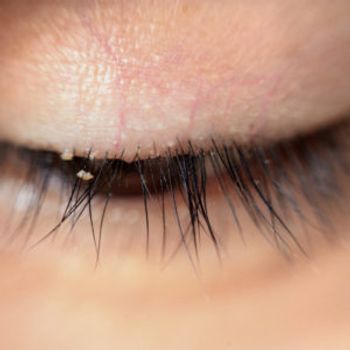
Tarsus Pharmaceuticals has enrolled the first patient in a Phase 2a clinical trial studying TP-03 for the treatment of meibomian gland disease in patients diagnosed with Demodex mites.

The project marks the Orbis Flying Eye Hospital's first return to in-person programming since the start of the pandemic.

A multi-institutional effort led by researchers at the University of Pennsylvania is taking steps to develop an effective technique to regenerate photoreceptors cells and restore sight in patients with vision disorders.

The annual Mission Cataract program allows staff to extend its mission to people who need assistance due to unfortunate circumstances.
According to a new study from New York Eye and Ear Infirmary of Mount Sinai, a new, non-invasive ocular imaging method may be able to detect an early indicator of glaucoma in time to prevent disease progression and vision loss.
According to the company, AR-15512 is a differentiated, novel, first-in-class product candidate for the treatment of the signs and symptoms of dry eye disease.

According to the company, the clinical trial is reviewing EYP-1901, an investigational sustained delivery anti-vascular endothelial growth factor (anti-VEGF) treatment for wet age-related macular degeneration (wet AMD).

Retina indications for which ranibizumab-eqrn is interchangeable include neovascular (wet) age-related macular degeneration; macular edema following retinal vein occlusion; diabetic macular edema; diabetic retinopathy, and myopic choroidal neovascularization.