
During a presentation at the EURETINA 2021 Virtual Congress, Daniel Jones, PhD, discussed GA and emphasized the need for additional study to gain a better understanding of the burden experienced by patients.

During a presentation at the EURETINA 2021 Virtual Congress, Daniel Jones, PhD, discussed GA and emphasized the need for additional study to gain a better understanding of the burden experienced by patients.

In a presentation at the EURETINA 2021 Virtual Congress, Cristina Cristian, MD, noted that an injection of brolucizumab treatment in patients with neovascular age-related macular degeneration led to a median improvement in visual acuity (VA) of 10.5 letters and the drug was well-tolerated.
Grazia Pertile, MD, discusses the highlights of her presentations on the management of retinal folds after retinal detachment and the role of the anterior vitreous as a cause of recurrent retinal detachment.

During a presentation at the EURETINA 2021 Virtual Congress, Anat Loewenstein, MD, MHA, discussed how artificial intelligence can optimize optical coherence tomography.

During a presentation at the EURETINA 2021 Virtual Congress, José-Alain Sahel, MD, explains that optogenetics involves the use of artificial photoreceptors from specific retinal cells to restore vision by transferring a gene that encodes for a light-sensitive protein that causes neuronal cells to respond to light stimulation.
This conference titled, “The Top Ten Things I Wish I Knew Sooner,” is the brainchild of Lisa M. Nijm, MD, JD, who has had the foresight to help young ophthalmologists negotiate the choppy waters of a new practice.
Treating the disease can be a challenge, and at the EURETINA 2021 Virtual Congress, Chekitaan Singh, MD, discussed a case study detailing the care of a patient who had already lost vision in one eye from a similar issue.

Speaking during the EURETINA 2021 Virtual Congress, Marta Belmonte-Grau, MD, discussed the potential risk for posterior capsular rupture during cataract surgery.

Amid a surging COVID-19 pandemic, ophthalmologists in the path of Hurricane Ida are now dealing with the storm's impact.

Dr. Jorge Calzada's diabetic macular edema blog dives into his successful treatment of DME with MicroPulse.

Investigators find imaging method may be useful to monitor disease progression.

Organization looks to improve global eye care through ophthalmic education.

Mark Breazzano, MD, discusses his views on the future of telehealth for ophthalmologists and retina specialists.
Mark Breazzano, MD, discusses his research into the decrease in urgent and emergent procedures in ophthalmology, how he's handling it in his practice, and how to make patients more comfortable coming in to receive care.

Development of new animal model enhances study of genetic mutations.

Study examines immunomodulatory as a potential long-term treatment option.
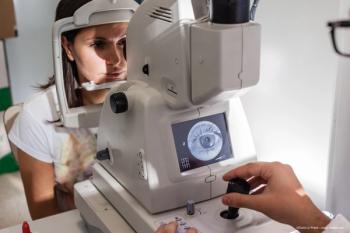
Novel treatments may be on the horizon for the advanced form of age-related macular degeneration.

A new study reveals that children of mothers with diabetes during pregnancy have an increased risk of eye problems.

Ophthalmologists face challenges of drug delivery for retinal diseases.

Science fiction is quickly becoming science fact as a team of German scientists has developed a small, lab-grown brain cell cluster that developed fundamental eye structures.
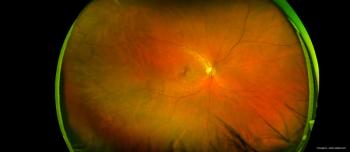
Scanning laser ophthalmoscopy offers improved view of posterior segment.

Approval may inspire increased vaccination effort.
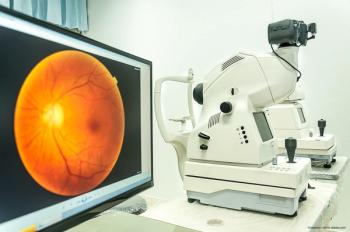
Option detects treatment-naive nonexudative macular neovascularization in eyes with dry age-related macular degeneration.

The American Academy of Ophthalmology issued a guidance this week requiring all in-person attendees at its annual meeting Nov. 12-15 in New Orleans to show proof of COVID-19 vaccination.

The American Society of Retina Specialists is gearing up for its 39th annual scientific meeting Oct. 8-12 at the JW Marriott San Antonio Hill Country Resort and Spa in San Antonio, Texas.

Findings from the Archway trial showed that the PDS effect is long-lasting, consistent, and comparable to those seen with monthly injections.

Programming includes 16 EURETINA sessions; 22 symposia; 44 instructional courses; 85 hours of content, and more than 300 speakers.
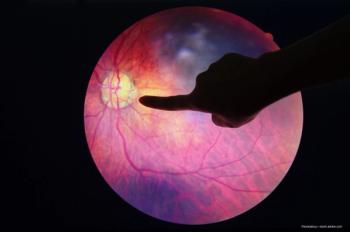
Visual benefit is not seen during first 2 years of Protocol W study.
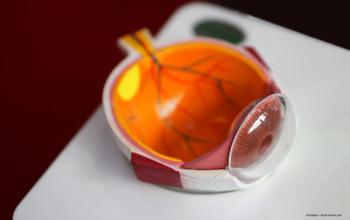
Dexamethasone implant, aflibercept offer a safe treatment option for diabetic macular edema.

Dr. Mark Breazzano discusses pandemic-related patient hesitancy and how retina specialists can help.