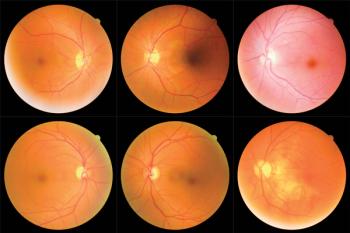
Specialist explains approaches for a variety of cases encountered during procedure

Specialist explains approaches for a variety of cases encountered during procedure

The hope is that future analyses would show more patients completing the pathway and a lower rate of missed appointments.

The development of a novel AI-based algorithm aims to improve risk prediction for diabetic eye disease.

Insights into the pathophysiology of diabetic macular edema are providing a basis for therapeutic interventions.
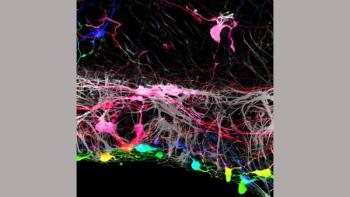
According to investigators at the Wilmer Eye Institute at the Johns Hopkins University School of Medicine conducting experiments in mouse tissues and human cells, by removing a membrane that lines the back of the eye they may be able improve the success rate for regrowing nerve cells damaged by blinding diseases.
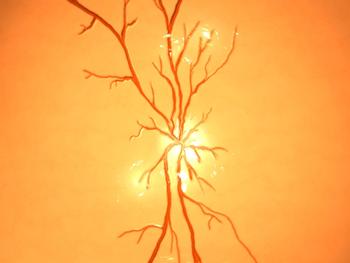
Annual Bascom Palmer Eye Institute program will spotlight latest advances in neovascular and exudative ocular disease over 2-day event, February 12-13.
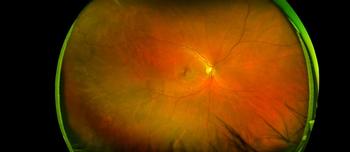
Three sessions cover the range from clinical updates for imaging to emerging therapies for non-exudative AMD.

The program features an update on faricimab, plus diabetes, choroiditis, retinitis pigmentosa, and late-breaking reports.

John H. Merey, MD, possibly one of the last Holocaust survivors still in the practice of ophthalmology, shares his story.

The FDA has granted Fast Track designation to MeiraGTx's AAV-CNGA3 gene therapy product candidate for the treatment of achromatopsia (ACHM).

Delivery into the suprachoroidal space may potentially extend the duration of therapeutic action and reduce or relieve the treatment burden for wet AMD.

Amydis announced the successful completion of a pre-investigational new drug (IND) meeting with the FDA for its candidate AMDX-2011P, a small-molecule retinal tracer that targets amyloid beta to diagnosis amyloid angiopathy.

The COVID-19 vaccine, and the speed at which it was developed, is the medical breakthrough of our lifetimes.


Multiple challenges remain for diabetic macular edema with unmet needs to improve treatment outcomes, speed of treatment benefit, and the duration of response.

Three risk-related baseline factors identified by this analysis may be associated with a potential need for injections.

Analyses of IRIS Registry data capture a snapshot of patient visits and receipt of anti-VEGF injections.

Prospective randomized trial demonstrates clinical equivalence of biosimilar and reference ranibizumab

A study including data from about 42,000 eyes found diabetic retinopathy (DR) severity is a risk factor for the progression of diabetic eye disease. Other findings support the idea that genetic factors influence the development of proliferative DR versus diabetic macular edema.

Study highlights the role of demographic and socioeconomic characteristics as contributors to disease- and treatment-related disparities among patients with diabetic macular edema.

According to an abstract presented during the 2020 Virtual Retina Society Annual Meeting, women are 34% less likely to receive a repair for a retinal detachment compared with men.

Thanks to researchers like Russell N. Van Gelder, MD, PhD, the possibility of restoring sight to people blinded by age-related macular degeneration or retinitis pigmentosa is another step closer to reality.
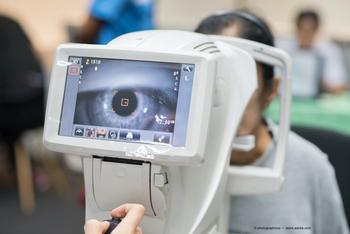
Bradley Smith, MD, presents at AAO 2020 on how fingolimod 0.5 mg, a first-line treatment for multiple sclerosis, may reduce both the number of relapses and disease progression in patients with relapsing-remitting MS as well as the incidence of uveitis.

During AAO 2020, Neal H. Shorstein, MD, explains how physicians at Kaiser Permanente have a streamlined regimen using a prophylactic drop-free drug before cataract surgery for more than a decade.

Rudy Nuijts of the University Eye Clinic Maastricht, the Netherlands, discusses the highlights of his AAO 2020 presentation on a combination treatment regimen for lowering the incidence of cystoid macular oedema following category surgery.

Kristen Brotherson, vice president, US surgical marketing for Alcon, discusses some of the recent advances in cataract surgery-related technologies, including a new advanced lens for patients with presbyopia (AcrySof IQ Vivity IOL).
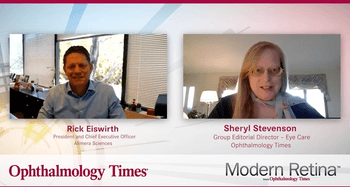
Rick Eiswirth, president and CEO of Alimera Sciences, provides an update on the company’s clinical trial that aims to evaluate its fluocinolone acetonide intravitreal implant 0.19 mg (Iluvien) as a baseline therapy for diabetic macular edema.