

40 years after the inaugural flight of the Flying Eye Hospital, Orbis International continues to harness the power of innovation to reach new heights in the fight against avoidable blindness.

40 years after the inaugural flight of the Flying Eye Hospital, Orbis International continues to harness the power of innovation to reach new heights in the fight against avoidable blindness.

The group is offering free sight-saving resources to employees and employers.

KSI-301, a therapy for patients with nAMD, did not meet the primary endpoint of showing non-inferior visual acuity gains compared to aflibercept given every eight weeks; however, it was safe and well-tolerated with no new or unexpected safety signals.
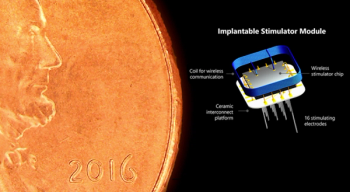
While there is currently no cure for blindness, an artificial vision system has undergone its first successful implantation, bringing with it the potential to restore partial vision to people who have lost their sight.

Investigators at the Eye Clinic, Department of Medicine, Surgery and Health Sciences, University of Trieste, Trieste, Italy, found that the appearance of the retina and optic disc was associated with the SARS-CoV-2 virus.

Alimera Sciences, Inc. announces statistically significant improvements in best corrected visual acuity, central subfield thickness and treatment burden for patients with diabetic macular edema.

Leading the charge for a multifactorial approach to combat diabetes, Kristen Nwanyanwu, MD, MBA, MHS, and her team have embraced the need for a multi-pronged program to address health disparities in diabetic retinopathy.
Dr. Quan Dong Nguyen reviews a Monte Carlo simulation that showed evidence that treating severe NPDR with anti-VEGF therapy garners positive results.

According to data presented by Horizon Therapeutics at the North American Neuro-Ophthalmology Society annual meeting in Austin, Texas, Upliznq treatment is linked to fewer severe attacks and reduced levels of key disease-related biomarkers versus placebo.

Kriya Therapeutics company recently took the wraps off an exclusive agreement with the Medical University of South Carolina (MUSC) Foundation for Research Development to license next generation complement-targeted gene therapies for the treatment of geographic atrophy and other ocular diseases.
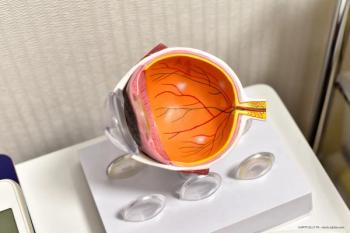
AM712 is a novel bispecific biologic molecule specifically designed for ocular use. In pre-clinical studies, it demonstrated efficacy, ocular pharmacokinetics, and the desired safety profile supporting clinical exploration.

According to the company, it is developing elamipretide for treatment of extra-foveal geographic atrophy under U.S. FDA Fast Track designation.
Researchers know that parts of the retina are considered as biomarkers for Alzheimer disease, but the team from Otago’s Dunedin Multidisciplinary Health and Development Research Unit in New Zealand have been investigating the retina’s potential to indicate cognitive change earlier in life.

Robert Bhisitkul, MD, PhD, provided 24-week clinical data from the Phase 1 study, demonstrating that patients with DME and wet AMD showed improved visual acuity through 24 weeks following a single dose of UBX1325.

A brief overview of findings presented at the 2022 Angiogenesis, Exudation and Degeneration meeting hosted by Bascom Palmer.

The company noted that the study was the first to evaluate whether AI software can accurately detect more-than-mild diabetic retinopathy using a single image per eye, obtained from either a desktop or handheld retinal camera.

Investigators in the Netherlands have developed an RNA therapy to halt the progression of Stargardt disease.

Dr. Carel Hoyng divulges the main takeaways from his Angiogenesis presentation, including the origins of Stargardt disease, correct diagnosis, ongoing gene therapy trials and the future of therapy.
Dr. Carl Regillo discusses the 100-week results of KESTREL and KITE, two pivotal Phase 3 studies for brolucizumab for the treatment of diabetic macular edema.
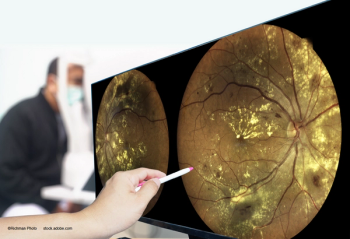
After 2 years, the improvements in vision and anatomy were sustained with extended dosing out to every 16 weeks in a high percentage of patients.

KALAHARI study finds THR-149 to be safe, well-tolerated with preliminary efficacy as treatment for DME patients who respond suboptimally to anti-VEGF.

Most patients (95%) with the PDS implanted did not need supplemental treatment before the refills, indicating the persistence and durability of the treatment.
During her talk at Angiogenesis, Dr. Loewenstein outlines how artificial intelligence could revolutionize diabetic retinopathy screening.
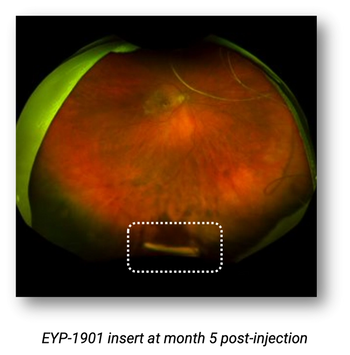
Previously treated patients showed significantly reduced treatment burden.

At Angiogenesis, Dr. SriniVas R. Sadda discusses how choriocapillaris may predict the rate of progression of atrophy.

In a presentation at the Bascom Palmer Eye Institute’s 19th annual Angiogenesis, Exudation, and Degeneration 2022 Virtual Edition, Glenn J. Jaffe, MD, noted that the analysis showed, for the first time, a decreased growth rate in the central foveal area by a therapeutic intervention when compared to sham treatment.

Dr. Nadia K. Waheed reviews the latest updates on the FOCUS trial, evaluating AAV-based viral vector GT005 for the treatment of geographic atrophy.

This study showed that an investigational subretinal implant, CPCB-RPE1, containing allogeneic human embryonic stem cell-derived RPE cells, was safe and well-tolerated by patients with dry AMD.

Dr. David S. Boyer describes how blocking Connexin-43 may improve the retinal vascular system function in patients with diabetes, potentially creating a future of oral medication for treatment of diabetic retinopathy and AMD.