

J. Fernando Arevalo, MD, PhD, investigated the anatomic and functional outcomes of pars plana vitrectomy, scleral buckle, or a combination of the two, and suggested that the combination approach may need further consideration.

J. Fernando Arevalo, MD, PhD, investigated the anatomic and functional outcomes of pars plana vitrectomy, scleral buckle, or a combination of the two, and suggested that the combination approach may need further consideration.
At ASRS in New York City, Charles Wykoff, MD, presented a talk entitled, “Suprachoroidal Delivery of RGX-314 Gene Therapy for Diabetic Retinopathy: Phase II ALTITUDE Study.” The trial demonstrated large improvements for patients with diabetic macular edema (DME) and non-proliferative diabetic retinopathy (NPDR), with notable improvements according to the Diabetic Retinopathy Severity Scale (DRSS).
The future risk of the development of new-onset vision-threatening diabetic retinopathy, diabetic macular edema, and proliferative diabetic retinopathy can be predicted using the patient’s retinopathy status and hemoglobin A1c value.
Metformin, a frequently prescribed drug to treat diabetes, could be a novel therapy for AMD.
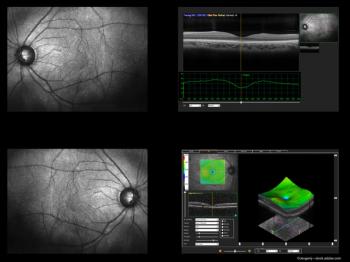
Investigators from Thailand took a close look at retinal fluid fluctuations in Thai patients with wet age-related macular degeneration (AMD) and devised a better way to measure the fluctuations in the central subfield thickness (CST).

Rhegmatogenous detachments increased with age; myopia, trauma, and history of retinopathy were common underlying risk factors for development of rhegmatogenous retinal detachments.

Treatment with faricimab in patients with neovascular AMD achieved improvements in the visual acuity, central subfield thickness, and pigment epithelial detachments.

Results from our recent poll regarding ASRS 2022 attendance indicate that most ophthalmologists and retina specialists plan to participate in the Annual Meeting in person in New York, New York.

CAM encourages corneal healing in patients with ocular surface disease.

A team of investigators at the Agency for Science, Technology and Research in Singapore have developed a bio-functional thermogel, a type of synthetic polymer, to prevent retinal scarring caused by failed retinal detachment repair surgery.
A team of investigators from Johns Hopkins Medicine say they’ve discovered that levels of a specific protein appears to help accurately predict whether people with the wet form of age-related macular degeneration may need lifelong, frequent eye injections to preserve vision or if they can be safely weaned off the treatments.

Foundation Fighting Blindness is a driving force in advancing retinal gene therapies into clinical trials.

The 40th annual Scientific Meeting of the American Society of Retina Specialists is scheduled for July 13-16, 2022, in New York.

A team of investigators at Flinders University in Australia have found that a specific cell within the retina appears to be particularly good at housing Ebola and other viruses.

According to the company, the primary outcome of the MGT009 study is safety, and botaretigene sparoparvovec treatment was found to be generally safe and well-tolerated.

Survey respondents point to a perceived gap in treatments for uveitic macular edema, document interest in suprachoroidal drug delivery.

LumiThera Inc. noted that the trial results demonstrated statistically significant improvement in the prespecified primary endpoint in BCVA at 13 months in the PBM treatment group over the sham-treatment group.

A team led by researchers from the University of Geneva has identified a molecular mechanism that causes degeneration of the eye’s photoreceptors, which can lead to blindness.
Steven Yeh, MD, provides a brief overview of available therapies for noninfectious uveitis and uveitis macular edema.

The U.S. Centers for Medicare and Medicaid Services code is effective July 1 and will enhance access to Xipere, the only therapy available in the United States for suprachoroidal use in the treatment of macular edema associated with uveitis.

A study by Orbis International found that children with myopia experienced significantly higher levels of depression and anxiety than their peers without vision impairment.

A window into the world of academic retina practice today.

Study demonstrates results of pegcetacoplan as a geographic atrophy therapy.
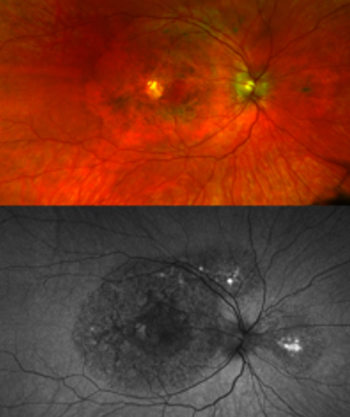
Genetic and clinical research reveals new type of macular dystrophy, a cause of central vision loss.
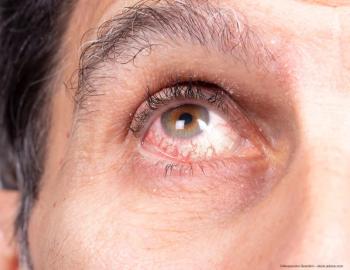
Modern Retina™ Case-Based Roundtables create an environment for ophthalmology’s brightest minds to examine complex, real-world patient cases in a discussion-based setting. Led by an expert in the topic, the group dissects the case together to improve their knowledge of rare diseases and niche diagnoses. In Fort Lauderdale, Florida, Modern Retina™ hosted Uveitis Case-Based Roundtables. Moderators Thomas Albini, MD, and Eduardo Uchiyama, MD, are uveitis specialists who have encountered intriguing cases in the clinic. Attendees asked questions and reviewed imaging of the cases in hopes of improving their overall patient care. Roundtable 1, led by Dr. Albini and discussed here, investigates two intriguing cases.

Although off-label repackaged bevacizumab syringes appear to satisfy an urgent clinical and financial need for patients with a variety of retinal disorders, they are known to be associated with considerable public health concerns due to the risks posed to patients from compounding pharmacies’ lack of compliance with a variety of FDA requirements.
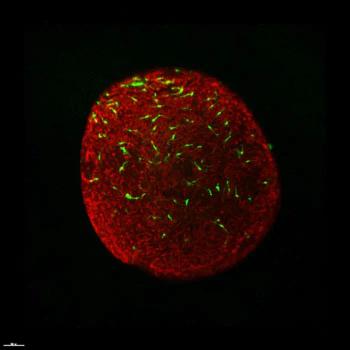
By co-culturing the differentiated microglia with retinal organoids, investigators found they may be able to recapitulate retinal development.

After 10 years, AREDS2 formula shows increased efficacy compared to original formula, benefit of eliminating beta-carotene.

With clearer imaging and enhanced resolution, the new OCT approach could improve medical diagnostic imaging.

According to the study by a team of researchers from the University of California Irvine and University of Southern California, treatment with Humanin G reduced protein levels of inflammation markers that become elevated in age-related macular degeneration.