
According to investigators pointed out that while good surgical results are obtained with small and medium-sized macular holes, it is important to determine the hole diameters at which the success rates of conventional surgery begin to decline.

According to investigators pointed out that while good surgical results are obtained with small and medium-sized macular holes, it is important to determine the hole diameters at which the success rates of conventional surgery begin to decline.
The Phase 2 SPECTRA clinical trial will assess 4D-150 in patients with DME.

The vision care company is joining forces with the global nonprofit to fight avoidable blindness around the world.

According to the company, ONL1204 is a first-in-class small molecule Fas inhibitor with a mechanism of action designed to provide neuroprotection for retinal cells.

The Bascom Palmer program showcases neovascular, exudative, and degenerative eye diseases, and is designed for retina specialists, general ophthalmologists, and researchers.

According to a news release from Bausch + Lomb and biomedical laser company Modulight announced that the FDA has approved the ML6710i photodynamic laser for equivalent use with Visudyne.

According to a news release, the CDC is urging that clinicians and patients immediately discontinue the use of EzriCare Artificial Tears until the epidemiological investigation and laboratory analyses are complete.

According to the company, the approval allows Eyenuk’s EyeArt AI eye screening system, already approved for detection of diabetic retinopathy, to aid millions of additional patients at risk for vision loss.

Patients diagnosed with diabetic retinopathy may be particularly vulnerable to periods of low glucose, and keeping glucose levels stable should be an important part of glucose control.
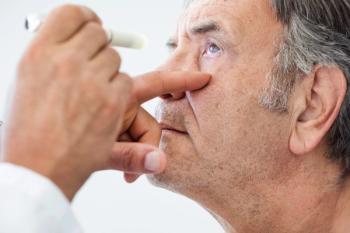
Based on their findings, an international team of researchers is discouraging the application of atropine as a standard therapy for trabeculectomy surgery.

According to the company, it is planning an end-of-phase 2 meeting with the FDA to discuss the results.

The PRPH2 and Associated Retinal Diseases Workshop is designed to bring together leading experts from academia and industry, to discuss openly, and in detail, what is known about PRPH2 disease pathology, disease models, clinical characteristics, and therapeutic approaches.

A University of Houston researcher has been awarded a $1.6 million grant to help restore vision loss in patients with the rare disease that causes a progressive loss of vision, prompting retinitis pigmentosa.

A team of researchers have found that STOC tomography enables unprecedented views of eye structure.

The transaction between the 2 companies is expected to be completed in the first quarter of 2023.

The United States Department of Justice originally filed the lawsuit in December 2021 on behalf of an elderly quadriplegic patient, alleging that Tempe, Arizona-based Barnet Dulaney Perkins Eye Center was requiring patients with mobility disabilities to hire third-party medical transport and transfer assistance for outpatient surgical procedures. American Vision Partners was named as a codefendant.

Researchers used obesity as a model to accelerate and exaggerate the stressors experienced by the body throughout life.
As a therapy for vision impairment resulting from inherited retinal degeneration, or IRD, the mRNA would instruct photoreceptor cells – faulty because of a genetic mutation – to manufacture the proteins needed for sight.
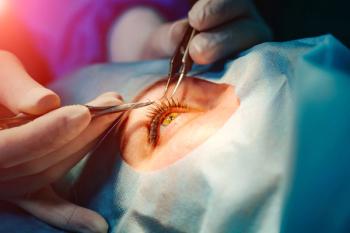
Researchers discovered that all patients had similar single surgery success rates but that minority patients had significantly worse vision outcomes and were more likely to have multiple retinal breaks.

Lorem ipsum dolor sit amet, consectetur adipiscing elit.

Joshua Mali, MD, offers his top 5 prognostications for 2023.

According to researchers, factors that were associated with all type of visual impairment included older age, lower education level, and lower income were associated with all types of visual impairment.

In the study, investigators conducted a cross-sectional study with the goal of evaluating a correlation between the number of peer-reviewed publications published before a residency and the subsequent peer-reviewed publications or career choices of doctors who graduated from an ophthalmology residency program.
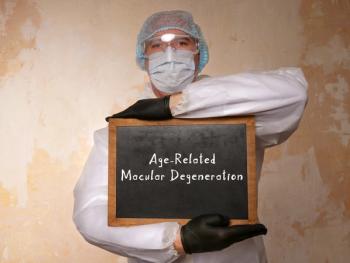
No treatment is currently available for the early stages of AMD, but some retrospective studies have reported an association between metformin and reduced risk of AMD.

Investigators coaxed human skin cells reprogrammed to act as stem cells to develop into layers of several types of retinal cells that sense light and ultimately transmit what we see to the brain.

To advance the company’s ability to anticipate on increasing patients’ needs and to pursue long-term growth plans in both fields of expertise, the company decided to spin out its retina division.

FT-001 is administered by a one-time injection into the subretinal space of the eye that delivers a functional copy of the human RPE65 gene to the nuclei of the patient’s retinal cells.

The investment supports the clinical development of two novel programs, both with the aim of being protective against vision loss.

Investigators concluded that both formulations of AR-1105 were well-tolerated and provided clinically meaningful and sustained visual improvements in vision and decreased retinal thickening despite that some patients had difficult-to-treat BRVO or CRVO with longstanding edema.

When dietary patterns were adjusted to include a Mediterranean diet, dietary nitrate intake was not associated with AMD progression independently.