

The role of compounded anesthetic formulations in streamlining efficiency and elevating patient care.

The role of compounded anesthetic formulations in streamlining efficiency and elevating patient care.
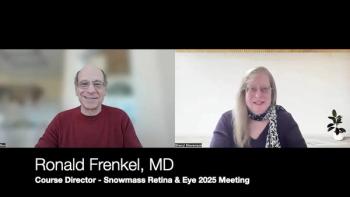
The 15th annual meeting, taking from March 24–28 in Snowmass, Colorado, will deliver high-impact discussions on macular disease, artificial intelligence in ophthalmology, and breakthrough therapies—plus opportunities for networking on and off the slopes.

“Our current understanding of the pathophysiological basis of MacTel has led to the development of novel therapeutic approaches that may be able to break ground in this disease state.”

A recent study of AEYE-DS AI technology used in conjunction with the Topcon NW500 resulted in exceptional clinical diagnostic efficacy.

Working definition forwarded by NIH CVI Working Group

Donald Munoz has over 30 years of health care experience as a chief financial officer and an investment banker.

A look at the current state of AI in diabetic eye disease and where the future may take us.

How modern tools may lead to customized AMD treatment plans

Researchers screened for outcomes such as the presence of retinal diseases including age-related macular degeneration and retinal vein occlusion

David S. Boyer, MD will present data from the sozinibercept Phase 2b wet AMD trial.

The European Medicines Agency's new standard procedure allows manufacturers to request advice from medical device expert panels

The approval follows a refiling after the FDA issued a Complete Response Letter due to language on the amended label.

Researchers from the University of Bristol recorded increased instances of inflammation in particular demographic groups


The 36-week trial was a randomized, double-masked, parallel-group, active-controlled, multicenter evaluating CLS-AX (axitinib injectable suspension) in participants with neovascular age-related macular degeneration.

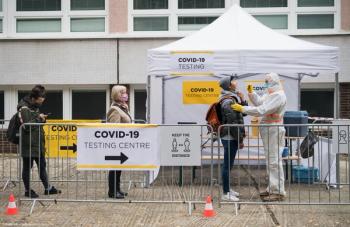
The pandemic caused an overall decrease in the rates of the 10 most common ophthalmic procedures performed in 2020 when compared to the year prior.

The trial will feature the company’s product candidate, AXV101, focused on combating childhood blindness due to retinitis pigmentosa (RP) caused by Bardet-Biedl Syndrome 1 (BBS1).

The announcement comes after a request was made by the Canadian Investment Regulatory Organization (CIRO) to explore the possibility of a sale.

PRISM evaluates 4D-150, a potential backbone therapy designed to provide multi-year sustained delivery of anti-VEGF (aflibercept and anti-VEGF-C) from the retina with a single, safe, intravitreal injection.

Results were published from the phase 3 QUASAR trial and the extension study of the phase 3 PULSAR trial.
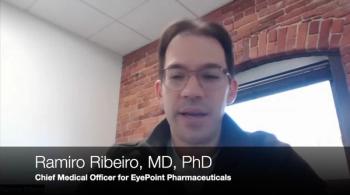
Ramiro Ribeiro, MD, PhD, shares insights from the ongoing research tyrosine kinase inhibitors for AMD and DME.

The implant was tested in eyes of patients with bilateral age-related macular degeneration who underwent cataract surgery


The data will be presented virtually at Angiogenesis, Exudation, and Degeneration 2025 on February 8 and February 10, 2025.
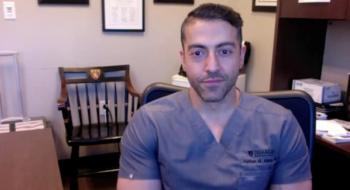
Ashkan Abbey, MD, shares insights from the one-year data for the phase 2 DAVIO2 trial and the impact of tyrosine kinase inhibitors on reducing treatment burden.
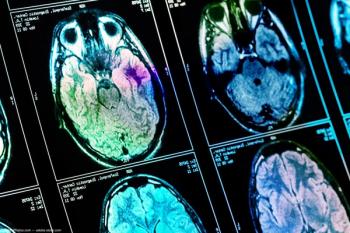
Researchers reported identifying changes in 4 areas of the brain
Susvimo 100 mg/mL for intravitreal use via ocular implant is a refillable implant surgically inserted into the eye during a one-time, outpatient procedure, continuously delivering a customized formulation of ranibizumab over time.

Results from the study assisted Notal Vision in receiving De Novo authorization from the US FDA for the SCANLY Home OCT in 2024.

Optical coherence tomography angiography (OCTA) was performed in all participants; the choroidal and retinal changes were examined and recorded.