
Three cases illustrate how next-generation anti-VEGF agents are extending treatment intervals and improving durability across retinal vascular disease.

Three cases illustrate how next-generation anti-VEGF agents are extending treatment intervals and improving durability across retinal vascular disease.

SOL-1 results show intravitreal axitinib hydrogel delivered superior vision maintenance and anatomic outcomes through 52 weeks.

New IGF-1R antibody Lumvoa receives FDA nod for active and chronic thyroid eye disease, offering rapid proptosis relief and diplopia improvement.

A randomized trial found that 8 weeks of daily use of the Calm Health app significantly improved mental health outcomes in adults with non-infectious uveitis.
Not every question in the management of patients with GA has a clear answer—the two retina specialists work through the ones clinicians face most often in practice.

A prospective pilot study finds focal photopic microperimetry may detect cone-mediated losses that lesion size and visual acuity do not reflect.

For Jay S. Duker, MD, and Ramiro Ribeiro, MD, PhD, paths that began in clinical and academic medicine became the foundation for a different kind of work—leading drug development from the inside.

Retina cells that sense light falter in Alzheimer’s, potentially derailing sleep and body clocks—pointing to new diagnostic and treatment angles.

StemSight secures new patents for scalable induced pluripotent stem cells-derived limbal stem cells, boosting STE-101’s path to off-the-shelf limbal stem cell deficiency therapy and upcoming Series A.

SOL-1 data show OTX-TKI extends rescue-free control in treatment-naive wet AMD, shaping AI-driven trial design and longer-interval care.

Learn how FDA’s interchangeable ranibizumab biosimilar may streamline injections, cut costs, and guide safe switching for retina patients.

A retrospective study identifies thin choroid as the key factor behind ungradable ultrawidefield green-light fundus autofluorescence images in geographic atrophy.

Alkeus Pharmaceuticals has dosed the first participant in the phase 3 NORTHSTAR trial of oral gildeuretinol for Stargardt disease, a condition with no approved treatments.
In the latest episode of The Retina TL;DR with Dr. Weng, host Christina Y. Weng, MD, MBA, FASRS, talks with Dr. Eichenbaum about the cell and gene therapy pipeline ahead, what sustains a career in retina, and why lifting others up is just what you do.

Guidance includes building on existing science, reducing redundant testing, and accelerating treatments for rare and life-threatening diseases

Meeting founder and co-chair Arshad M. Khanani, MD, MA, FASRS, shares what attendees can expect during this year's program, opening the evening of June 12 and running through June 13 in Las Vegas, Nevada.

The FDA has approved ranibizumab-hkdz (Ranluspec; Lupin Limited) as an interchangeable biosimilar for wet AMD, DME, DR, RVO, and mCNV.

A propensity-matched retrospective analysis of more than 920,000 adults finds a 30% higher risk of incident uveitis following human papillomavirus infection.

Researchers report pseudophakic patients implanted with a peripheral vision IOL detected roadway hazards significantly faster than those receiving a standard monofocal lens.

Therini Bio begins a phase 1b DME trial of THN391, an intravitreal antibody targeting fibrin-driven retinal inflammation.

Genetic testing transforms inherited eye disease care, but expert interpretation matters—learn why false negatives and new gene therapies reshape retina practice.

Researchers from Johnson & Johnson Vision and Aier Eye Hospital present 24-month prospective data showing that Chinese children wearing Abiliti™ 1-Day contact lenses experienced approximately half the axial elongation and myopia progression of a matched spectacle-wearing control group.
SOL-1 results show intravitreal axitinib hydrogel delivered superior vision maintenance and anatomic outcomes through 52 weeks.
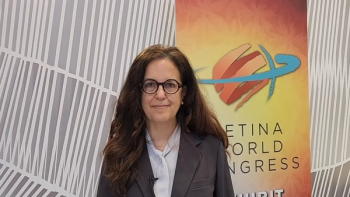
Sharon Fekrat, MD, FACS, FASRS, reviews the science behind dopamine signaling in the retina and its potential role in the progression of age-related macular degeneration.

Dimitra Skondra, MD, PhD, FASRS, shares her perspective on the evolving treatment landscape for dry age-related macular degeneration and the key questions facing the field.
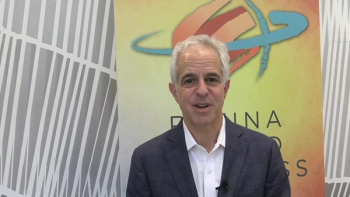
Carl D. Regillo, MD, FACS, reviews long-term efficacy and safety findings from the Port Delivery System clinical trial program.
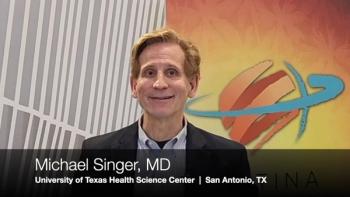
Michael Singer, MD, discusses the role of steroids, biomarkers, and second-generation therapies in diabetic macular edema management.

Aixa Alarcon, PhD, and colleagues reported natural image analysis may better predict real-world visual performance of premium intraocular lenses than traditional single-frequency MTF testing, while also capturing the impact of dysphotopsias and residual astigmatism.

A modular AI system comprising six transformer models achieves near-expert concordance with an ASUWOG-aligned composite inflammation score

In this interview from the 2026 Retina World Congress, Katherine Talcott, MD underscores that retinal vein occlusions (RVOs) should prompt retina specialists to look beyond the eye and ensure patients are connected to primary care and cardiology. She highlights the importance of systemic risk factor management and interdisciplinary coordination as essential components of comprehensive RVO care.