

OpZira’s product portfolio includes AdaptDx Pro and the NOVA Vision Testing System.

OpZira’s product portfolio includes AdaptDx Pro and the NOVA Vision Testing System.

Researchers will investigate a gene in the eye that is crucial for normal vision, but can cause retinal diseases when mutated that often lead to blindness.

Catch up on this week's highlights in retina.

OCT-A angiography can help reveal early neurodegenerative disease signs, offering a noninvasive method for identifying high-risk patients through retinal analysis.

The presence of AMD predicted an increased risk of all-cause and CVD mortality in patients with a high risk of CVD, even in the early stages of AMD.

Sanofi's gene therapy SAR402663 receives FDA fast track designation, targeting neovascular age-related macular degeneration with positive clinical trial data.
At the EURETINA meeting, Professor Uy described the ways artificial intelligence can augment an existing imaging workflow.

Findings from the retrospective, observational study support the potential anti-inflammatory benefits of the drug class.

Sandoz received FDA approval for its biosimilar Enzeevu (aflibercept-abzv) on August 12, 2024. It has the same dosage form, route of administration, and presentation as the reference medicine, Eylea, from Regeneron.

A study reveals similar risks of sight-threatening diabetic retinopathy in pregnant women with type 1 diabetes compared with nonpregnant controls.

The acquisition includes the noninvasive Valeda PBM device for the treatment of early and intermediate dry age-related macular degeneration.

KOLs in the retina world reflect on advice they would share with fellows beginning their journey into retina, including the vast opportunities in healthcare and the importance of curiosity and collaboration for revolutionary advancements in retina medicine.

Recent research highlights inferred sensitivity mapping as a promising method to assess retinal function in geographic atrophy, enhancing clinical trial outcomes.
The EURETINA YOURS program prepares retina specialists for the EBO exam and helps them find training in the competitive subspecialty of vitreoretinal surgery.

Beacon Therapeutics shares promising phase 2 trial results for laru-zova, a gene therapy showing potential in treating X-linked retinitis pigmentosa.

In the debut episode of The Retina TL;DR, host Christina Y. Weng, MD, MBA, FASRS, talks with Tony Stefater, MD, PhD; and Tommy Stryjewski, MD, about PYK-2101, a biodegradable retinal sealant designed to replace gas and oil tamponades.

Alfredo Sadun, MD, PhD, details an unexpected outcome from a gene therapy in development for Leber hereditary optic neuropathy (LHON).

In addition to Thompson joining the board of directors, EyeCool also announced the members joining its newly formed medical advisory board (MAB).
Prof. Querques broke down perifoveal vascular anomalous complex (PVAC) and telangiectatic capillaries (TelCaps) for congress delegates.
Prof. Androudi said differential diagnoses are more important than ever in the era of cell and gene therapies.

A study reveals that ophthalmic artery angioplasty improves vision and functionality in patients with late-stage age-related macular degeneration.
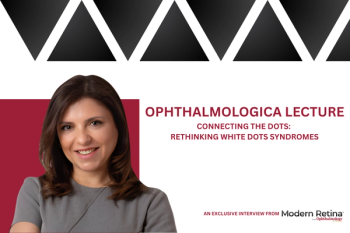
During her Ophthalmologica Lecture at the 2025 EURETINA Congress, Prof Cicinelli explained why it's time for a different approach to white spot syndromes.

At the 2025 EURETINA Congress, Prof Korobelnik delivered the Gisbert Richard Lecture, focusing on removal of intra-ocular foreign bodies and mitigating ocular trauma.
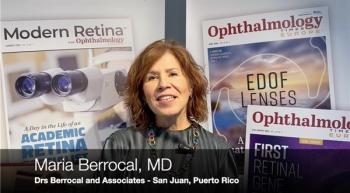
María Berrocal, MD, titled her Kreissig Award Lecture "Throwing away wisdom: How we abandon what works."
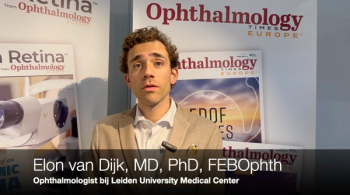

Prof Tunde Peto and Prof Catherine Creuzot-Garcher will serve on an educational panel during the networking event.

Neurotech Pharmaceuticals enhances its leadership by appointing Peter J. McDonnell, MD, a leading ophthalmology expert, to its Board of Directors.
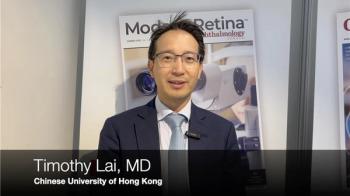

An understanding of GA growth kinetics is key to addressing the pathophysiology of age-related macular degeneration.

Roche's Contivue platform gains EU CE mark, offering innovative treatment for neovascular AMD with fewer injections and promising long-term vision outcomes.