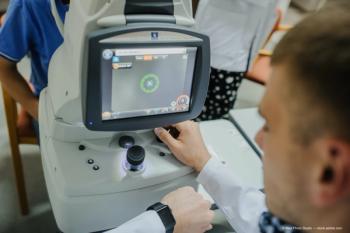
Early detection and anti-VEGF treatment of choroidal neovascularization (CNV) in the second eye leads to better mean final visual acuity (VA) with fewer injections at 1 year.

Early detection and anti-VEGF treatment of choroidal neovascularization (CNV) in the second eye leads to better mean final visual acuity (VA) with fewer injections at 1 year.


This action will result in 2 separate companies
Justis P. Ehlers, MD, speaks on the key findings and take-aways from his presentation "Impact of baseline OCT characteristics on response to risuteganib for the treatment of intermediate age-related macular degeneration (AMD)."
Daniel F. Kiernan, MD, FACS, speaks on the key findings and take-aways of his presentation "Dexamethasone intracameral drug-delivery suspension for inflammation associated with vitreoretinal surgery."

Caesar Luo, MD, shares the take-away points from his ASRS presentation, and how the topics from his talk may be applied day to day in retinal practice.
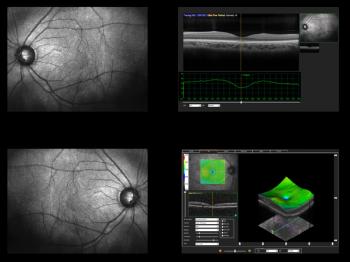
Investigators tested the hypothesis that changes in certain areas of the macular are more relevant to AMD. What did their findings reveal?

Why progression to advanced disease may have a more dramatic impact on patients with neovascular AMD compared with those with central geographic atrophy.

Rates of anxiety and depression increased but were not necessarily tied to disease severity

A retrospective study found that in both patients with type 2 diabetes and non-diabetics, average central macular thickness was lower in Asians than Caucasians. Why is this significant for clinicians?

Theresa Heah, MD, provides an update on AsclepiX’s AXT107, which is derived from a cryptic peptide within collagen IV that works by activating naturally existing, homeostatic mechanisms of angiogenesis.

Derek Kunimoto, MD, JD, focuses on Aviceda's technology, which will aim to target various immune system responses that contribute to pathology associated with dry AMD.

ASRS 2020: Josh Anderson speaks on the highlights from Alcon, including new data on the performance benefits of the Hypervit dual blade 20,000 cpm probe and the launch of the NGENUITY 1.4 upgrade.

PDS with ranibizumab is proving to be an innovation solution for nAMD patients. Peter Campochiaro, MD, detailed findings of phase 2 of the Ladder Trial and ongoing Archway Trial during the virtual 2020 ASRS annual meeting.

The results of the Protocol T Extension Study underscore the need for methods to improve long-term visual gains in eyes with diabetic macular edema, according to Dante Pieramici, MD, on behalf of the DRCR Retina Network, during the American Society of Retina Specialists 2020 Virtual Annual Meeting.

Carl Danzig, MD, presented results of phase 2 Stairway Trial during the virtual 2020 American Society of Retina Specialists (ASRS) annual meeting.
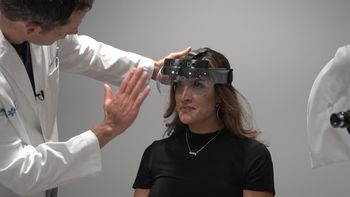
An augmented-reality device provides AMD patients with enhanced reading ability and facial recognition.

Intravitreal liposome-encapsulated bromfenac is under study as a treatment for refractory DME. Results of a pilot study were detailed at the virtual 2020 ASRS annual meeting.
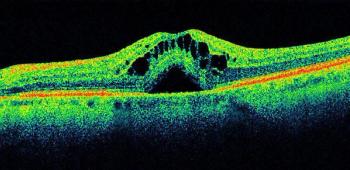
The Audacious Goals Initiative of the National Eye Institute is focused on developing noninvasive imaging advances to help patients with vision loss.
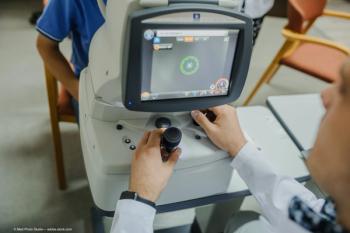
These imaging technologies can help with assessing unexpected structural and vascular retinal and choroidal changes in active and post-treatment toxoplasmic retinochoroiditis.
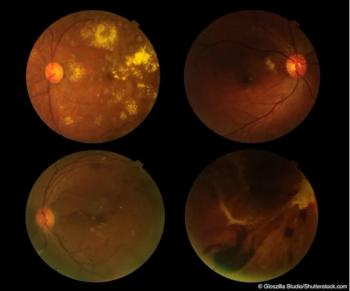
The study authors hypothesized that patients poorly responding to ranibizumab may have resulted from tachyphylaxis or tolerance to the drug and regarding the nonresponders, they speculated that VEGF-A may not have been the main cause of the neovascular growth.

A study of adult patients with diabetes found that bowtie-shaped polarization artifacts do not serve as reliable clinical biomarkers for center-involving diabetic macular edema. What might this mean for clinicians?

An in-office intravitreal therapy delivering a gene for aflibercept expression continues to demonstrate encouraging safety, tolerability, and efficacy in a phase 1 study of patients with neovascular age-related macular degeneration who require frequent injections to control their disease.

Treatment with a single ocriplasmin injection led to clinically meaningful improvements in the patient-reported visual function measured by the VFQ-25 questionnaire over 24 months in patients with symptomatic vitreomacular adhesion.

Only 2% of patients with internal limiting membrane peeling developed an epiretinal membrane compared with 46% with no peeling.

Fundus autofluorescence is a helpful tool for diagnosing central serous choroidopathy and planning treatment.

Immediate administration after radiation therapy is key.
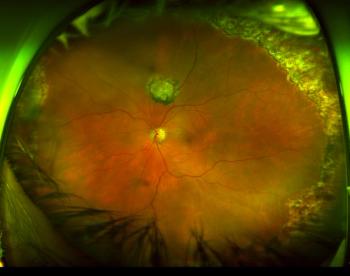
Physicians can discover, diagnose, document, treat diseases that might go undetected

Patient enrollment for the NORSE 2 clinical trial has been completed, with safety and efficacy data expected to be reported in the third quarter of 2021.
Chronic cases can be difficult for retina specialists; treatment is satisfying.