

At EURETINA 2026, Arshad Khanani, MD, FASRS, reviews sura-vec, 4D-150 and ixo-vec, 3 nAMD gene therapies in phase 3 with readouts expected over the next 12 months.
At EURETINA 2026, Arshad Khanani, MD, FASRS, reviews sura-vec, 4D-150 and ixo-vec, 3 nAMD gene therapies in phase 3 with readouts expected over the next 12 months.

Ashish Sharma, MD, on what real-world data show about switching and long-term outcomes with retinal biosimilars.
João Pedro Marques, MD, MSc, PhD, FEBOphth, discusses the IRD-PT, a web-based Portuguese registry of roughly 2,400 patients with inherited retinal diseases that supports research and identifies patients for clinical trials.

Could one surgery replace years of GA injections? Phase 2 ArMaDa data suggest gene therapy OCU410 slows lesion growth.
At EURETINA 2026, Elon van Dijk, MD, PhD, FEBOphth, reviewed trial evidence favouring half-dose PDT over micropulse laser and eplerenone for central serous chorioretinopathy.

Paul Nderitu, MBChB, MPhil, MBCS, FRCOphth, PhD, gives an update at EURETINA 2026 on Global RETFound, a foundation model being built with 108 partners from more than 40 countries
• The American Academy of Ophthalmology 2026 annual meeting is set for October 9-12 in New Orleans.

4DMT's 4D-150 gene therapy enters phase 3 4SIGHT trial in DME; 2-year SPECTRA data show +10.8-letter BCVA gain in 9 patients.

Katherine Talcott, MD, discusses phase 2 VERONA results showing EYP-1901 plus aflibercept reduced supplemental treatment needs in DME, with early vision and anatomy gains and no significant safety signals.
At EURETINA 2026, Arshad Khanani, MD, FASRS, reviews 2-year SPECTRA data on 4D-150 gene therapy for DMO and the phase 3 4SIGHT trial comparing it with aflibercept.

Serena Salvatore, MD, discusses the retinal laser training gap, persistent laser myths, simulation and practical advice for safer laser at EURETINA 2026.
Ester Carreño, MD, PhD, explains how to tell retinitis pigmentosa from uveitis and why genetic confirmation now matters more.

OT Roundup returns with MOGENRY's 4-year RP data, RCA's retina care report, SYD-101's FDA hearing, and new OCU410 GA data.

Women’s systemic and ocular health associated with pregnancy is a focus at EURETINA 2026 in Vienna.

Three EURETINA 2026 e-posters examine OCT/OCTA biomarkers and real-world switching to faricimab or aflibercept 8 mg in nAMD.

Three studies use OCT and OCTA to track AMD treatment response, flag diabetic retinopathy before oedema and confirm ocular toxoplasmosis.

Japan's filing covers IRDs broadly, supported by RESTORE and open-label Stargardt data.

Francesca Cordeiro, PhD, MD, FRCOphth, explains how Detection of Apoptosing Retinal Cells (DARC) imaging predicted the speed and direction of GA growth and could help stratify patients for treatment.

Inherited metabolic diseases affect the retina even before the systemic diagnosis is established.

Sharon Fekrat, MD, FACS, FASRS, discusses how retinal imaging fits into the diagnostic picture for CVI, TBI, and neurodegenerative disease.

An industry symposium on intravitreal 4D-150 and a course on subretinal delivery lead gene therapy content at EURETINA 2026, alongside IRD courses and trial readouts.

Nimesh Patel, MD, urges the FDA to reconsider SYD-101 as pediatric myopia drives earlier retinal damage in US children.
Sequencing IOL choice by eye can ease patient decision paralysis.

R. Ross Lakhanpal, MD, FACS, outlines how he counsels newly diagnosed patients, uses FAF imaging, and weighs long-term GA treatment data.
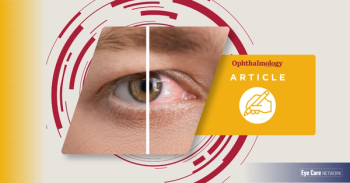
Aldeyra Therapeutics will submit a FDRR to the FDA for reproxalap, an investigational drug or dry eye disease.

For CVI Awareness Day, 3 experts explain why CVI can hide behind a normal eye exam and why early referral matters.

Coats, OD, FAAO, explains how neurotrophic keratitis, demodex, cosmetic habits and mucus fishing complicate dry eye disease.

Veeral S. Sheth, MD, MBA, FACS, FASRS, on how the avacincaptad pegol label update, earlier treatment, and patient counseling shape long-term GA care.

Tarcocimab, tabirafusp-ted were noninferior to aflibercept in DAYBREAK wet AMD trial; 54% on tarcocimab reached 24-week dosing.
Cathleen McCabe, MD, presents real-world data from a 57-site US study of the enVista Aspire IOL at ESCRS 2026, reporting over 90% patient satisfaction and 20/32 uncorrected intermediate vision in more than 70% of patients.