

AMA resolution backs classifying myopia as a disease, aiming to expand insurance coverage for pediatric myopia control treatments.
AMA resolution backs classifying myopia as a disease, aiming to expand insurance coverage for pediatric myopia control treatments.

In patients reporting chronic ocular pain, dry eye may not be the entire diagnosis.

Polish investigators showed that various modalities can quantify ocular changes in attention deficit/hyperactivity disorder.

ESCRS 2026 real-world data: aceclidine (VIZZ; LENZ Therapeutics) drops show fast onset, high satisfaction for presbyopia.

Three-year ESCRS 2026 data show trans-epithelial PRK matches conventional PRK in refractive outcomes, safety, and pain, with faster surgical time.

A real-world study of an enhanced monofocal IOL found most patients achieved 20/20 distance vision and functional intermediate vision without glasses, according to Jai Parekh, MD, MA, FAAO, at ESCRS 2026.
New ESCRS 2026 data show corneal measurements shift meaningfully across the day, with early-morning readings potentially biased by overnight eyelid closure.

At ESCRS 2026 in London, Radhika Rampat, MBBS, FRCOphth, describes bringing low-level light therapy into her refractive practice, from dry eye care to chalazion treatment and pre-surgical ocular surface optimisation.

In the latest episode of The Retina TL;DR with Dr. Weng, host Christina Y. Weng, MD, MBA, FASRS, talks with Dr. Aaberg about the science, clinical data, and real-world reception of the first FDA-approved treatment for MacTel type 2.

Suzana Konjevoda, MD, presents data at ESCRS 2026 showing citicoline eye drops aid corneal nerve recovery post-cataract surgery.

ESCRS 2026 study shows multifocal IOLs tie at distance, but reading speed plunges in dim light; focus curves predict laser touch-ups.

Mingo Botín, MD, PhD, discusses ESCRS 2026 data on an EDOF IOL in post-LASIK eyes vs non-LASIK controls.
Real-world data show tear film and Schirmer improvements with two preservative-free dry eye drops at ESCRS 2026.

The 44th Congress of the ESCRS kicked off at ExCeL London with iNovation Day and the Opening Ceremony, setting the stage for a five-day programme.
Suzana Konjevoda, MD, previews ESCRS 2026, highlighting new IOLs, presbyopia correction, AI in everyday practice, and advances in post-cataract surgery recovery and comfort.

Opus Genetics announced positive 3- and 6-month results OPGx-BEST1 in BEST1-related retinal diseases.
A JAMA Ophthalmology Clinical Trial of the Year enrolled 1421 eyes across 28 sites, with NEI-funded follow-up extending the findings to 5 years.
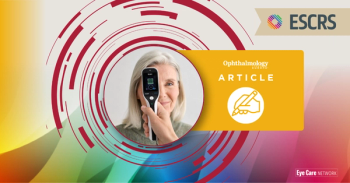
Handheld IC1000 pairs rebound tonometry with camera-guided alignment

The FDA accepted Nanoscope's BLA for MOGENRY (sonpiretigene isteparvovec, MC-010), a gene therapy for retinitis pigmentosa with severe vision loss, supported by RESTORE trial data showing sustained BCVA improvement.
Piotr A. Woźniak, MD, PhD, previews the ESCRS' growing focus on AI-assisted digital surgery and an expanding dry eye programme.

Ahead of the 44th ESCRS Congress in London, a look at the presbyopia-correcting IOL, glaucoma and dry eye disease research on this year's scientific programme.
Dante Pieramici, MD, discusses the phase 3 COMO and CAPRI trials of EYP-1901 in diabetic macular edema and what 6-month dosing could mean for treatment burden.

Andrew G. Lee, MD, and Drew Carey, MD, break down a debate over PDE-5 inhibitor use after non-arteritic anterior ischemic optic neuropathy.
New research covers a 3D OCT foundation model, an OCTA biomarker review and offline smartphone screening for three retinal diseases.
Startup S5G Therapeutics aims to move ubiquinol technology from the laboratory toward treatments for dry eye, Fuchs dystrophy, and other corneal conditions.

A VR lens simulator used at InVision Eye Care lifted premium IOL conversion rates from 30%-35% to the mid-40s

Study authors discuss fishing-related eye injury patterns, pediatric risk, and prevention strategies drawn from other sports.
A gamified program may speed the brain’s adjustment, new data suggest.
Giant cell arteritis, long known by its more familiar name, temporal arteritis, is the most common vasculitis in adults over 50 and a true ophthalmic emergency. If untreated, it can result in permanent bilateral vision loss within days. Women are more often afffected than men, the the disease manifests differently between the sexes.
Ashraf Ahmad, MD, explains what tear breakup time testing shows and why results vary between clinic visits.