
Peter K. Kaiser, MD, shares a promising outlook for patients with dry age-related macular degeneration, with innovative therapies in development that have the potential not only to prevent vision loss but also improve visual acuity.



Peter K. Kaiser, MD, shares a promising outlook for patients with dry age-related macular degeneration, with innovative therapies in development that have the potential not only to prevent vision loss but also improve visual acuity.

A new study focuses on the specific visual field conditions and defects that can result in an increased risk of vehicular accidents, particularly in the aging population.
Ophthalmology experiences lower burnout rates compared with other medical fields, but the profession is not immune to the issue, explains Peter J. McDonnell, MD.
Daniel H. Chang, MD, shared highlights of his presentation on a first-in-human clinical feasibility study of a dual-optic accommodating IOL system.

Analysis showed low-dose, preservative-free formulation of atropine is effective in slowing progression in children aged 3 to 17, living in the US and European Union.

Ab-interno implantation of a supraciliary allograft bio-tissue successfully reduced intraocular pressure (IOP) with comparable safety to other minimally invasive glaucoma surgical (MIGS) procedures

Conference
The company announced updated data from the OPTIC extension study of patients diagnosed with wet AMD during the Retina Subspecialty Day at the American Academy of Ophthalmology 2023 Annual Meeting in San Francisco. Patients in OPTIC continue to experience long-term benefit from Ixo-vec through 3 years of follow-up, including maintenance of vision, durability of anatomical improvements and sustained reduction in anti-VEGF treatment burden.

Conference
At the 127th American Academy of Ophthalmology annual meeting in San Francisco, Alcon revealed the full U.S. commercial availability of its cloud-based cataract planner, building on its leading image-guided clinic to OR connectivity.
At this year's American Academy of Ophthalmology meeting, Mary Elizabeth Hartnett, MD, of the Byers Eye Institute at Stanford University presented on gender disparities in vision loss and blindness.

According to data presented at the American Academy of Ophthalmology annual meeting in San Francisco, a study of children with cell disease finds 1 in 3 had retinopathy.
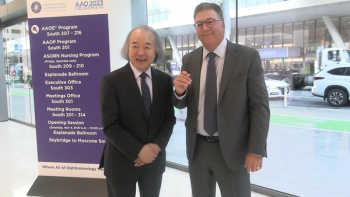
Edward J. Holland, MD, and Professor Shigeru Kinoshita, MD, discuss how a single donor cornea could potentially help over a thousand patients.

Results showed that IZERVAY met the primary objective of reducing the rate of geographic atrophy (GA) growth in patients treated monthly compared to sham-treated patients
David Hutton of Ophthalmology Times spent time with Esen K Akpek, MD, who discussed her presentation at this year's American Academy of Ophthalmology meeting.
Kerrie Brady, president and chief executive officer of OcuTerra Therapeutics, shares progress in their Phase 2 DR:EAM Diabetic Retinopathy study, with promising results expected in Q1 2024 for their innovative eye drop treatment, OTT166.

The American Academy of Ophthalmology (AAO) 2023 annual meeting is returning home to San Francisco on Friday November 3 through Monday November 6.

Ayush Parikh, MD, and colleagues conducted a retrospective review of and found that spontaneous closure and surgical treatment yielded comparable rates of closure and visual outcomes.

The latest innovations are in focus at the 127th annual meeting of the American Academy of Ophthalmology, being held at the Moscone Center in San Francisco.

Launched in 2014, Intelligent Research in Sight is the nation's first and largest comprehensive eye disease registry.

Researchers are addressing growing concern over vision loss in people taking semaglutideat the American Academy of Ophthalmology annual meeting in San Francisco.

The collaboration, fueled by a $5 million donation from Knights Templar Eye Foundation (KTEF), will introduce a free and open VR simulation program for ophthalmologists and trainees worldwide.

The purpose of this investigation was 2-fold: to estimate the costs of treating GA with pegcetacoplan and to identify possible utility measures to compare treatments for GA.

The goal is to evaluate neonates with retinopathy of prematurity (ROP) who met only 1 screening criterion with the goal of easing the burden of ROP screening.

Researchers conducted a study on 145 patients with night vision problems, testing the effects of 0.75% phentolamine ophthalmic solution. The trial demonstrated substantial improvement in visual acuity on both evaluation days.

OCT and OCTA imaging were especially valuable in this patient population because the images extended the current definition of sickle cell retinopathy.

Light-adjustable lens in patients with previous RK: Improved visual and refractive outcomes after cataract surgery.
News
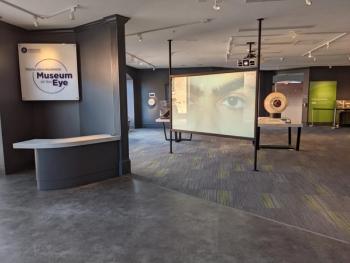
The collection at the Truhlsen-Marmor Museum of the Eye includes more than 38,000 objects, including rare books, instruments and immersive educational materials.

Academy’s 2023 program taking place in San Francisco.

New details define the molecular patterns in thyroid eye disease and further implicate the role of insulin-like growth factor-1 in patients with low Clinical Activity Scores.
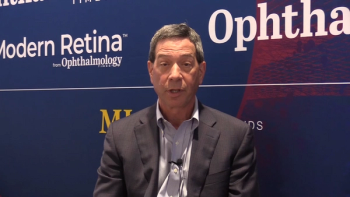
Jay S. Duker, MD, chief operating officer of EyePoint Pharmaceuticals, highlights the Phase 1 and Phase 2 DAVIO clinical trials for EYP-1901 in wet age-related macular degeneration. The company also announced the first patient has been dosed in the Phase 2 PAVIA trial of EYP-1901 for nonproliferative diabetic retinopathy.
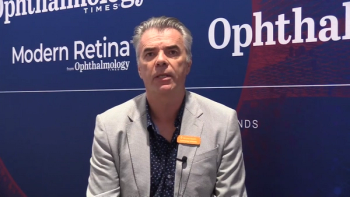
Lawrence Whittle, Chief Commercial Officer for Verana Health, explains what the significance of imaging data linked with electronic health record data means for patient outcomes.