



IOL
Latest News

Advertisement
Video Series

CME Content












Advertisement
Connect, learn, and innovate in a family-friendly atmosphere: What to expect at EnVision Summit 2025
The EnVision Summit, co-founded by Bonnie An Henderson, MD, is a unique family-oriented, multispecialty ophthalmology CME conference, along with a newly introduced optometry track. Henderson sits down with Ophthalmology Times to talk about the 2025 conference that will take place February 14 to 17 at the Caribe Hilton San Juan, in Puerto Rico.

The FDA granted approval to the enVista Envy full range of vision IOLs following Canadian approval in May 2024.

News
According to the company, enVista Envy IOLs will be commercially available in the U.S. on a limited basis in the coming weeks and more broadly in 2025. Bausch + Lomb is also in the process of seeking regulatory approvals for the lens in additional markets.

The TECNIS Odyssey IOL is a new full vision range IOL built on the TECNIS platform.

Option provides surgeons with flexibility and creativity.

The non-diffractive, aspheric IOLs are the second generation of BVI’s ISOPURE family
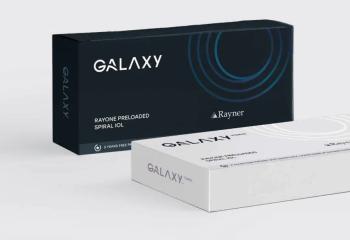
The IOL, designed with artificial intelligence, will launch at this year's ESCRS Congress in Barcelona, Spain
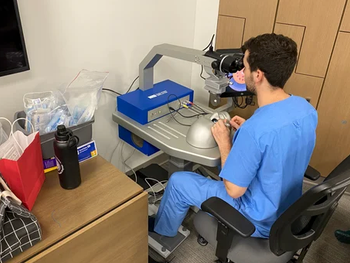
The device features real-time feedback and other features, allowing residents to hone their skills and expand options for practicing one of the most needed procedures in the country.

The Summit will feature 18+ course hours and an extensive resource library to support practice adoption of AT IOLs

A team of 14 eyecare professionals made the recent trip including faculty from the Loyola Medicine Department of Ophthalmology and faculty and residents from Cook County Health, Northwestern Medicine, Wills Eye Hospital in Philadelphia, the University of Toledo College of Medicine and Champlain Ophthalmology in Bethesda, Maryland.
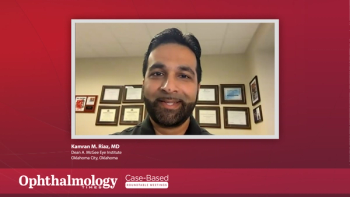
Kamran Riaz, MD, reviews a cataract surgery case where the patient was fitted with different IOLs in each eye.
An expert on ophthalmic conditions presents the case of a patient with Fuchs dystrophy and cataracts in both eyes who inquired about intraocular lenses.
An ophthalmologist presents a case of a 75-year-old patient who was dissatisfied with previous intraocular lenses but achieved satisfactory vision with a monofocal plus IOL.
Kamran Riaz, MD, provides an overview of current monofocal intraocular lens options, focusing on the most popular choices.

The company states this will enable movement toward US approval

The SimVis Gekko eye dominance strength test may change the standard of care.

The retrospective cohort study by a team of researchers in China included 58 cataract eyes of 54 patients with corneal astigmatism who underwent phacoemulsification and rotationally asymmetric multifocal intraocular lens implantation. Patients were treated with either an opposite clear corneal incision or a single clear corneal incision.

Enhanced monofocal technology may benefit patients with cataracts and dry eye.
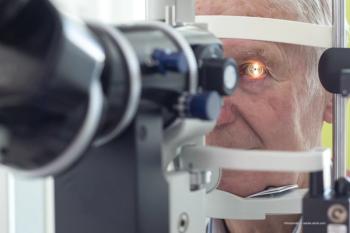
According to the company, its combined vitreoretinal-cataract system and standalone cataract system are cleared for use in the United States.

Investigators looked to see if a large language model could provide safe, accurate, and readable information to patient inquiries about cataract surgery.

Over 380 organizations representing patients, health care providers, the medical technology and biopharmaceutical industry, health plans and others endorse the legislation
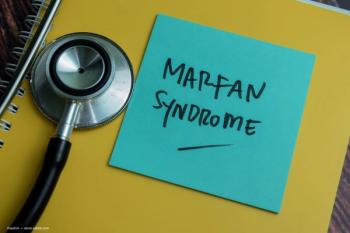
Investigators put forth a list of considerations for surgeons ahead of lens removal in pediatric patients

MELT-300 is a non IV, non-opioid tablet that combines fixed doses of midazolam (3mg) and ketamine (50mg).

The organization is providing free cataract resources for patients and professionals, including fact sheets, social media graphics, a dedicated web page and expert video.

The company is in the process of seeking regulatory approvals for the lens in the US and Europe.
Advertisement
Advertisement
Trending on Eye Care Network - Ophthalmology Times
1
Matching artificial tears to dry eye phenotype: a Q&A with Omur Ucakhan, MD
2
One day, three approvals: FDA expands options for ocular redness, thyroid eye disease, and presbyopia
3
Retinal imaging as a window into atrial fibrillation
4
Women’s Health: Identifying dry eye in rheumatoid arthritis can make all the difference
5