

















The company, which has European headquarters in Basel, Switzerland, plans to use the funds for a non-interventional, observational study and a first-in-human clinical trial



Study indicates age and gender are factors in ocular gene therapy outcomes
The company, which has European headquarters in Basel, Switzerland, plans to use the funds for a non-interventional, observational study and a first-in-human clinical trial

ViGeneron, based in Munich, also received approval for dose escalation in the ongoing phase 1b clinical trial

The RESTORE Study is the follow-up study of the RESCUE and REVERSE studies of lenadogene nolparvovec to treat vision loss from LHON

Our top 10 print stories highlight the core content concepts we explored this year

Ocular clues to a neurological conditions help clinicians understand neuromyelitis optica spectrum disorder (NMOSD)

Phenocell and Amarna Therapeutics were awarded the grant by Eureka’s Eurostars initiative, co-funded by the European Union
Arun Upadhyay, PhD, discusses new study findings from trials of OCU400 (Ocugen)

HG202, by HuidaGene Therapeutics, is formulated for clinical use in treating neovascular age-related macular degeneration

Collaboration and outside-the-box thinking present significant opportunities for science and industry

The company also announced it will seek a strategic partner to continue development of APX3330, an oral small-molecule inhibitor of Ref-1 for the treatment of non-proliferative diabetic retinopathy.

Gene therapy for nAMD represents significant advancements in the treatment of retinal conditions

Gene therapy was a major topic at the 2024 EURETINA and Retina Society meetings
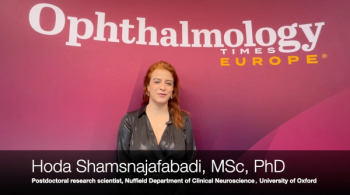
The e-poster came in 2nd place for the August Deutman award at the EURETINA Congress

Research by investigators at Trinity College in Dublin, Ireland shows how the gene therapy conferred significant protection for retinal ganglion cells

Identifying all genetic culprits may improve diagnostics and prognoses

The US Food and Drug Administration issued designations for the allogeneic cell therapy candidate, a therapeutic for corneal oedema

XLRP often leads to blindness by middle age with no treatment options currently available

Investigators say the discovery highlights the importance of genetic consultation

Simply slowing disease progression is no longer enough

Promising innovations are not one-size-fits-all

The tissue serves as a testing ground for outpatient ocular therapies

Rich Small, CEO of Neurotech Pharmaceuticals, provides an update on the months ahead for NT-501 encapsulated cell therapy

The opportunities and challenges presented by CRISPR manipulation

The Phase 2/3 VISTA trial for AGTC-501 in XLRP is expected to begin in in the first half of 2024

How this treatment paradigm could change ocular cell therapy