





Diabetic Retinopathy
Latest News
Advertisement
Video Series
CME Content













Advertisement

Susvimo is the first and only FDA-approved, continuous delivery treatment shown to maintain vision in people with DR with just one refill every 9 months.

In total, 613,690 images used for screening were included in the study.
Ultra-wide field imaging shows nonperfusion and leakage independently predict diabetic retinopathy progression, suggesting earlier treatment with anti-VEGF or photocoagulation may prevent complications.

New research reveals how low blood sugar can damage the retina in diabetes, highlighting potential treatments targeting specific proteins to prevent vision loss.

Palatin Technologies reveals groundbreaking preclinical results on melanocortin agonists, showcasing their potential to combat diabetic retinopathy and preserve vision.

At Retina World Congress 2025, Dilsher S. Dhoot, MD, shares updates on the HELIOS trial and the potential future of tyrosine kinase inhibitors (TKIs).

KIO-104 is a therapeutic candidate shown to significantly reduce retinal scar formation.

The company announced 27 abstracts at the Association for Research in Vision and Ophthalmology (ARVO) 2025 Annual Meeting from May 4 to 8 in Salt Lake City.

The FDA did not agree with a supplemental Biologics License Application for the addition of extended dosing intervals of up to 24 weeks across currently-approved indications.
VX01-DR-201, is a phase 2, multi-center, double-masked, randomized, placebo-controlled study in patients with moderate to severe NPDR without center-involved diabetic macular edema (CI-DME).
Below a specific threshold, FCP exerts a protective effect, but above that threshold the protective effect becomes uncertain.

Researchers from the Czech Republic found that an AI system showed higher sensitivity and specificity for screening diabetic retinopathy compared to telemedicine evaluations.
Tarcocimab is an investigational anti-VEGF therapy built on Kodiak's proprietary antibody biopolymer conjugate (ABC) platform.

A recent study of AEYE-DS AI technology used in conjunction with the Topcon NW500 resulted in exceptional clinical diagnostic efficacy.

DRSS stable/improved with OKT-TKI; drug well tolerated

Catch up on the clinical trial news, updates from the United States Food and Drug Administration (FDA), and company funding that you may have missed.

Roche, Ainnova, and Salud 360 signed this alliance to improve access to vision screening in patients with uncontrolled diabetes.
A case report demonstrates independent effect of GLP-1 receptor agonist.

A recent cohort study revealed low adoption of FDA-approved AI-based diabetic retinopathy detection, with less than 5% of diabetic patients receiving ophthalmic imaging. Researchers emphasize the need for improved awareness, cost-effectiveness, and integration to increase diabetic retinopathy screening rates.
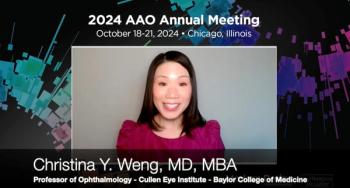
Christina Y. Weng, MD, MBA, shared insights from recent publications on teleretinal screenings for diabetic retinopathy. She will be presenting an overview of these findings at the annual American Academy of Ophthalmology meeting being held in Chicago, Illinois during a talk entitled, "The use of teleretinal screening for diabetic retinopathy."

In the first five months of the program at Henrietta Johnson Medical Center, 26% of patients with images gradable by EyeArt tested positive for either more-than-mild or vision-threatening diabetic retinopathy.

AEYE Health will attend the American Academy of Ophthalmology (AAO) Annual Meeting, from October 18-21 in Chicago.

Advertisement
Advertisement
Trending on Eye Care Network - Ophthalmology Times
1
2026 Nobel Prize in Physiology or Medicine awarded for optogenetics discovery
2
Oku Digital Health launches from Topcon to link eye care, primary care
3
EURETINA 2026: Duravyu misses LUGANO endpoint but cuts treatment burden by 42%
4
EURETINA 2026: Eyestem interim Phase 2 results for clinical study of Eyecyte-RPE for GA secondary to dry AMD
5