



Cataract Surgery
Latest News
Advertisement
Latest Videos




CME Content















Advertisement
More News

Shameema Sikder, MD; and T. Y. Alvin Liu, MD, highlight the technology’s role in bridging challenges and successes for clinical practice.
At the Envision Summit 2025 in San Juan, Puerto Rico, Angela Zhu, MD, offered advice on cataract surgery for all ages, focusing on pediatrics.

At the Envision Summit 2025 in San Juan, Puerto Rico, Arjan Hura, MD, talked about EVO ICL surgery, its benefits, and how every ophthalmologist has the ability and training to conduct the surgery even if they aren't aware.

Sonia H. Yoo, MD, a cornea, cataract, and refractive surgery specialist and a member of the planning committee for the EnVision Summit, highlights a session focused on the latest advancements in lens implant technologies, refractive procedures, and imaging innovations. The summit will be held from February 14 to 17, 2025, at the Caribe Hilton San Juan in Puerto Rico.

From easing fears to improving mood, a recent study explores how music transforms the surgical experience for both patients and health care teams.

Lana Rifkin, MD, a uveitis specialist at Ophthalmic Consultants of Boston, shared insights into her work and her role as committee chair of the uveitis section for the upcoming EnVision Summit, which will be held from February 14 to 17, 2025, at the Caribe Hilton San Juan in Puerto Rico.

According to the company, VVN461, a non-steroidal dual JAK1/TYK2 immunomodulator, achieved its primary endpoint, demonstrating statistical and clinical efficacy compared to vehicle in treating post-operative inflammation following cataract surgery.

News
Melt Pharmaceuticals announced positive results from its Phase 3 study of MELT-300, a non-IV, non-opioid tablet for procedural sedation during cataract surgery. The results support a regulatory submission, with potential to revolutionize sedation practices in various medical specialties.
Connect, learn, and innovate in a family-friendly atmosphere: What to expect at EnVision Summit 2025
The EnVision Summit, co-founded by Bonnie An Henderson, MD, is a unique family-oriented, multispecialty ophthalmology CME conference, along with a newly introduced optometry track. Henderson sits down with Ophthalmology Times to talk about the 2025 conference that will take place February 14 to 17 at the Caribe Hilton San Juan, in Puerto Rico.
News
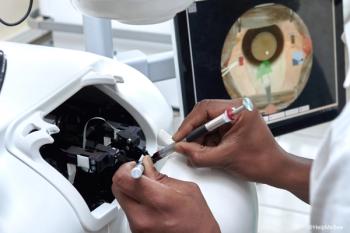
HelpMeSee’s Mazava Project trains general practitioners in Madagascar to perform cataract surgeries, addressing the country’s high rate of avoidable blindness. Trainees gain proficiency through simulation-based learning and live surgeries, improving access to eye care in remote areas.
News
HelpMeSee has partnered with new initiatives to address the global cataract blindness crisis, focusing on empowering women in low- and middle-income countries. Through training and education, the organization aims to reduce gender inequality and improve socioeconomic outcomes worldwide.

News
HelpMeSee has partnered with Empowered, an educational series hosted by Meg Ryan, to spotlight the cataract blindness crisis, its socioeconomic impacts, and gender inequality issues. The episode emphasizes simulation-based surgical training advancements, expanding cataract care access for underserved populations and fostering equitable healthcare solutions.

Analysis highlights discrepancies between adult, pediatric cataract procedures.

The phase 3 trial was conducted by licensee, Grand Pharma in Chinese cataract surgery patients.

Removing drops from procedure increases adherence and comfort for most patients.

The integration of artificial intelligence in laser cataract technology is shifting the paradigm for the future of cataract surgery and is driving increased precision and improved outcomes for patients.

Custom-designed, lens-based surgery is a less interventional surgical option.
Investigators conducted a retrospective clinical database study that covered 12 years to quantify the risk of PCR in the second eye after PCR developed in the first eye during cataract surgery.

AAO 2024: Centricity Vision to unveil new ZEPTOLink enhancements for improved efficiency and control
News
Centricity Vision announced new ZEPTOLink enhancements, reducing treatment time by up to 60%. These updates, aimed at improving cataract surgery efficiency and control, will be showcased at the 2024 American Academy of Ophthalmology Annual Meeting in Chicago.

MELT-300, a non-IV, non-opioid tablet for procedural sedation during cataract surgery.
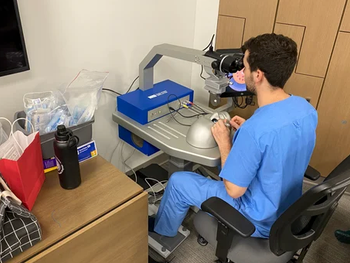
The device features real-time feedback and other features, allowing residents to hone their skills and expand options for practicing one of the most needed procedures in the country.

The Summit will feature 18+ course hours and an extensive resource library to support practice adoption of AT IOLs

A team of researchers in China examined the difference and relationship between optical coherence tomography and optical quality analysis system parameters induced by compound electrolyte intraocular irrigating solution or Ringer lactate solution during uncomplicated cataract surgery.

Plasma emission for blepharitis, meibomian gland dysfunction, and dry eye disease.

Investigators looked to see if a large language model could provide safe, accurate, and readable information to patient inquiries about cataract surgery.
Advertisement
Advertisement
Trending on Ophthalmology Times - Clinical Insights for Eye Specialists
1
Oculis phase 3 DIAMOND trials miss vision endpoints in diabetic macular edema
2
TearSolutions advances Lacripep into phase 2 following dual FDA designations in neurotrophic keratitis
3
Study links alcohol consumption to earlier advanced presbyopia in men
4
Outlook Therapeutics resubmits BLA for bevacizumab-vikg (ONS-5010/LYTENAVA)
5