
















The study met its primary efficacy endpoint for the neovascular age-related macular degeneration (nAMD) treatment.

The study met its primary efficacy endpoint for the neovascular age-related macular degeneration (nAMD) treatment.

Samsung Bioepsis' SB15 was comparable to Eylea (aflibercept) in a 56-week randomized clinical trial that included a rerandomization at 32 weeks. The rerandomization resulted in 111 study volunteers switching from Eylea to the biosimilar for the last part of the study.

This study of patients was designed to identify unexpected adverse effects of these new pharmacologic therapies that may not have been observed or anticipated during clinical research trials. The studied drugs were biosimilars to the reference drug ranibizumab.

The two companies have announced an exclusive agreement for Polifarma to commercialize AVT06, the proposed biosimilar to Eylea, in Turkey.

SB15 (Samsung Bioepis) has shown similar efficacy, pharmacokinetics, safety, immunogenicity to aflibercept after 56 Weeks in phase 3 clinical trial.

Representatives from Magellan Rx Management provided a detailed overview of current treatment options in ophthalmology and the impact that biosimilars could have.

The 2023 Harrington Prize for Innovation in Medicine recognizes Jean Bennett, MD, PhD, and Albert M. Maguire, MD, for their work in retinal gene therapy for genetic diseases.

The Cardinal Health study reveals provider perceptions of commercially available biosimilars and anticipated launches, which have the potential to increase equitable access to critical treatments.

The Alteogen Inc. subsidiary company provided an update on its ALT-L9 biosimilar to compete with EYLEA

The considerations for biosimilars in clinical practice are interesting and remain to be determined, according to George A. Williams, MD.
The survey addressed topics that would facilitate a better understanding of the awareness of retina specialists regarding this relative new form of treatment in ophthalmology.

Specialists seek more information for use in the treatment of patients diagnosed with retinal diseases

Let us know how familiar are you on the approval process for biosimilar drugs compared with new drug applications to the FDA. The poll will be open until February 28, 2023.

Coherus plans to file a Biologics License Application for FYB203 later in 2023 in preparation for an anticipated 2025 launch.

Continued education and financial incentives will become essential if biosimilars are to become a mainstay in ophthalmological markets, according to a recent report.
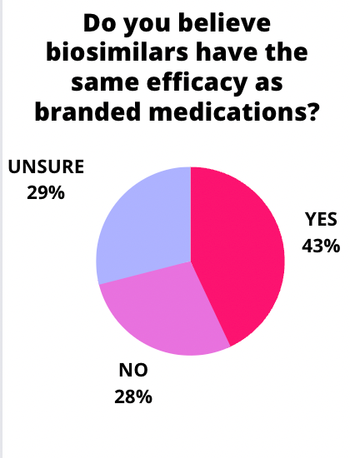
Results from our recent poll indicate a mixed bag of responses from ophthalmologists.

Weigh in on this month's survey question. The poll will be open until December 16, 2022.
Baseline age, best-corrected visual acuity, and central subfield thickness play role in predicting the efficacy of both drugs.
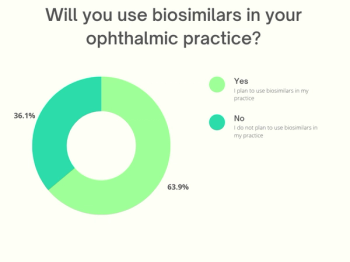
Results from our recent poll indicate that many ophthalmologists (63%) plan to use biosimilars in their clinical practice.

This post-hoc analysis was performed to evaluate immunogenicity over the long term.
Anti-VEGF biosimilars may offer a therapeutic alternative to the original biologic because they have the ability to lower the overall therapeutic cost in the management of varied chorioretinal disorders.

Let us know if you will plan to use biosimilars in your daily practice. The poll will be open until October 10, 2022.

Coherus BioSciences’ ranibizumab-eqrn is the first and only FDA-approved biosimilar interchangeable with ranibizumab injection for all indications, with 12 months of interchangeability exclusivity.

The authors noted that the proportion of patients losing fewer than 15 letters from the baseline BCVA score in the study eye was comparable between the two groups.

According to a news release, the U.S. Food and Drug Administration has approved Coherus’ ranibizumab-eqrn (Cimerli) as an interchangeable biosimilar for all five indications of Lucentis.