Adam Muzychuk, MD, discusses how AI like the Kane formula is improving outcomes, and why he still urges caution over relying on it for clinical decisions.
Adam Muzychuk, MD, discusses how AI like the Kane formula is improving outcomes, and why he still urges caution over relying on it for clinical decisions.

Hove explains how his own cataract surgery has changed the way he counsels patients about glare, halos, and near vision.

Jai Parekh, MD, MA, FAAO, says AI is poised to transform eye care—from retinal and glaucoma imaging to cataract surgery—without disrupting it.

Radhika Rampat, MBBS, FRCOphth, discusses how AI is already shaping intraocular lens selection and keratoconus screening, and where anterior segment imaging and patient-facing AI tools are headed next.

At the 44th Congress of the ESCRS in London, Mark Bullimore, PhD, MCOptom, said delaying myopia onset is more valuable than slowing its progression, and explained how to identify children most at risk.
At ESCRS 2026, Adam Muzychuk, MD, shares real-world data showing the enVista Envy IOL matches clinical trial outcomes, even in eyes with residual refractive error.
Two-year data presented at ESCRS 2026 show the ELIOS excimer laser procedure sustained IOP reduction and kept most glaucoma patients medication-free.

At ESCRS 2026, Zoltan Z. Nagy, MD, reported that femtosecond laser trabeculotomy (FLigHT) cut intraocular pressure by 27% at 48 months in open-angle glaucoma, with a stable, incision-free safety profile.
A prospective French study found intraoperative OCT most valuable for measuring key surgical distances in deep sclerectomy and MIGS procedures, and useful for training residents.
Three-year ESCRS 2026 data show trans-epithelial PRK matches conventional PRK in refractive outcomes, safety, and pain, with faster surgical time.
A real-world study of an enhanced monofocal IOL found most patients achieved 20/20 distance vision and functional intermediate vision without glasses, according to Jai Parekh, MD, MA, FAAO, at ESCRS 2026.
New ESCRS 2026 data show corneal measurements shift meaningfully across the day, with early-morning readings potentially biased by overnight eyelid closure.
At ESCRS 2026 in London, Radhika Rampat, MBBS, FRCOphth, describes bringing low-level light therapy into her refractive practice, from dry eye care to chalazion treatment and pre-surgical ocular surface optimisation.

ESCRS 2026 study shows multifocal IOLs tie at distance, but reading speed plunges in dim light; focus curves predict laser touch-ups.
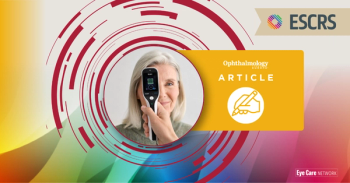
Handheld IC1000 pairs rebound tonometry with camera-guided alignment
Cataract safety, Glaucoma drugs and MIGS, plus Artificial Intelligence debates and retina breakthroughs—key FDA moves and trial updates in ophthalmology.

A same-platform, prospective comparison of 123 eyes suggests diffractive trifocal optics don't compromise standard automated perimetry outside the central 5°

Large cohort links long-term tadalafil for urinary symptoms to modestly higher open-angle glaucoma risk.
ZEISS CLINIC 360 is an all-in-one cloud and browser-based software platform designed to consolidate ophthalmic diagnostic and medical record data into a single, unified patient view.

AI accelerates retina trials and imaging insights, boosts screening access, and raises urgent questions on regulation, privacy, and equity.

AI model beats human graders at spotting glaucoma risk in UK population retinal photos, boosting accuracy and strengthening the case for scalable AI vision screening.

The trial is evaluating the company’s orally administered synthetic cannabinoid, ART27.13
Wet AMD gains a new FDA-approved therapy as retina, glaucoma, and dry eye pipelines surge—plus AI, devices, and workforce trends reshaping care.

The annual Best Hospitals report from US News & World Report compares more than 4500 hospitals across 14 specialties and 22 procedures and conditions.
Seven-year Vestrum data: anti-VEGF gaps hit 40% of patients with wet AMD by year 1, worsening vision.
Hasenin Al-khersan, MD, of the Retina Group of Florida, shares real-world RCA registry findings showing that pegcetacoplan significantly reduced both photoreceptor and RPE loss in eyes with GA.

Susvimo works in conjunction with the company’s port delivery platform, Contivue, which was specifically engineered for use with Susvimo.
The approval establishes LYTENAVA as the first and only FDA-approved ophthalmic formulation of bevacizumab for the treatment of wet AMD in the United States.
A University of Chicago-led ASRS 2026 poster explores how large language and vision-language models could help retina specialists manage imaging, records, and clinical trial matching—without replacing physician judgment.
Louie Cai, MD, discusses why manual prescreening is so labor-intensive, how the study was designed, and what broader adoption of AI-assisted screening could mean for clinician time, patient satisfaction, and the pace of drug development.