June brings FDA clearance for Lumvoa, key retina and glaucoma trials, device deals, and hard truths on AI performance in eye care.

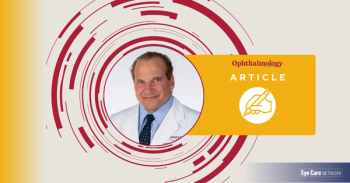
James Tsai, MD, MBA, sheds light on what is in the offing for glaucoma specialists
The future of glaucoma treatment is bright. James Tsai, MD, MBA, shed light on what is in the offing for glaucoma specialists. He is president of the New York Eye and Ear Infirmary of Mount Sinai, the Delafield-Rodgers Professor of Ophthalmology at the Icahn School of Medicine at Mount Sinai, and chair of the Department of Ophthalmology at the Mount Sinai Health System, all in New York.
Tsai: There are clinical trials under way to study drugs to enhance uveal scleral outflow. One such is the CREST study1 (
Current research is also trying to impact the IOP by reducing fluctuations via decreases in the episcleral venous pressure. QLARIS Bio is developing QLS-111 to treat normal tension glaucoma, primary OAG, ocular hypertension, and elevated IOP associated with Sturge-Weber Syndrome, according to the company website, by controlling the episcleral venous pressure, the largest component of the IOP.
Ophthalmic Therapeutic Innovation is currently working on a new formulation of a medication (OTI-2024) to decrease IOP fluctuations, ie, normalize the IOP, through the trabecular meshwork.
Another technology is a device that is being developed by researchers at Mount Sinai Health System to estimate the outflow facility of the eye by measuring the intrinsic resistance. “This may give glaucoma surgeons a better idea of how much outflow with surgical devices they need to target,” Tsai said.
Prostaglandin analogues, such as latanoprost and bimatoprost, are the go-to therapies for glaucoma therapy. They continue to be investigated to study their mechanisms of action, how they work combined with other therapies, and effectiveness in combination therapies.2
Drug-eluting contact lenses are on the horizon. A phase 2b study of LL-BMT1 (MediPrint Ophthalmics), which contains unpreserved bimatoprost, showed that the lens obtained sustained reductions of about 30% from the baseline value.3
Tsai: A device is being developed by Mount Sinai to fill a gap that would aid surgeons intraoperatively. The device would estimate the outflow facility of the eye by measuring the intrinsic resistance. “This may give glaucoma surgeons a better idea of what they need to target,” Dr. Tsai said.
Regarding minimally invasive glaucoma surgeries, these devices are becoming more reliable. However, they do not always achieve the targeted IOP. Some device companies are working on ways to manipulate the IOP control better with selective lasering to increase outflow with certain devices.
While the surgeries are good, I am looking forward to a biologic to normalize IOP or eliminate the extracellular debris in the trabecular meshwork (e.g. modulation of the matrix metalloproteinase pathway), which would really make a big difference in our patients.
Tsai: We are getting there, but we are not there yet. miLens (SmartLens Inc.) may be a bright future prospect that will facilitate close to 24-hour IOP monitoring. This smart lens has microfluidic technology (ie, fluid channels in the contact lens). Outside of the clinic setting, the patient can put their iPhone near their eye, thus allowing the iPhone to “read” the level of the fluid and record the pressure reading at that time. This can be done at any desired time frequency, but the patient should measure the pressure right before bedtime and then upon awakening. The FDA granted permission for this to be done for one night. The company will send the data from the iPhone to the doctor, who then can explain the recording at the patient’s next visit. The smart contact lens use with the iPhone is currently in a trial. This technology would be a big game-changer in glaucoma management. It may receive FDA approval within the year.
James C. Tsai, MD, MBA
Tsai is on the scientific advisory board of AI Nexus Healthcare, Eyenovia, Ophthalmic Therapeutic Innovation, and Smartlens. He is also a consultant for Thea Pharma.