


News|Articles|November 24, 2026
Introducing AT LUCIA toric 721P IOL: A Next-Generation Monofocal Toric Lens Designed for Precise Astigmatism Correction and High-Quality Vision
Author(s)Prof. Sathish Srinivasan
Advertisement
Residual astigmatism as low as 0.5 D after cataract surgery can degrade visual quality and acuity and increase the likelihood for patient dissatisfaction and a need for spectacle correction.1,2 An accurately powered and positioned toric intraocular lens (IOL) offers a reliable method for precisely correcting astigmatism during cataract surgery. Advances in toric formulas and techniques for guiding intraoperative alignment are enhancing outcomes after toric IOL implantation. However, accurate reduction of preoperative astigmatism, postoperative IOL stability and high-quality visual outcomes are also influenced by the choice of toric IOL technology.
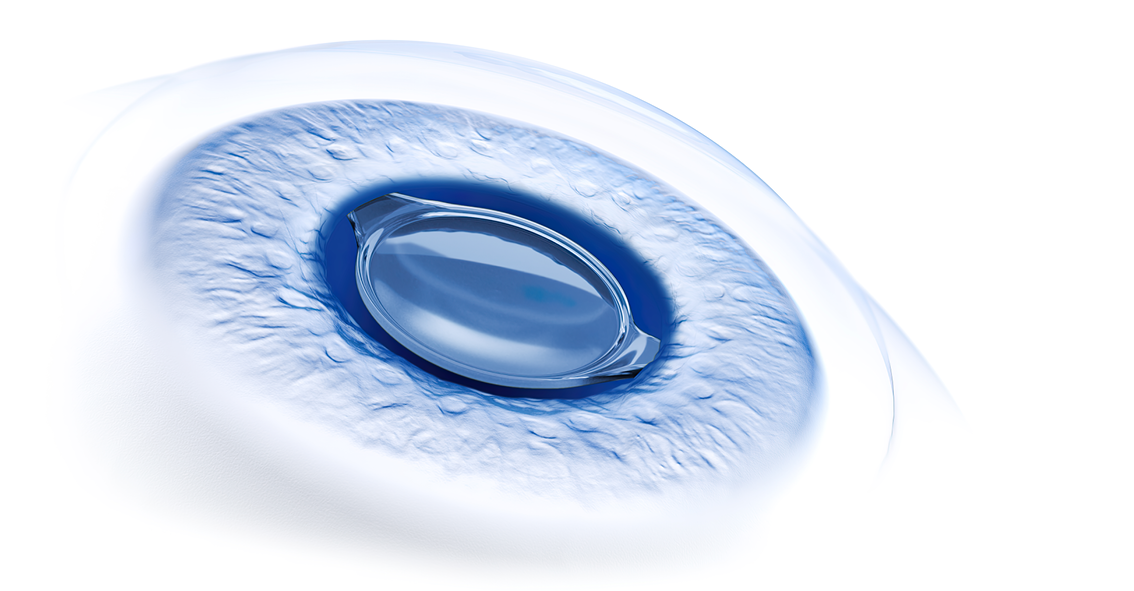
At the ESCRS Congress in September 2026, Carl Zeiss Meditec AG officially announced the commercial launch of the ZEISS AT LUCIA toric 721P monofocal toric IOL (Figure 1). Cylindrical powers at the IOL plane are currently available from 1.0 to 4.0 D in 0.5 D increments, with future availability up to 6.0 D. The lens is built on the proven ZEISS CT LUCIA® 621P/PY monofocal platform, which has demonstrated high refractive accuracy, stability, and patient satisfaction in multiple studies.3,4,5 It also features a unique aspheric profile (ZEISS Optic, ZO) and bitoric design that brings further advantages for optimizing outcomes.
Designed for delivering surgical success and patient satisfaction
The AT LUCIA toric 721P is made of the same glistening-free* hydrophobic acrylic with a heparin-coated surface** that is used to manufacture the CT LUCIA 621P IOLs. This material has a high Abbe number (51) so that chromatic aberrations are lowered.6 The low refractive index (1.49) implies a reduction of light reflection at optical surfaces, which are responsible for positive dysphotopsia (PD) in monofocal IOLs.7
Like the CT LUCIA 621P/PY, the AT LUCIA toric 721P optic is designed with patented ZO technology, a unique aspheric design concept that distinguishes the AT LUCIA toric 721P from all other currently available toric IOLs and that has important implications for clinical performance. Unlike most aspheric IOLs that bear a constant amount of negative spherical aberration (SA) to offset the average positive SA found in human corneas, ZO uses a non-uniform profile that was developed based on a realistic eye model to deliver the benefits of SA-correcting and SA-neutral designs.8 The ZO optic features a 3-mm central zone with -0.24 µm SA. According to research by Georges Beiko, this amount of negative SA would leave the average human cornea with a residual positive SA of ~ +0.10 µm that is optimal for improving high contrast sensitivity while also providing functional depth of focus.9,10 Moving from the edge of the central zone to the periphery, SA in the AT LUCIA toric 721P transitions from negative to overall neutral SA, giving the lens improved tolerance to any negative impact on visual quality in the event of tilt or decentration.11
Bitoricity is another unique feature of the AT LUCIA toric 721P as majority of other currently marketed toric IOLs have a monotoric design that places the entire cylinder power on a single surface (Figure 2).
A bitoric design evenly distributes cylinder power on the IOL’s anterior and posterior surfaces. This design is proposed to offer multiple optical and practical advantages that include an increase in effective optic size, better refractive accuracy when correcting higher amounts of astigmatism and decreased higher order aberrations.12 It may also provide greater stability across the lens center so that the alignment of the visual axis through the functional nodal point suffers minimal distortion if the lens is slightly decentered or rotates slightly off-axis. Additionally, bitoric design can enable the reduction in thickness when manufacturing higher cylinder power toric IOLs.
Importantly as well, in manufacturing the AT LUCIA toric 721P, ZEISS goes beyond required ISO standards governing optical performance in terms of modular transfer function (MTF), manufacturing tolerances for SE and cylinder power, and the accuracy of the toric axis, which speaks to why ZEISS holds a reputation as a global leader in the precision engineering of optical products.
Early clinical impressions
I had the opportunity to use the AT LUCIA toric 721P as a participant in a premarket evaluation, and I was very pleased with the outcomes in an initial series of 20 eyes. The achieved manifest spherical equivalent results showed high refractive accuracy even before A-constant optimization (Figure 3). Monocular uncorrected distance visual acuity in these cases was excellent at 1 month postop with mean of 0.12 ± 0.13 logMAR.
I also saw that patients benefited from functional uncorrected intermediate vision at about 67 cm (mean 0.38 ± 0.20 logMAR), which is really not surprising to me considering the ZO aspheric profile of the lens, the accuracy of its spherical and cylindrical powers, and its relatively high MTF value.
Conclusion
The ZEISS AT LUCIA toric 721P is truly a unique offering among currently available monofocal toric IOLs. Its hydrophobic acrylic biomaterial, square edge optic, and haptic design contribute to optical quality and IOL stability, and its visual outcomes and refractive accuracy are further enhanced by its aspheric design, bitoricity and stringent standards for production. Consistent with these features, my early experience shows that the ZEISS AT LUCIA toric 721P toric IOL enhances quality of vision for patients with visually significant astigmatism. Now I look forward to corroborating my impressions through results from an ongoing multicenter clinical trial.
Prof. Sathish Srinivasan, MBBS, FRCSEd, FRCOphth, FACS, FWCRS, FEBOS – CR (Hon)
Founder and Medical Director, Ayrshire Eye Clinic, Ayr, Scotland, UK
* Grade 1 (traces) or better for 85% of the patients up to and including 12 months according to Christiansen scale and based on internal clinical trial outcomes and on published clinical data.
** Fragment of heparin used in IOL surface coating with no pharmacological, immunological or metabolic action.
References:
1. Ye LY, Li SF, Zuo JJ, Li J, Ma HX. Effect of low-degree astigmatism on the objective visual quality. Int J Ophthalmol. 2024;17(6):1086-1093.
2. Day AC, Dhariwal M, Keith MS, et al. Distribution of preoperative and postoperative astigmatism in a large population of patients undergoing cataract surgery in the UK. Br J Ophthalmol. 2019;103(7):993-1000.
3. Casazza M, Reifeltshammer SA, Hirnschall N, et al. Capsular bag performance of an aspheric hydrophobic IOL after conventional phacoemulsification or femtosecond laser-assisted cataract surgery: 12-month results of a randomized prospective study. Graefes Arch Clin Exp Ophthalmol. 2025;263:2817-2825.
4. Schallhorn SC, Teenan D, Venter JA, Schallhorn JM, Hannan SJ. Preliminary evaluation of clinical and non-clinical outcome metrics in patient satisfaction after implantation of a non-constant aberration-correcting monofocal IOL. Clin Ophthalmol. 2025;19:795-806.
5. García-Tomás B, Marín-Sánchez JM, García-Elskamp C, et al. Clinical outcomes of a monofocal, optimized, aspheric, hydrophobic acrylic intraocular lens implant. Clin Ophthalmol. 2023;17:3215-3224.
6. Zhao H, Mainster MA. The effect of chromatic dispersion on pseudophakic optical performance. Br J Ophthalmol. 2007;91(9):1225-1229.
7. Masket S, Fram N. Pseudophakic Dysphotopsia. Ophthalmology, 2020; 128, e195-e205
8. Liou HL, Brennan NA. Anatomically accurate, finite model eye for optical modeling. J Opt Soc Am AOpt Image Sci Vis. 1997;14(8):1684-1695.
9.
10. Beiko GH. Personalized correction of spherical aberration in cataract surgery. J Cataract Refract Surg. 2007;33(8):1455-60.
11. Pérez-Gracia J, Varea A, Ares J, Vallés JA, Remón L. Evaluation of the optical performance for aspheric intraocular lenses in relation with tilt and decenter errors. PLoS One. 2020;15(5):e0232546.
12. Kim MJ, Yoo YS, Joo CK, Yoon G. Evaluation of optical performance of 4 aspheric toric intraocular lenses using an optical bench system: Influence of pupil size, decentration, and rotation. J Cataract Refract Surg. 2015;41(10):2274-2282.
en-INT_32_021_0060I The statements of the authors reflect only their personal opinions and experiences and do not necessarily reflect the opinion of any institution that they are affiliated with. The authors alone are responsible for the content of their experience reported and any potential resulting infringements. Carl Zeiss Meditec AG and its affiliates do not have clinical evidence supporting the opinions and statements of the authors nor accept any responsibility or liability of the authors’ content. AT LUCIA 721P is either trademark or registered trademark of Carl Zeiss Meditec AG or other companies of the ZEISS Group in Germany and / or other countries. Products referenced may not be available in all countries and product labeling varies by country.
Advertisement
Related Content
Advertisement




Latest CME



Advertisement
Advertisement
Trending on Eye Care Network - Ophthalmology Times
1
Thyroid Eye Disease in 2026: Disease state, recent developments, and the pipeline
2
Beyond the eye: The future of retinal imaging in medicine
3
FLORetina-ICOOR 2026: An eye to the future
4
Q&A: GLP-1 RAs and NAION, the case for a baseline exam
5