


News|Videos|July 20, 2026
ASRS 2026: Automated OCT quantification shows faricimab dried eccentric subfields beyond the center in DME
Author(s)Bradley Smith, MD, FASRS, Lucia Gambuzza
AI-driven OCT analysis shows faricimab reduces diabetic macular edema fluid and thickness more than aflibercept, suggesting eccentric subfields may guide treat-and-extend dosing.
Advertisement
Retinal fluid volume in
Why look beyond central subfield thickness?
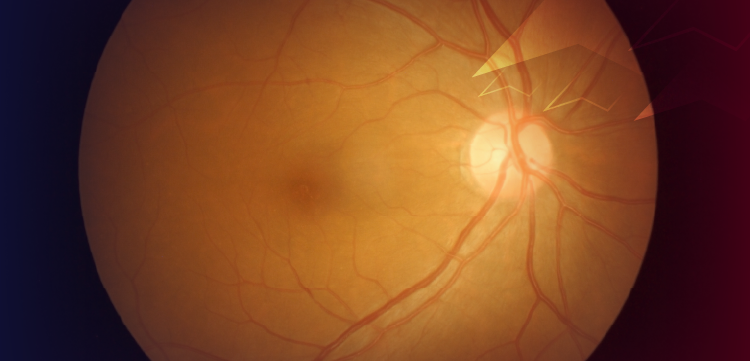
"Central subfield thickness is the one that's most closely associated with visual acuity," Smith said. "But there's some important anatomical information that can be gleaned by looking at the eccentric subfields." Investigators used a machine learning–based retinal OCT segmentation algorithm (ROSA; Roche) to quantify retinal volume and thickness within each subfield of the 6-mm ETDRS grid—the central 1-mm subfield and the inner and outer inferior, temporal, nasal, and superior quadrants—from baseline through week 100.1
Baseline fluid concentrated in the temporal subfields
Among 1502 patients with a baseline volume and thickness measurement available, mean retinal volumes were highest in the temporal subfields of both the inner and outer rings, and mean thickness was highest in the central 1-mm subfield, followed by the inner and outer temporal subfields. Smith noted that the inferior subfields were thicker than the superior subfields—the reverse of the pattern typically seen in patients with little to no
At years 1 and 2, the greatest volume reductions occurred in the temporal subfields of both rings, and the greatest thickness reductions occurred in the central 1-mm subfield, followed by the temporal subfields. At year 1, faricimab every 8 weeks (Q8W) and faricimab treat-and-extend (T&E) each produced greater volume and thickness reductions than aflibercept 2 mg across all 6-mm subfields, except the outer nasal subfields, and for T&E, the superior subfield. At year 2, faricimab Q8W showed greater reductions than aflibercept in the 3-mm diameter and within the central 1-mm and inner temporal subfields.1
Could eccentric subfield drying inform treat-and-extend decisions?
Smith said that if he were weighting eccentric subfields more heavily, he might treat until the subfield that was thickest at baseline—not the central subfield alone—has normalized before extending the interval. He tied the rationale to the recurrent "sawtooth" pattern in central thickness, in which fluid rebounds between injections; drying the thickest baseline subfield, he said, might produce steadier central control and help maintain visual acuity across the treatment course.
Smith cautioned that the approach requires validation, including defined normative values, because baseline thickness varies from patient to patient: a thin retina can signal perfusion abnormalities rather than health, while factors such as age, sex, volumetric status, and kidney dysfunction can leave some patients with thicker retinas at baseline that do not indicate disease. For those reasons, he said, the metric is not yet ready to apply to the individual patient in clinic.
Reference
1. Smith B, Amador M, Han L, Warter A, Chen M, Gibson K. Automated quantification of retinal fluid and thickness on SD-OCT for assessing treatment response in DME: biomarker results from YOSEMITE/RHINE. Presented at: American Society of Retina Specialists 2026 Annual Meeting; July 15-18, 2026; Montréal, Québec, Canada.
Advertisement
Related Content
Advertisement

Latest CME

















Advertisement
Advertisement