


News|Videos|July 17, 2026
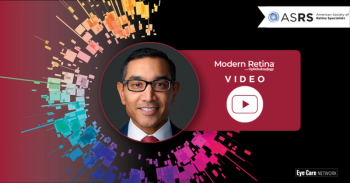
ASRS 2026: Arshad M. Khanani, MD, MA, on SOL-1 phase 3 data
Arshad M. Khanani, MD, MA, discusses phase 3 SOL-1 data showing axitinib sustained vision in wet AMD for 9-12 months after 1 dose, outperforming aflibercept 2 mg.
Advertisement
Study design
At the American Society of Retina Specialists (ASRS) 2026 annual meeting in Montreal, Canada, Arshad M. Khanani, MD, MA, discussed pivotal results from the phase 3 SOL-1 superiority trial evaluating axitinib (Axpaxli; Ocular Therapeutix) in patients with wet age-related macular degeneration (AMD).
Axitinib is a tyrosine kinase inhibitor delivered via a bioresorbable intravitreal hydrogel platform designed for sustained release and intracellular activity on vascular endothelial growth factor (VEGF) receptors. In SOL-1, patients received 2 loading doses before being assigned to a single dose of axitinib or continued treatment with aflibercept (Eylea; Regeneron) 2 mg. Patients were monitored for disease activity and rescued if they met a prespecified criterion of a 15-letter or greater loss in visual acuity.
Efficacy
According to Khanani, SOL-1 met its primary endpoint of vision protection or maintenance, with a highly significant P value of .0006. Patients treated with axitinib achieved better disease control and maintained vision longer than those treated with aflibercept 2 mg. Khanani said the majority of patients treated with a single dose of axitinib achieved durability of 9 to 12 months. He noted the trial was not confounded by anti-VEGF rescue therapy after randomization, allowing investigators to observe durability directly attributable to axitinib.
Safety
Khanani reported that axitinib was well tolerated in the pivotal trial. As the hydrogel reabsorbs, drug particles resolve without associated adverse consequences, he said.
Clinical implications
Khanani said undertreatment remains a major challenge in real-world wet AMD care, with up to 40% of patients discontinuing therapy within the first 1 to 2 years. He said the durability shown in SOL-1 could reduce treatment burden for patients currently receiving injections every 3 to 4 months who are well controlled, potentially extending their treatment interval to 9 or 12 months. For patients requiring more frequent injections—every 4, 6, or 8 weeks—Khanani said axitinib could serve as a foundational therapy to extend treatment intervals. A second pivotal trial, SOL-2, is evaluating axitinib dosed every 6 months. Khanani said his goal as a retina specialist is to optimize long-term vision outcomes for patients with wet AMD, and he believes axitinib could be a groundbreaking addition to the treatment toolbox.
Reference:
Khanani AM. Intravitreal Axitinib Hydrogel (OTX-TKI) in Wet AMD: Efficacy and Safety Results from the Phase 3 SOL-1 Trial. Presented at: American Society of Retina Specialists (ASRS) 44th Annual Scientific Meeting; July 15-18, 2026; Montreal, Canada.
Advertisement
Related Content
Advertisement


Latest CME




















Advertisement
Advertisement