
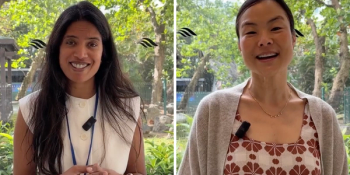
Laxmi Devisetty, MD, and Eva Kim, MD, look ahead at upcoming sessions focusing on geographic atrophy and refractive and cataract surgery at the Envision Summit 2025.

Laxmi Devisetty, MD, and Eva Kim, MD, look ahead at upcoming sessions focusing on geographic atrophy and refractive and cataract surgery at the Envision Summit 2025.
Martin Friedlander, MD, PhD, discusses phase 3 macular telangiectasia findings, highlighting the potential for a decade-long alternative to intravitreal injections.
Yvonne Ou, MD, a professor of ophthalmology at the University of California San Francisco, spoke about lifestyle modifications for glaucoma at this year's Glaucoma 360 meeting.
M. Roy Wilson, presented the Shaffer-Hetherington-Hoskins Lecture at the Glaucoma 360 meeting held in San Francisco, California. This lecture was entitled, "Rethinking Race as a Risk Factor for Glaucoma: What Really Matters?"
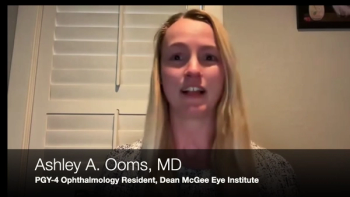
Ooms' poster at the Association of University Professors of Ophthalmology annual meeting highlighted a study on gray area complications in strabismus surgery, showing that trainees are more likely than attendings to disclose these complications despite having similar baseline anxiety levels. Ooms is a PGY-4 ophthalmology resident at the Dean McGee Eye Institute.
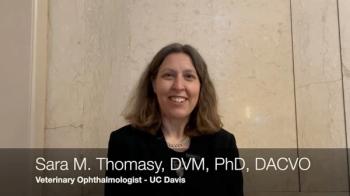
Ophthalmology Times spoke with Sarah M. Thomasy, DVM, PhD, DACVO, a veterinary ophthalmologist at UC Davis about how her research can align with human glaucoma research to move the entire field
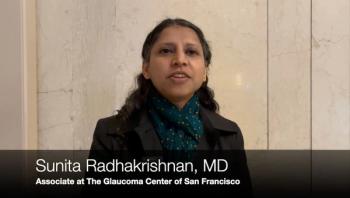
Sunita Radhakrishnan, MD, shares insights on the use of electric neurostimulation and its potential use in the treatment of glaucoma, as evidenced by its current use in Europe and the upcoming trials for use in the US.
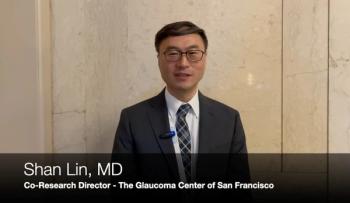
Shan Lin, MD, speaks to the new MIGS entering the glaucoma space and providing additional options for patients and providers as they work to preserve vision and work towards a better future for glaucoma treatment options.
Andrew Iwach, MD, co-founder of the Glaucoma 360 meeting shares that value this meeting has for residents and fellows as they embark on their careers and the future additions to the meeting that will include retina discussions.
Inder Paul Singh, MD, speaks to the potential of artificial intelligence (AI) in the management of the glaucoma disease state as well as the current challenges of drug delivery in treating patients with glaucoma.
John Berdahl, MD, discusses a non-surgical, non-drug treatment for glaucoma approved by the FDA in 2024. The pump uses negative pressure to lower eye pressure by an average of 39% in clinical trials, with a good safety profile.
Andrew Iwach, MD, shares how Glaucoma 360 got its start and how today's meeting focuses on innovation that can benefit patients with glaucoma as the condition is monitored and treated.
Sonia H. Yoo, MD, a cornea, cataract, and refractive surgery specialist and a member of the planning committee for the EnVision Summit, highlights a session focused on the latest advancements in lens implant technologies, refractive procedures, and imaging innovations. The summit will be held from February 14 to 17, 2025, at the Caribe Hilton San Juan in Puerto Rico.
Colby highlights the strides made and challenges that remain for women in ophthalmology, emphasizing the importance of mentorship, individualized professional growth, and resilience in a competitive field, drawing from her experience as Chair of the Department of Ophthalmology at NYU Grossman School of Medicine.
A panelist discusses how different phacoemulsification technologies, including vacuum-based and fluid-based systems like the Quatera 700, impact surgical efficiency and chamber stability during cataract procedures, emphasizing the importance of optimized fluidics settings for safe outcomes.
A panelist discusses how various factors influence IOL selection for cataract surgery patients, including patient lifestyle needs, ocular conditions, and specific lens features like the CT Lucia 621P's wide diopter range and spherical aberration compensation capabilities.
Panelists discuss how novel intravitreal agents faricimab and high-dose aflibercept 8mg offer potential advantages in treating retinal diseases through their extended durability and dual mechanism of action.
Panelists discuss how careful patient selection and management of potential complications - including surgical risks, device-related adverse events, and cost-benefit considerations requiring operating room resources - are crucial factors in successfully implementing the port delivery system in clinical practice.
Panelists discuss how the Port Delivery System (PDS) presents important considerations around adverse effects, patient selection criteria, and adoption challenges including surgical requirements and cost-benefit analyses that must be carefully weighed when integrating this technology into retinal practice.
Dr Jordan Graff highlights key steps in implanting the port delivery system, emphasizing incision and closure techniques with video clips.
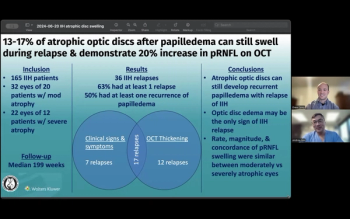
Andrew G. Lee, MD, and Drew Carey, MD, return for this latest episode of the NeuroOp Guru to discuss whether a dead nerve can swell, focusing on the condition of papilledema caused by elevated intracranial pressure.
Panelists discuss how successful implementation of the port delivery system requires careful attention to surgical technique during both initial implantation and subsequent refill procedures, with specialized training and protocols that differ significantly from standard intravitreal injections in terms of procedural steps, sterility requirements, and patient preparation.
Panelists discuss how patients experiencing a high treatment burden with frequent anti-VEGF injections every 4-8 weeks are optimal candidates for the port delivery system, which can help reduce their number of clinic visits while maintaining therapeutic effectiveness.
Panelists discuss how the port delivery system (PDS) with ranibizumab represents a paradigm shift in neovascular AMD treatment by utilizing a surgically implanted refillable device that provides continuous medication delivery for 6 months, offering patients a preferred alternative to frequent intravitreal injections while ensuring consistent therapeutic levels.
Dr. Frenkel highlights a comprehensive program that covers the latest breakthroughs in glaucoma and cataract surgery to in-depth discussions on AI, retinal treatments, and new drug-delivery platforms, all set against the backdrop of Snowmass, Colorado.
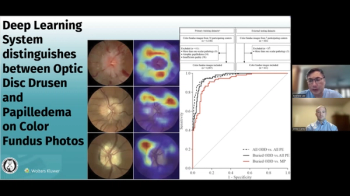
Andrew Lee, MD, and Andrew Carey, MD, sit down on another episode of the NeuroOp Guru to discuss deep learning systems and whether they can distinguish between optic disc drusen and true papilledema

Himani Goyal, MD, discusses a complex glaucoma case involving persistent intraocular pressure elevation despite multiple treatment procedures, focusing on advanced management strategies and decision-making for challenging cases.
Himani Goyal, MD, explores a case of glaucoma treated with an intracameral implant, evaluating its efficacy in managing intraocular pressure and its role in optimizing long-term glaucoma care.
Himani Goyal, MD, discusses a case of cataracts and minimally invasive glaucoma surgery (MIGS) combination, highlighting the benefits of this approach in managing both cataracts and glaucoma in a single procedure for improved patient outcomes.
Wendy Lee, MD, an oculoplastics specialist and member of the program committee at EnVision Summit, shares an agenda that will include a mix of functional oculoplastics, aesthetics, and live facial rejuvenation demonstrations at the upcoming event, which will be held from February 14 to 17, 2025, at the Caribe Hilton San Juan in Puerto Rico.