

In this series, experts in the field advise current residents and offer insight into how they can make the most of their time and experience moving forward with their careers.

In this series, experts in the field advise current residents and offer insight into how they can make the most of their time and experience moving forward with their careers.
In an interview with Ophthalmology Times, Alon Kahana, MD, PhD, discusses interleukin-6 and its role in autoimmune diseases, particularly thyroid eye disease, noting that a promising alternative under clinical trial is pacibekitumab, an IL-6 ligand-blocking antibody.

In this series, experts in the field advise current residents and offer insight into how they can make the most of their time and experience moving forward with their careers.

In this series, experts in the field advise current residents and offer insight into how they can make the most of their time and experience moving forward with their careers.
Ahead of this year's Floretina meeting and International Congress on OCT Angiography, En Face OCT and Advances in OCT (ICOOR), David Hutton of Ophthalmology Times spoke with Charles Wykoff, MD, PhD. At FLORetina ICOOR, he presented on a number of topics, including diabetic retinopathy—the subject of his conversation with the Eye Care Network.
This Week in Ophthalmology is a video series highlighting some of the top articles featured on the Ophthalmology Times website.

In this series, experts in the field advise current residents and offer insight into how they can make the most of their time and experience moving forward with their careers.
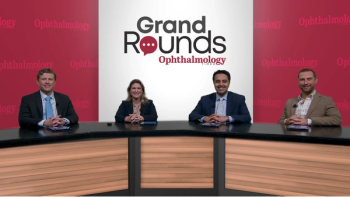
Retinal specialists conclude their discussion with key highlights from each patient case of retinal vascular disease and pearls the audience can apply in their practice.
In this final case, Sumit Sharma, MD, FASRS presents his case of neovascular AMD with a severe retinal pigment epithelial detachment who experienced a higher durability with a newer agent.

In this series, experts in the field advise current residents and offer insight into how they can make the most of their time and experience moving forward with their careers.

In this series, experts in the field advise current residents and offer insight into how they can make the most of their time and experience moving forward with their careers.

In this series, experts in the field advise current residents and offer insight into how they can make the most of their time and experience moving forward with their careers.
Welcome to the latest edition of This Week in Ophthalmology, a video series highlighting some of the top articles featured on the Ophthalmology Times website.
Lisa J. Faia, MD asks the panel about their concerns regarding the safety of newer agents for the broad array of retinal vascular diseases, highlighting the similarities and differences between clinical trial outcomes and real-world results.
In the third case, moderator Lisa J. Faia, MD presents her case of persistently active central retinal vein occlusion (CRVO), explaining her approach to switching this treatment-resistant patient to a newer agent.

In this series, experts in the field advise current residents and offer insight into how they can make the most of their time and experience moving forward with their careers.
This Week in Ophthalmology is a weekly video series highlighting the latest news and articles featured on the Ophthalmology Times website.
Sumit Sharma, MD, FASRS ponders to the panel the root cause of improved outcomes with newer agents. The panel then highlights current gaps in measuring visual improvements beyond tools such as the OCT, emphasizing the need for patient-centered treatment plans.
In the second case, Scott D. Walter, MD, MSc, FASRS presents a patient case of diabetic macular edema (DME) where each eye was treated with a different agent. Walter presents optical coherence tomograph (OTC) outcome similarities and differences in key criteria, such as neovascularization, micro aneurism leakage, and macular leakage.
News
This Week in Ophthalmology is a weekly video series highlighting the latest news and articles featured on the Ophthalmology Times website.
News
Livionex, recently announced a successful end-of-Phase 2 meeting with the FDA, supporting the advancement of C-KAD, a 2.6% EDTA ophthalmic solution, to a Phase 3 clinical study. In an interview with Ophthalmology Times, Randall Olson, MD, lead author and a Distinguished Professor at the University of Utah, Chair of the Department of Ophthalmology and Visual Sciences, and CEO of the John A. Moran Eye Center, discusses the ongoing research.
Sumit Sharma, MD, FASRS asks the panel what they are using for first-line AMD treatment and what considerations factor into decision making, such as insurance coverage or risk of inflammation.
In the first case, David Lally, MD presents a patient case of age-related macular degeneration (AMD) highlighting the superior durability of newer treatments.
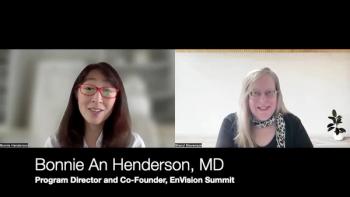
Program director and co-founder Bonnie An Henderson, MD, sits down with Ophthalmology Times to talk about how the annual conference is a unique blend of cutting-edge science, professional growth, and community. The 2025 conference will take place February 14 to 17 at the Caribe Hilton San Juan, in Puerto Rico.
News
This Week in Ophthalmology is a weekly video series highlighting some of the top articles featured on the Ophthalmology Times website.
News
Omar Salamanca, MD, staff ophthalmologist, Orbis Flying Eye Hospital, discusses Orbis's tailored glaucoma training programs, which focus on hands-on surgical skills, early detection, telemedicine, and personalized follow-up care, helping underserved regions improve glaucoma management and blindness prevention.
News
In an interview with David Hutton of Ophthalmology Times, Ash Abbey, MD, discusses the Phase 3 LUGANO trial for EYP-1901 in treating wet age-related macular degeneration. Abbey discusses the trial’s non-inferiority objectives, treatment schedule, patient outcomes like reduced treatment burden, and anatomical stability. Patient interest is high, particularly among those wanting fewer injections, though recruiting treatment-naive patients may be challenging. If results are favorable, potential FDA approval could occur within 3 to 4 years.
At the Tear Film and Ocular Surface meeting in Venice, Melissa Toyos shares findings on the mechanism of action of brimonidine tartrate.
New research sheds light on how the dry eye medication lifitegrast works beyond the ocular surface, targeting the underlying immune system to provide relief for patients.
Alfredo Sadun, MD, PhD, is the chief of Ophthalmology at the Doheny Eye Institute of UCLA. At this year's AAO meeting held in Chicago, Illinois, he stopped by the Eye Care Network booth to share insights from the symposium "Professional Longevity 2.0: Assessing the Ophthalmologist," which he presented during.